Retail & Archive
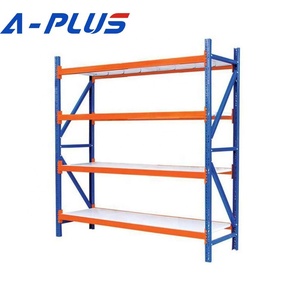
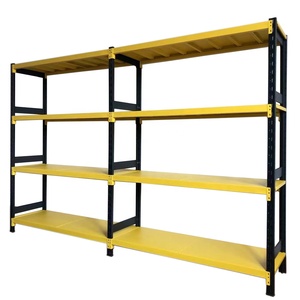
Industrial Use Shelving Unit For Retail With Wholesale Price
- Load: 150 - 500 kg / Tier
- Tool-less teardrop/butterfly clip setup
- Electrostatic epoxy powder finish
Precision-engineered cold-rolled Q235B structural solutions custom-fabricated for third-party logistics (3PL), distribution hubs, cold storage facilities, and high-throughput manufacturing.
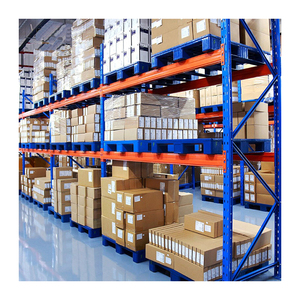
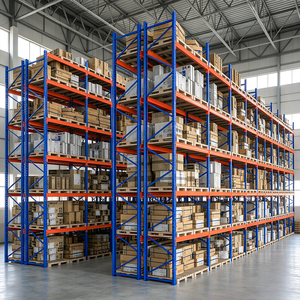
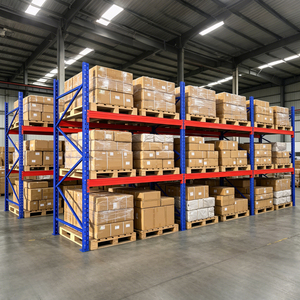
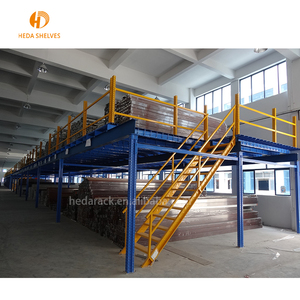
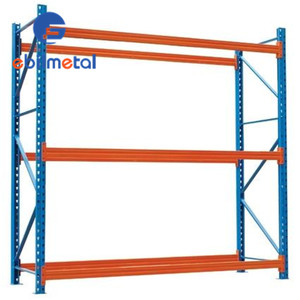
A rigorous examination of gravity flow physics, lane kinetics, roller bed engineering, and total cost of ownership (TCO) benchmarks for global supply chain engineers.
In modern supply chain infrastructure, warehouse real estate costs continue to escalate globally, requiring enterprise logistics managers to decouple from conventional wide-aisle selective rack designs. Gravity feed pallet racking—widely known as Pallet Flow Racking or dynamic live-storage systems—represents the apex of high-density, First-In, First-Out (FIFO) material handling methodology. Powered purely by the kinetic energy of natural gravitational descent, these continuous-flow systems eliminate extraneous interior access aisles, consolidating floor footprints while enforcing automated inventory rotation.
Flow lane slopes are millimetre-calibrated between 3.0% and 4.0% (1.7° to 2.3°) based on pallet bottom structure, bottom runner wood density, and gross payload weight.
Direct mechanical centrifugal brake rollers govern rolling speed under 0.3 m/s, preventing dangerous pallet acceleration and violent collisions along lanes exceeding 30 meters.
Integrated pneumatic and mechanical pallet separators disengage trailing line pressure from the front discharge pallet, protecting forklift operators during retrieval cycles.
Unlike stationary racking where load distributions are static, a gravity feed installation is subjected to cyclic kinetic loads, dynamic point-impact strains, and horizontal line-pressure forces caused by cumulative trailing pallets. For example, in a 20-pallet-deep lane carrying 1,000 kg pallets, the line-pressure force bearing on the front-most pallet stop exceeds 700 to 1,000 daN. As a premier Chinese manufacturer, our Guangzhou fabrication facilities utilize cold-formed Q235B and Q355B high-tensile structural steel with yield strengths above 235–355 MPa, reinforcing front-column upright assemblies with heavy-gauge welded column protectors and wrap-around footplates.
Roller configurations are bifurcated into full-width steel rollers (typically zinc-plated with precision shielded 6002-RS bearings) and staggered multi-wheel polymer/polyurethane skate-wheel tracks. Full-width cylindrical rollers remain mandatory for standard wooden four-way Europallets (1200x800mm) and GMA/ISO pallets (1200x1000mm) with irregular or weak bottom boards, ensuring seamless span over roller spacings without point sinkage or track deflection.
| Storage Racking System | Inventory Logic | Space Utilization | Throughput Speed | Direct Pallet Accessibility | Capex Investment Level |
|---|---|---|---|---|---|
| Gravity Feed Flow Racking | Strict FIFO | Up to 85% - 90% | Extremely Fast (Dedicated Faces) | Pick-face only (FIFO buffer) | Medium - High |
| Selective Pallet Racking | Any (FIFO/LIFO) | 35% - 40% | Standard | 100% Direct Selective Access | Low |
| Drive-In / Drive-Through | Strict LIFO / Limited FIFO | 65% - 75% | Slow (Forklift enters lane) | Lane entrance only | Low - Medium |
| Push Back Racking (Cart) | Strict LIFO | 70% - 75% | Moderate (2-6 pallets deep) | Lane front only | Medium |
| Radio Shuttle Automation | Flexible FIFO & LIFO | 85% - 92% | Semi-Automated Machine | Shuttle controlled per level | High |
Procurement engineers and warehouse supply chain directors are no longer purchasing racking solely based on gross steel tonnage. Modern project tenders incorporate life-cycle durability, energy consumption benchmarks, and ergonomic pick-face automation. The following five vectors define international sourcing preferences:
Unlike automated storage and retrieval systems (ASRS) demanding continuous electrical power, gravity feed functions indefinitely without power consumption, reducing operational carbon indices across cold storage facilities.
With quick-frozen foods and pharmaceutical logistics accelerating, roller bearings engineered with -35°C low-temperature synthetic lubricants prevent seized rollers and roller-shell brittleness.
Gravity carton-flow and pallet-flow are increasingly mounted into multi-level structural mezzanine floors, routing bulk stock on top levels and dedicated case pick modules on bottom tiers.
As high-precision automation interfaces like AGVs (Automated Guided Vehicles) and AMR pickers integrate with physical rack bays, the fabrication tolerances of gravity feed systems have tightened dramatically. Upright punching pitch tolerances must adhere strictly to ±0.2 mm over an 11-meter column span. Roller axle parallelism must not exceed 0.5 mm variance, or descending pallets will experience angular crab-walking, wedging themselves irreversibly against frame uprights.
State-of-the-art Chinese manufacturing lines now utilize multi-station continuous CNC cold-roll-forming profiles, automated continuous robotic welding lines for beam-end connectors, and high-precision laser-drilled roller track beds. Furthermore, surface treatment has shifted beyond conventional solvent paints to non-polluting electrostatic powder coating following an 8-stage pickling and phosphating pre-treatment bath, ensuring salt-spray resistance exceeding 500 hours in maritime transit and damp coastal warehouses.
Complete traceability from certified hot-rolled steel coils to ocean-container export bundling:
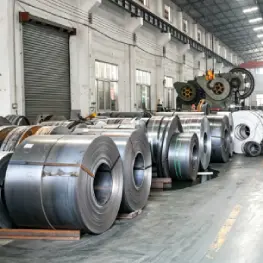
Spectrographic analysis of Q235B/Q355B coils ensuring mill-certified tensile and yield margins.
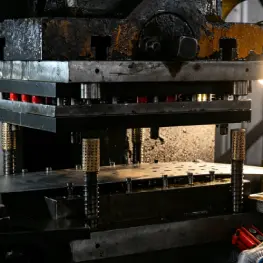
50mm/75mm hole pitches punched continuously with micrometer accuracy before roll bending.
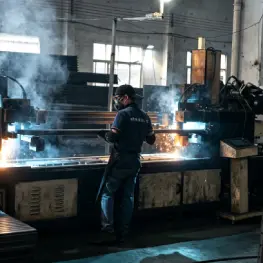
Precision shielded welding of 3-claw/4-claw beam connectors guaranteeing shear load resistance.
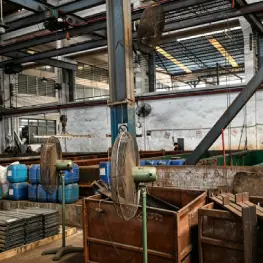
Chemical rust descaling & anti-corrosive passivation layer prior to electro-powder baking.
Founded in 2001, Guangzhou Heda Shelves Co., Ltd. has grown from a regional structural rack manufacturer into an internationally audited warehousing equipment powerhouse. Sourcing gravity feed pallet racking directly from our South China manufacturing plant provides measurable engineering and balance-sheet advantages:
Direct engineering answers addressing critical design loads, pallet bottom criteria, safety mechanisms, and shipping logistics.
Hardwood or virgin HDPE plastic pallets with bottom runners oriented parallel to the rolling track work best. Pallets must have minimal bottom-board deflection under maximum rated payload. Weak, two-way notched stringer pallets or damaged skids require full-width roller beds or dynamic slave trays to prevent snagging.
Speed controllers are self-contained mechanical units equipped with internal planetary gears and centrifugal brake pads. As a pallet rolls over the brake roller, velocity is monitored. If velocity exceeds approximately 0.25–0.30 m/s, centrifugal force forces the internal pads outward against the drum, maintaining constant safe descent speeds.
Yes. HEDA Shelves specifically engineers cold-storage pallet flow installations down to -30°C. We specify specialized low-temperature sealed ball bearings, synthetic non-freezing lubricants, and heavy zinc-plated or hot-dip galvanized finishes to eliminate moisture condensation corrosion during defrost cycles.
While standard lanes run between 5 and 15 pallets deep, custom engineered systems can exceed 25–30 pallets deep when equipped with heavy-duty pallet separators, multiple brake rollers, and entry guide funnels. For depths beyond 20 pallets, our structural team evaluates total accumulation line pressure on front upright stops.
Please share: (1) Warehouse architectural drawings indicating clear height and column locations, (2) Pallet dimensions (W x D x H) including overhang and gross weight, (3) Pallet bottom runner orientation, (4) Daily SKU turnover volume, and (5) Operating environment temperatures. We return CAD designs within 24 hours.
Upright frames and beams are bundle-strapped with protective corner boards; roller tracks and mechanical separators are packed into reinforced export wooden crates. Every order includes detailed 3D exploded assembly diagrams, part-marking numbers, and technical video guides for local assembly crews.
Speak directly with our senior racking structural engineers. Submit your warehouse floor plan today for a complimentary CAD layout, lane-capacity calculation, and wholesale export quotation.
Inquire Now