Engineered Commercial Racking & High-Density Storage Catalog
Precision-profiled cold-rolled carbon steel, multi-directional industrial storage, and automated stacker systems designed for maximum volumetric utilization.
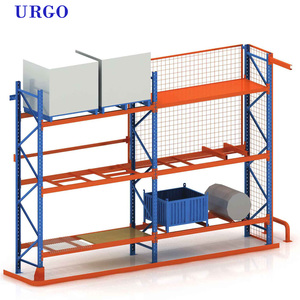
Very Narrow Aisle (VNA) Heavy Duty Racking System
Engineered to maximize vertical cube utilization with operational clearance down to 1.6m, integrating precision wire-guided turret truck interfaces.
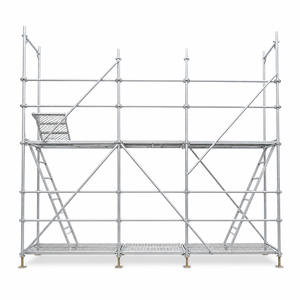
500kg Multidirectional Galvanized Shelving
European modern modular geometry featuring hot-dipped zinc protective passivation, built for humid storage depots and cold-chain resilience.
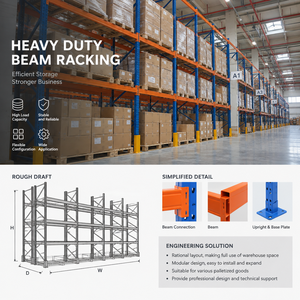
Q235 Selective Warehouse Beam Racking
Standardized 100% immediate selectivity configured with heavy structural carbon steel box-beams, electrostatic exterior powder barrier, and safety locks.

Modular Stainless Commercial Floor Storage Shelving
Commercial-grade brushed stainless steel structural modules delivering dual-utility showroom presentation and high-load distribution stockroom organization.
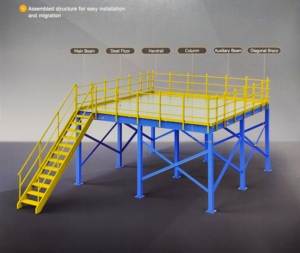
Industrial Multi-Tier Mezzanine Platform
Engineered structural platforms tripling square meter usability, incorporating integrated staircase assemblies, security gates, and heavy beam grids.
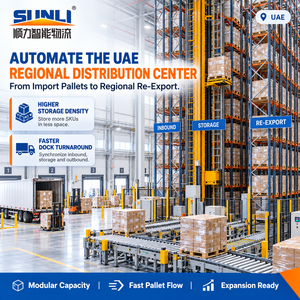
Heavy Duty Automated AS/RS Stacking Rack
High-precision vertical alloy steel engineering engineered for automated stacker crane tolerances, handling 500kg-1500kg dynamic pallet loads.
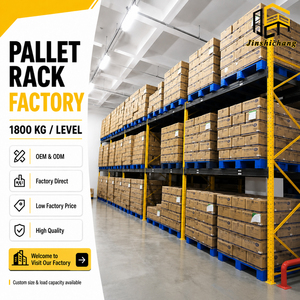
3000KG Extreme Duty Powder-Coated Pallet Rack
Reinforced beam sections and heavy base-plate anchorage calibrated for severe industrial mass distribution and high-cycle reach truck staging.
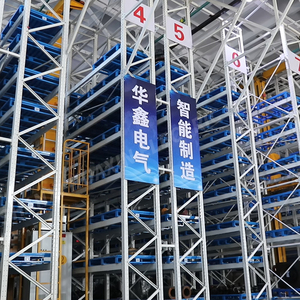
Robotic AMR/AGV Picking High-Density Shelving
Optimized interface tracks for autonomous mobile picking units, high-frequency e-commerce fulfillment matrices, and multi-tier sorting.
Comprehensive Strategic Whitepaper: Navigating Chinese Racking & Commercial Shelving Procurement
Modern global logistics networks operate under stringent floor-utilization, seismic resilience, and rapid stock-turnover mandates. Sourcing warehouse racking directly from premier Chinese manufacturing hubs provides global enterprises, logistics operators, and project engineers with substantial economic advantages. However, navigating the structural specifications requires deep technical comprehension of raw material metallurgy, fabrication tolerances, and local building code compliance (such as FEM 10.2.02, RMI, and EN 15512).
Raw Steel Metallurgy & Structural Engineering Integrity
The core structural integrity of heavy-duty commercial storage rests upon the grade and cold-forming behavior of carbon steel coils. Industrial grade Q235B and Q355B structural steel (comparable to ASTM A36 and ASTM A572 Grade 50) represents the international gold standard for upright profile manufacturing. Chinese top-tier mills utilize automated uncoiling, multi-station continuous roll-forming lines, and CNC-guided hydraulic punching to guarantee that upright hole pitches exhibit zero thermal distortion or structural elongation down the entire vertical axis.
Precision cold bending forms stiffening ribs into upright columns and step-beams. This engineered profile design maximizes the radius of gyration, dramatically inhibiting lateral-torsional buckling when pallets are loaded up to 3,000 kg per level. Furthermore, leading facilities incorporate certified continuous robotic seam-welding for 3-hook and 4-hook beam connectors. These connectors distribute bending moments smoothly into column webs, eliminating dynamic shear fatigue caused by high-cycle forklift impacts.
Surface Passivation, Pickling, and Powder Coating Durability
In global coastal regions, monsoon zones, and cold-storage facilities with high relative humidity, surface finish is directly tied to structural longevity. Standard paint finishes frequently chip and rust beneath the substrate. High-end Chinese manufacturers employ a thorough 10-stage automated surface treatment: hot degreasing, twin-stage acid pickling for total scale removal, zinc phosphating, and deionized water rinsing prior to electrostatic thermoset polyester powder deposition. This yields coating thicknesses from 60 to 90 microns, verified by ASTM cross-hatch adhesion and salt spray testing exceeding 500 hours.
Future Procurement Trends in Industrial Storage
Automation & Robotic Interoperability
Procurement is pivoting rapidly from static manual racking to Autonomous Mobile Robot (AMR) grids, 4-way radio shuttle channels, and mini-load automated storage retrieval systems (AS/RS).
Seismic Micro-Zoning Engineering
Global engineering tenders now demand rigorous dynamic finite element simulation (FEA) calibrated to local subsoil profiles, spectral acceleration coefficients, and customized base-plate anchor configurations.
Total Landed Cost Container Optimization
Procurement teams prioritize factories that utilize algorithmic 3D container bundling software. Maximizing 40HQ maritime container payload cubes directly reduces landed import costs per pallet position by 18-24%.
Technological Evolution of Modern Racking Architecture
The international warehousing industry has moved beyond rudimentary static storage. Modern operations are driven by skyrocketing land leasing expenses and severe labor availability constraints. Structural engineers are consolidating picking and bulk storage vertically through rack-supported structural building platforms, where the exterior cladding of the facility is anchored directly to the high-bay racking frame. This method eliminates the capital cost of separate structural building columns.
Simultaneously, warehouse management systems (WMS) require rack suppliers to deliver millimeter-level profile tolerances. In automated radio shuttle bays and ASRS crane aisles, structural sway must remain within L/500 deflection limits to prevent optical sensor faults. Meeting these performance standards demands in-house roll-forming mills, automated robotic end-plate welding, and automated laser drilling centers.
Factory Direct Manufacturing Strengths
With an extensive manufacturing footprint centered in Guangzhou, South China, we deliver end-to-end industrial structural solutions that eliminate intermediary markups while maintaining total quality management control.
Since 2001 Heritage
Over two decades of pure-play structural racking engineering across cold chain, retail DC, agricultural bulk, and automotive assembly hubs.
30,000 Ton Output
Our 30,000 m² heavy-industrial manufacturing facility delivers high-volume throughput to keep critical infrastructure projects on schedule.
Verifiable Compliance
Fully certified quality control holding verified CE certification (2435-CPR-8605159), ISO 9001:2015 registration, and RoHS compliance certificates.
Free CAD & 3D Modeling
Complete layout planning, FEA load calculations, and full structural validation provided by our dedicated engineering team within 24 hours.
Frequently Asked Strategic Sourcing Questions (FAQ)
Ready to Engineer Your High-Performance Warehouse Layout?
Submit your architectural CAD drawing, clear height limits, and unit load profiles. Our senior structural logistics engineering team will return a turnkey layout, 3D render, and detailed commercial project quotation within 24 hours.