Featured Industrial Racking & Warehouse Systems
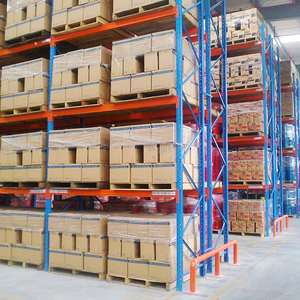
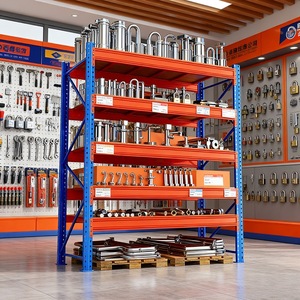
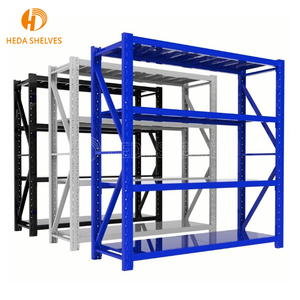
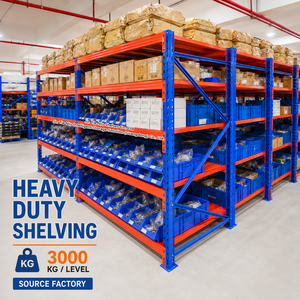
Explore our flagship heavy-duty pallet storage, display, and workshop racking systems engineered for high load-bearing efficiency and long-term structural integrity.
Technical Industry Whitepaper: Navigating Teardrop Racking Sourcing in China
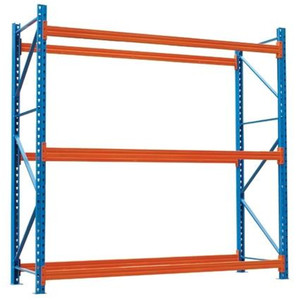
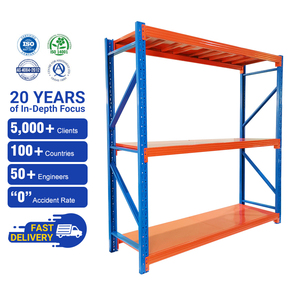
In modern supply chain architecture, Teardrop Pallet Racking remains the dominant material handling standard across North America, South America, and global logistics hubs. Characterized by its universal teardrop-shaped punch hole pattern along upright frames, this boltless connection geometry allows step beams to seat securely via gravity and spring-loaded safety locks. When sourcing teardrop storage systems from Chinese OEMs and direct manufacturers, supply chain directors and warehouse operations managers face a crowded marketplace. Distinguishing high-capacity, ANSI MH16.1-compliant engineering from low-cost material downgrades requires an acute technical understanding of cold-formed steel metallurgy, load-deflection ratios, structural welding standards, and surface pretreatment protocols.
1. Metallurgical Foundations and Structural Mechanics
The ultimate structural integrity of an industrial teardrop rack rests on cold-rolled steel quality. Leading Chinese manufacturers utilize high-tensile carbon steel coils—primarily Q235B and Q355B grades (equivalent to ASTM A36 and ASTM A572 Grade 50). Upright columns undergo continuous cold-roll forming to create rigid, multi-ribbed profiles. The teardrop punch spacing adheres to the standardized 2-inch vertical adjustment increments, permitting versatile vertical shelf reconfigurations.
Under heavy pallet loads, racking columns experience combined axial compression and bending moments. High-quality Chinese factories employ Finite Element Analysis (FEA) software to simulate maximum load capacity under static, dynamic, and seismic conditions. Step beams are constructed with continuous robotic seam welds connecting the beam tube to the end-connector brackets. The inclusion of automatic safety plungers ensures that upward forklift impacts cannot accidentally dislodge beams, preventing catastrophic warehouse collapses.
| Structural Parameter | Standard Commercial Grade | Heavy-Duty Industrial Grade (HEDA Standard) | Compliance / Testing Standard |
|---|---|---|---|
| Steel Coil Metallurgy | Q195 / Commercial Strip Steel | Q235B / Q355B Structural Carbon Steel | ASTM A572 / GB/T 700-2006 |
| Upright Profile Dimensions | 3" x 1-5/8" (1.5mm - 1.8mm) | 3" x 3" or 3" x 1-5/8" (2.0mm - 2.5mm) | RMI / ANSI MH16.1 |
| Beam Deflection Limit | L / 180 (Slight sag under load) | L / 240 (Strict engineering threshold) | EN 15512 / FEM 10.2.02 |
| Surface Powder Coating Thickness | 35 - 45 Microns (Single pass) | 60 - 80 Microns (Thermosetting Epoxy) | ISO 9227 Salt Spray Test (>500 hrs) |
| Safety Pin Shearing Strength | Manual Drop Pins (<800 kg rating) | Auto Spring Lock (>1,500 kg shear load) | ANSI MH16.1 Section 5.4 |
2. Pretreatment & Anti-Corrosion Finishing Protocols
Corrosion is the leading silent cause of long-term racking fatigue, particularly in coastal logistics centers or cold storage facilities. Premium Chinese factories implement a multi-stage automated pretreatment line:
Removes mill scale, fabrication oils, and rust inhibitors, preparing clean bare metal surfaces for chemical bonding.
Deposits a micro-crystalline zinc phosphate layer that enhances mechanical powder adhesion and halts subterranean rust migration.
Thermosetting powder resin applied at 180°C–200°C baking temperatures forms an impact-resistant 60–80 micron protective shell.
Enterprise Strengths: Why Partnering with Guangzhou Heda Shelves Matters
With over two decades of technical dedication, Guangzhou Heda Shelves Co., Ltd. has established itself as an authoritative manufacturer and global solution exporter in industrial racking. Operating a modern 30,000 m² factory equipped with heavy-duty cold-roll forming lines, laser tube cutters, and robotic welding stations, HEDA processes over 30,000 tons of high-grade steel monthly.
Every teardrop racking and structural mezzanine system produced by HEDA undergoes rigorous, verifiable quality controls. Our production management and international operations hold official certifications including:
- CE Certification: No. 2435-CPR-8605159 (Conformité Européenne for structural steel components)
- ISO 9001:2015 Quality Management: Certificate No. 18624Q00169R0M (Valid through June 2027)
- RoHS & Environmental Compliance: Eco-friendly powder coatings free of toxic heavy metals
- Engineering Support: Free CAD floor layout, 3D spatial modeling, and structural load calculations
Future Sourcing & Procurement Trends in Teardrop Racking (2025–2030)
As global logistics shifts toward automated fulfillment, real-time inventory tracking, and aggressive carbon-neutral targets, industrial storage hardware is evolving rapidly. Forward-thinking procurement teams must factor the following macro trends into their vendor evaluations:
A. AMR & AGV Hybrid Racking Configurations
Conventional forklift-operated teardrop racks are giving way to hybrid automated aisles. Autonomous Mobile Robots (AMRs) and Automated Guided Vehicles (AGVs) require tighter manufacturing tolerances on beam level consistency and column verticality. Chinese manufacturers are adapting by installing precision laser punch alignment systems, keeping hole pitch variances under ±0.2mm per 6-meter upright section.
B. Green Steel & Low-Carbon Manufacturing Practices
Western importers are increasingly subject to carbon-border adjustments and ESG disclosures. Leading Chinese teardrop racking factories are transitioning to electric arc furnace (EAF) steel coils where feasible, utilizing solar-assisted powder coating ovens, and recycling closed-loop wastewater from acid pickling plants. Sourcing from accredited green factories minimizes supply chain compliance risk.
C. Modular High-Density Drive-In and Shuttle Integrations
Faced with escalating industrial land costs across North America, Europe, and South Asia, warehouses are optimizing cubic space. Modern teardrop framing is being adapted into semi-automated Radio Shuttle platforms and Drive-In dynamic racking. This allows operations to transition seamlessly from selective pallet handling to high-density bulk storage without replacing primary vertical frames.
Frequently Asked Sourcing & Technical Questions (FAQ)
Below are authoritative technical answers to common questions raised by procurement directors and structural engineers when importing teardrop racking systems from China.
Transform Your Warehouse Storage Density & Efficiency
Consult with HEDA’s senior structural engineers today. Receive a comprehensive CAD floor layout design, structural load calculation sheet, and direct factory pricing within 24 hours.
Send an Inquiry