Factory-Certified Industrial Racking & Stacking Systems
Explore our factory-direct modular systems manufactured in accordance with FEM 10.2.02, EN 15512, and ANSI MH16.1 specifications. Built with premium structural Q235B/Q355B steel, robotic MIG welding, and industrial anti-corrosion finishes.
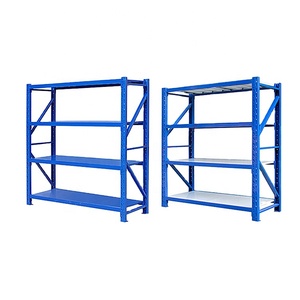
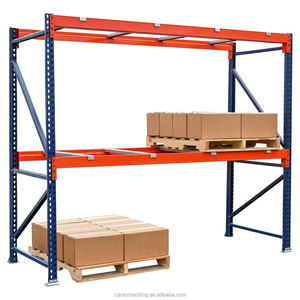
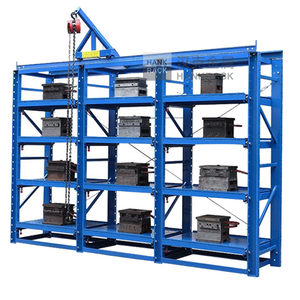
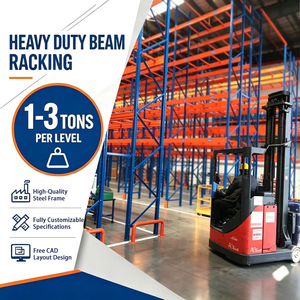
Executive Engineering Whitepaper: Modern Stackable Racking Architecture
In high-throughput distribution hubs, manufacturing staging zones, and third-party logistics (3PL) cold storage networks, static floor footprint costs represent the single largest variable overhead in logistics operations. Traditional fixed pallet racks offer rigidity, but lack agility when inventory volumes fluctuate dynamically according to seasonal demand, raw material batching, or port container unloading cadences. This is where engineered stackable warehouse racks (often classified as portable stack racks, post pallets, modular stacking frames, and nestable tire/mold racks) provide transformative capital expenditure (CapEx) efficiencies.
As China’s foremost stackable warehouse racks manufacturer and exporter, our engineering facilities bridge metallurgical rigor with modular adaptability. By utilizing high-tensile hot-rolled and cold-formed structural steel (primarily certified Q235B and Q355B grades), we design portable storage infrastructure capable of supporting uniform distributed loads (UDL) exceeding 2,500 kg per unit while safely nesting up to five tiers high under dynamic warehouse conditions.
Furthermore, reverse logistics economics dictate the financial viability of export-oriented warehousing equipment. Our collapsible, demountable, and folding post pallet systems achieve up to an 80% volumetric footprint reduction when empty. A standard 40-foot High Cube (40HQ) maritime shipping container, which normally fits only 30-40 assembled static frames, can accommodate over 240 units of our collapsed stackable frames. This drastically lowers landed procurement costs for overseas logistics operators in North America, Europe, Southeast Asia, South Asia, and the Middle East.
Stackable Post Racks vs. Fixed Pallet Racks vs. Block Stacking
| Evaluation Parameter | Modular Stackable Racks | Fixed Selective Pallet Racking | Direct Wooden Pallet Block Stacking |
|---|---|---|---|
| Vertical Space Utilization | 85% – 95% (Fully utilizes clear ceiling height) | 70% – 85% (Fixed flue spaces & aisles) | 35% – 50% (Crushing risk limits height to 1-2 tiers) |
| Floor Footprint Flexibility | 100% Dynamic (Zero bolted anchors to slab) | Static (Permanently bolted to slab anchors) | Dynamic but unstable |
| Warehouse Slab Modification | Zero civil work required; movable anytime | Requires chemical anchor drilling & slab rating | None |
| Product Crush Protection | 100% Steel load transfer; zero box load | 100% Steel beam load transfer | Severe risk; lower cartons carry entire weight |
| Empty Return Freight Efficiency | 1:4 to 1:6 Nesting / Collapsible ratio | Cannot collapse; permanent installation | Pallets only; cannot stack without pallets |
| Direct Pallet Access (Selectivity) | Batch / Lane Selective (LIFO optimal) | 100% Individual Pallet Selectivity (FIFO) | Poor (Pure LIFO; high double handling) |
| Initial Total Cost of Ownership | Low-Medium CapEx; 15+ year structural lifespan | High (Installation, upright protection, seismic engineering) | Lowest initial, highest damage & labor rate |
Structural Integrity, Load Deflection & Production Benchmarks
Why tier-1 global 3PL enterprises audit our manufacturing facilities: our factory strictly adheres to rigorous cold-forming, continuous weld penetration, and automated surface treatment standards.
Certified Steel Metallurgy
We source prime hot-rolled coils and high-yield strip steels directly from national state-owned mills. Each batch undergoes optical emission spectrometry to guarantee certified chemical compositions and yield strengths.
- Q235B Carbon Structural Steel: Yield strength ≥ 235 MPa, elongation ≥ 25% for reliable general ambient storage.
- Q355B Low-Alloy Structural Steel: Yield strength ≥ 355 MPa, designed for heavy mold racks, dynamic AGV interfaces, and sub-zero cold chain operations.
- Cold Impact Resilience: Retains Charpy V-notch impact toughness tested down to -20°C and -40°C without brittle cleavage fracture.
Robotic Welding & Structural Deflection
Every post sleeve, target cone, and diagonal bracing node is welded using Panasonic six-axis dual robotic welding cells to ensure uniform throat thickness and zero cold-lap defects.
- EN 15512 Deflection Thresholds: Dynamic horizontal and vertical deflection strictly verified within L/200 and L/300 serviceability limits under maximum UDL.
- Continuous Argon-Shielded MIG Welding: 80% Ar + 20% CO₂ active gas mixture eliminates spatter and ensures deep root penetration on high-stress base angles.
- Finite Element Analysis (FEA): Computerized ANSYS simulation verifies stress concentration tensors before production tooling initiation.
8-Stage Anti-Corrosion Treatment
To withstand intense maritime transit humidity and harsh industrial warehouse atmospheres, components pass through an automated 8-stage pre-treatment wash prior to powder curing.
- Chemical Pretreatment: Alkaline ultrasonic degreasing, acid pickling, rinse, iron/zinc phosphating, and deionized water passivating.
- Thermosetting Epoxy-Polyester Powder: Cured at 200°C for 20 minutes, yielding a hard, abrasion-resistant 70-100 μm coating thickness.
- Salt Spray Compliance: ASTM B117 neutral salt spray test exceeding 500 hours without red rust blister creep; hot-dip galvanized option exceeds 1000 hours.
Future Procurement & Technological Trends in Stacking Systems
Warehouse automation, supply chain volatility, and ESG decarbonization mandates are reshaping how international buyers procure industrial stacking racks. Here are the four structural shifts driving global specifications.
1. AMR & AGV Vision Docking Compatibility
Autonomous Mobile Robots (AMRs) and Automated Guided Vehicles (AGVs) are rapidly replacing conventional counterbalanced forklifts in brownfield distribution facilities. Future stackable warehouse racks must incorporate machine-vision fiducial targets, laser reflector recesses, and uniform fork pocket tolerances within ±2.0 mm.
Our intelligent stack racks integrate precision underbody entry apertures and high-contrast reflective QR plate recesses, allowing robotic lift vehicles to auto-center and execute multi-tier high stacking maneuvers without human intervention.
2. IoT Passive UHF RFID Digital Twins
Procurement directors are shifting from blind asset purchasing to connected fleet management. In large multi-warehouse campuses, lost or idle metal racks tie up significant working capital. Our newly engineered post pallets feature protected recessed pockets for long-range, metal-mount passive UHF RFID tags and low-power Bluetooth Low Energy (BLE) transponders.
This enables real-time yard location monitoring, dwell time alerts, automated cycle counts, and preventative load inspection tracking synchronized directly with SAP, Manhattan, or Oracle Warehouse Management Systems.
3. Circular Steel Sourcing & Scope 3 Decarbonization
Global logistics giants operating in the EU and North America now require verified Environmental Product Declarations (EPD) and documented Scope 3 carbon emission disclosures for all procured steel structures. The supply chain can no longer accept untraced scrap steel.
Our manufacturing workflow utilizes electric arc furnace (EAF) certified steel billets featuring up to 60% recycled scrap content, powered in part by rooftop solar arrays at our Guangzhou factory. Every batch comes with verifiable carbon footprint documentation compliant with ISO 14064 principles.
Emerging Cold-Chain Logistics Demands: -30°C Blast Freezer Optimization
Cold storage facilities face exorbitant energy running costs (up to 40% higher per cubic meter than dry ambient warehouses). Traditional bolted upright racks create cold-air circulation dead spots and ice buildup around mechanical connection pins. Furthermore, frequent forklift strikes in sub-zero environments—where steel ductility drops significantly—can cause brittle fracture in standard carbon steel uprights.
The contemporary procurement trend favors hot-dip galvanized (HDG) stackable post racks. Galvanized after fabrication in accordance with ASTM A123/BS EN ISO 1461, these racks offer an impenetrable 85 μm zinc protective envelope that is self-healing against scrape marks. By allowing unhindered horizontal convective airflow beneath stacked post pallets, freezer refrigeration compressors operate at 12-18% higher thermal efficiency while completely eliminating wooden pallet contamination risks.
Our Manufacturing Footprint & Quality Management
Founded in 2001, Guangzhou Heda Shelves Co., Ltd. has developed into a premier industrial manufacturer and worldwide exporter, engineering high-load storage installations for Fortune 500 logistics brands.
30,000 m² Advanced Production Hub
Our expansive production facility in Guangzhou houses over 30 continuous automated roll-forming lines, 20 high-speed CNC punching presses, and multi-station robotic welding cells capable of processing over 30,000 tons of structural steel monthly.
- High-speed automated coil slitting and longitudinal uncoiling.
- Precision CNC laser cutting for custom mold plate sockets.
- 300+ skilled mechanical engineers, welders, and production specialists.
Verifiable International Accreditations
Unlike trading intermediaries, our factory maintains rigorous quality verification certifications accessible to public registry audits, ensuring flawless customs documentation and municipal compliance worldwide.
- CE Certification: Construction Products Regulation Certificate No. 2435-CPR-8605159.
- ISO 9001:2015: Quality Management System Certificate No. 18624Q00169R0M (Current cycle valid through 2027-06).
- RoHS & REACH: Certified lead-free, non-toxic heavy metal coating safety.
Container Space Loading Optimization
Ocean freight rates can drastically skew landed unit economics. Our logistics engineering department calculates customized 3D computer container stuffing layouts (CargoWiz / SolidWorks) for each overseas project order.
- Post bundling with reinforced polymer straps and protective edge corners.
- Interlocking nest arrangements maximizing 40HQ volume utilization up to 94%.
- Export packaging preventing in-transit salt spray corrosion and abrasions.
Frequently Asked Questions (FAQ) for Overseas Buyers
Detailed answers addressing engineering feasibility, structural load safety, international customs protocols, and factory production standards.