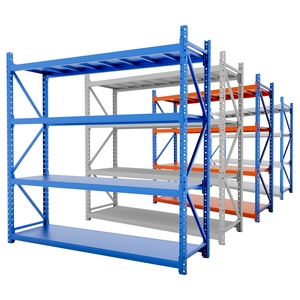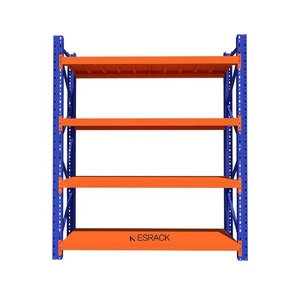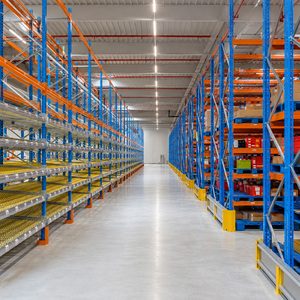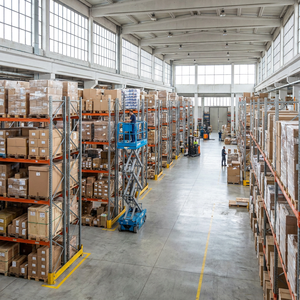
Warehouse Pallet Rack Factory Direct Supply Heavy Duty Steel Storage System Manufacturer
- Load Rating: 1,000 – 5,000 kg / level
- Material: Certified Q235B Cold-Formed Steel
- Standards: FEM 10.2.02 / EN 15512
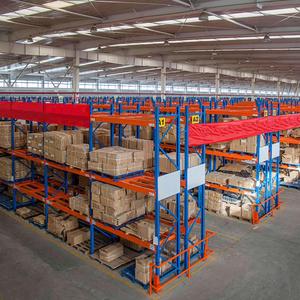
Precision-fabricated utilizing premium Q235B cold-rolled structural steel, certified under CE 2435-CPR-8605159 and ISO 9001:2015. Below are eight foundational industrial racking models engineered for distribution hubs, 3PL logistics facilities, heavy cold storage, and specialized manufacturing plants.
As international supply chains experience relentless demands for volumetric efficiency, warehouse managers and corporate procurement teams are pivoting from transactional hardware buying to integrated structural engineering partnerships. Understanding these procurement shifts is critical to mitigating capex risk and maximizing ROI.
Forward-thinking warehouse procurement officers now evaluate suppliers on structural longevity, deflection resilience (strictly adhering to L/200 and L/250 beam deflection under full operational loads), and corrosion resilience rather than lowest FOB price. Poor cold-forming profiles cause premature fatigue failure, racking alignment drifts, and costly operational shutdowns.
Global enterprise buyers are disintermediating middle-tier brokers to partner directly with tier-1 Chinese manufacturers. Factory engineering teams design upright profiles, knocked-down frames, and nested beam packs strictly modeled to fill 98%+ of 40-foot High Cube (40HQ) ocean containers, slitting international freight charges per pallet location by upwards of 28%.
Regulatory oversight across North America, Europe, Australia, and South Asia mandates third-party auditable structural standards: EN 15512 (Europe), RMI MH16.1 (USA), and AS 4084 (Australia). Procurement protocols reject self-declarations, requiring third-party verified mill test certificates (MTRs) confirming yield strength $f_y \ge 235\text{ MPa}$ and full weld penetration certificates.
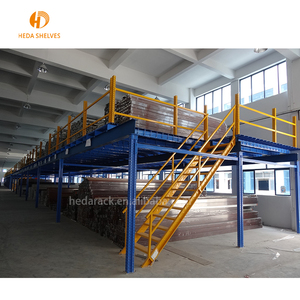
Faced with escalating urban commercial land lease rates, the modern supply chain focuses on vertical cubic utilization. Procurement has seen a 45% surge in multi-tier rack-supported platforms and structural steel mezzanines that convert open overhead headroom into functional picking galleries, e-commerce packing hubs, or cleanroom sub-assemblies without civic tax reassessments.
Industrial racking is no longer static structural ironwork. High-throughput fulfillment, zero-emission cold chain requirements, and robotic automation (AMR/AGV) are transforming rack profiles into dynamic, high-precision engineering systems.
Standard selective racking requires 3.2 to 3.8-meter aisles for counterbalance reach trucks, surrendering up to 60% of floor space to transit corridors. The dominant engineering trajectory involves high-density Radio Shuttle systems and automated storage and retrieval systems (AS/RS). By integrating motorized, wireless pallet carriers traveling on sub-tracks inside storage channels, operators achieve channel storage depths exceeding 30 pallets while slashing forklift collision rates to zero.
Furthermore, heavy-duty racking columns are increasingly roll-formed using specialized Omega (Ω) continuous cold-bent cross-sections with 11-13 structural fold bends. These multi-flange profiles enhance torsional rigidity and bucking resistance under severe eccentric loading, enabling rack structures to ascend safely past 24 meters in automated clad-rack applications.
Engineered dynamic anchoring plates engineered to dissipate horizontal seismic forces according to regional building codes.
Automated pickling and nano-ceramic phosphating before powder application, stopping micro-underfilm oxidation cold.
With pharmaceutical cold chains, dairy networks, and fresh food e-commerce rapidly scaling globally, racking steel must maintain fracture toughness down to -30°C. Standard commercial carbon steels undergo a ductile-to-brittle transition in sub-zero environments, which can trigger catastrophic brittle failure under shock loading from forklift impacts.
Leading Chinese manufacturers mitigate this risk by formulating specialized low-silicon, fully killed Q235B/Q355B chemistries featuring Charpy V-notch impact toughness validated at sub-zero operating temperatures. Coupled with heavy-metal-free, TGIC-free thermosetting polyester powders baked at 190°C–210°C, the resulting cross-linked polymer film achieves an impact resistance exceeding 50 kg·cm (ASTM D2794) and 600+ hours of continuous neutral salt spray resistance (ASTM B117).
Multi-axis automated CO2 shielded continuous fillet welds guarantee zero porosity on critical beam connector claws.
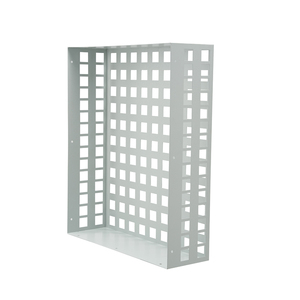
Modular flue-space cutouts and wire mesh shelves designed to prevent horizontal flame spread per NFPA fire guidelines.
A comprehensive comparison of core industrial storage configurations, detailing volumetric density ratios, inventory rotation workflows, aisle footprints, and recommended facility applications.
| Storage System | Pallet Selectivity | Space Utilization | Inventory Flow | Aisle Width Req. | Recommended Applications |
|---|---|---|---|---|---|
| Selective Pallet Racking | 100% Immediate | 40% – 50% | FIFO / LIFO Flexible | 3.0m – 3.8m | High-SKU distribution, 3PLs, general FMCG hubs |
| Drive-In / Drive-Through | Low (~15%) | 70% – 80% | Strict LIFO (FIFO if Drive-thru) | Eliminates inner aisles | Cold storage, bulk beverages, seasonal batch products |
| Radio Shuttle Racking | Configurable Lane | 80% – 88% | Programmed FIFO or LIFO | 3.0m – 3.2m (Access face) | Deep lane cold storage, meat processing, beverage bottling |
| Push-Back Cart Racking | Moderate (Lane Face) | 65% – 75% | LIFO (2 to 6 pallets deep) | 2.8m – 3.2m | Medium SKU velocity, manufacturing buffer queues |
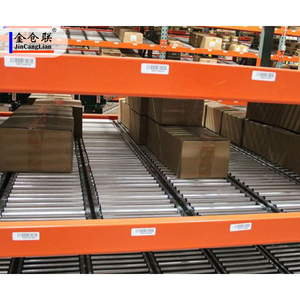
| Gravity Pallet Flow | 100% Lane Face | 75% – 85% | Strict FIFO (Gravity roller bed) | Separate load & pick aisles | Perishable food, dairy, pharmaceutical expiry control |
| Very Narrow Aisle (VNA) | 100% Immediate | 60% – 70% | FIFO / LIFO Flexible | 1.6m – 1.9m (Turret Truck) | High-value square footage, e-commerce, high-bay setups |
| Rack-Supported Mezzanine | 100% Manual / Shelf | Up to 250% (Multi-Tier) | Manual pick / Conveyor fed | 1.0m – 1.5m catwalk aisles | Garment fulfillment, automotive spare parts, B2C picking |
*Note: Utilization values represent typical project configurations. Actual floor space ratios are engineered based on warehouse column spans, sprinkler placements, and designated forklift turn radiuses.
Headquartered in Guangzhou, South China, Guangzhou Heda Shelves Co., Ltd. has established an international benchmark in storage engineering since 2001. We maintain direct control over every phase of production: raw coil metallurgical inspection, precision profiling, robotic welding, surface passivation, and export bundling.
Operating continuously since 2001, our engineering team has solved storage challenges across more than 10,000 warehouse projects in over 120 countries, adapting designs to coastal monsoon humidity, severe seismic fault zones, and heavy industrial duty cycles.
Before you invest a dollar, our licensed structural engineers generate complete 2D warehouse AutoCAD layouts, 3D renderings, and structural calculation sheets within 24 to 48 hours, fully tailored to your pallet dimensions and building drawings.
Our quality management and structural manufacturing processes carry verifiable CE Certification (Certificate No. 2435-CPR-8605159) conforming to European Construction Products Regulation, ISO 9001:2015 accreditation (No. 18624Q00169R0M), and RoHS compliance.
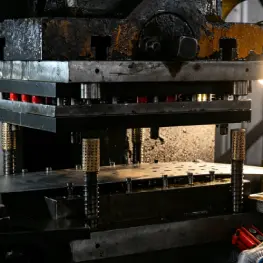
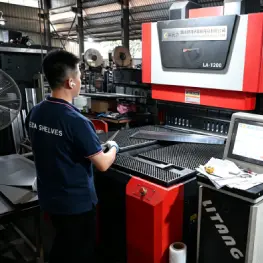
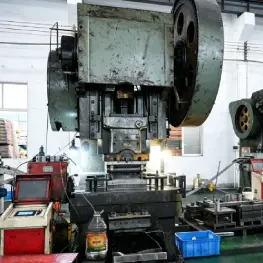
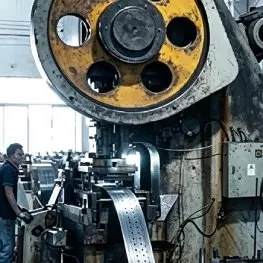
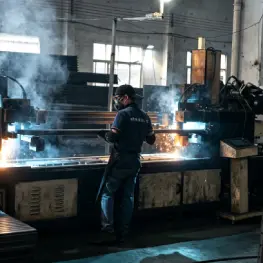
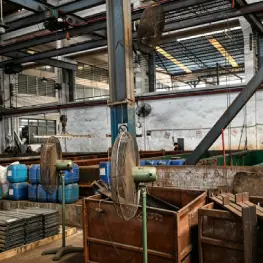
Spanning 30,000 square meters of specialized automated production area, our Guangzhou factory runs automated roll-forming lines, automated continuous laser-punching presses, and robotic welding stations delivering 30,000 tons of monthly capacity with guaranteed delivery lead times.
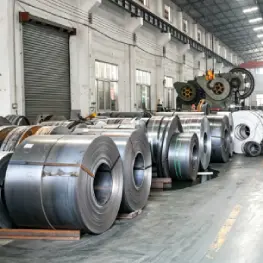
Chemical composition and yield-strength testing of Q235B coils.
Automated CNC shearing to accurate width and length tolerances.
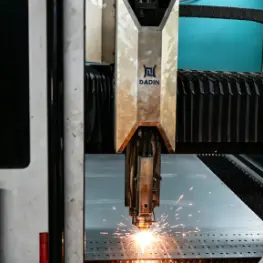
Ultra-precise 50mm / 75mm hole pitch punching for beam brackets.
Multi-roller progressive forming to avoid residual internal stress.
Continuous profiling of heavy box beams and Omega upright posts.
Removal of sharp burrs to safeguard operators and pallet loads.
Robotic dual-side fillet seam welding of high-strength beam end connectors.
Full 9-stage acid rust removal and passivation for coastal corrosion protection.
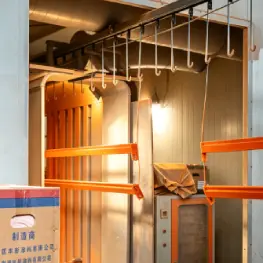
Automated powder application cured in 200°C tunnels for scratch resistance.
Full dimensional inspection, steel bundling, and containerization optimization.
Clear, engineering-backed answers addressing the most common technical, logistics, compliance, and structural design inquiries submitted by overseas buyers and industrial warehouse consultants.
Our heavy-duty industrial racking uprights, load beams, and bracing members are roll-formed exclusively from certified high-tensile Q235B and Q355B structural carbon steel, procured from premier state-owned mills including Baosteel and Shougang. Q235B provides an operational yield strength ($f_y$) of $\ge 235 \text{ MPa}$ and tensile strength between $370 - 500 \text{ MPa}$, closely comparable to ASTM A36 and European S235JR standards.
Every steel heat coil arrives with original Mill Test Certificates (MTC/MTR) validating chemical composition (carbon, manganese, phosphorus, and sulfur limits) and physical elongation metrics. On demand, we facilitate third-party metallurgical batch verification through international inspection bodies such as SGS, TÜV Rheinland, or Bureau Veritas before roll-forming commences.
Safe working load (SWL) limits are calculated using finite element analysis (FEA) models compliant with European standard EN 15512 and the American RMI (Rack Manufacturers Institute) Specification MH16.1. For industrial pallet rack beams under uniformly distributed loads (UDL), our engineering threshold restricts vertical deflection strictly to a maximum of $L/200$ (one two-hundredth of the clear beam span), and $L/250$ for automated AS/RS or cantilever platforms.
All structural calculations integrate safety factors ranging between 1.50 and 1.67 over elastic yield capacity, ensuring structural resistance against dynamic pallet drop impacts, accidental eccentric placements, and accidental forklift mast vibrations.
Untreated steel corrodes rapidly in maritime regions and monsoon climates (such as Chennai, Chattogram, Karachi, Colombo, and Southeast Asian ports). To prevent underfilm corrosion, all formed steel components pass through an automated 9-stage chemical pretreatment line incorporating alkaline degreasing, ultrasonic water washing, acid pickling rust-stripping, and nano-ceramic zirconizing/phosphating passivation.
After pretreatment, an electrostatic coating of automotive-grade epoxy-polyester hybrid powder is robotically applied at 65–85 $\mu$m dry film thickness and cured at 200°C. For severe chemical facilities, open-air port sheds, or wet meat processing rooms, we supply continuous hot-dip galvanized (HDG) steel components conforming to ISO 1461, delivering 80+ $\mu$m of sacrificial zinc protection capable of withstanding 25+ years of corrosive exposure.
To produce an engineered AutoCAD layout and price proposal within 24–48 hours, our technical team requires:
Sea freight rates are a major factor in the landed cost of imported steel. Our logistics engineering division models every shipment in 3D container stowage software before loading. Heavy upright frames are shipped in knocked-down (KD) configurations rather than fully welded frames, packing flat to multiply volume density by up to 300%.
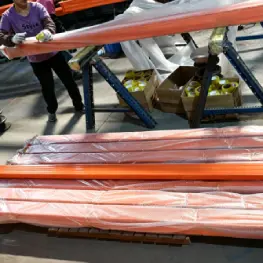
Beams are nested with custom corrugated interleaving and steel-banded on protective timber cradles. Accessories (row spacers, base plates, anchors, safety drop pins) fill internal hollow cavities. As a result, our export packing consistently hits 95%–98% cubic and weight limits in 40HQ containers, significantly reducing freight charges per pallet position.
Yes. Approximately 35% of our monthly factory output is produced for overseas racking brands, industrial distributors, and system integrators under OEM and ODM private label agreements. We can tool bespoke teardrop, hex-hole, or slotted upright profiles, provide customized beam end-connector press-dies, and match your brand's RAL color codes.
Private labeling includes screen-printed load warning plaques, stamped client part numbering on uprights, and client-branded packaging cartons and plastic wrap, backed by non-disclosure agreements (NDAs) to protect your regional market standing.
Every export consignment includes high-resolution assembly schematics, numbered component lists matching container manifests, and step-by-step video installation guides. This enables local mechanical contractors or in-house maintenance crews to erect the system without confusion.
For large-scale distribution centers (over 5,000 pallet positions) or complex multi-tier mezzanine projects, Guangzhou HEDA dispatches senior structural erection supervisors on-site to oversee plumbness alignment (within EN 15635 tolerances), anchor torque verification, and beam safety locking sign-offs.
In earthquake-prone territories (including New Zealand, Japan, Turkey, the Western United States, and the Himalayan belts), racking behaves as an unbraced or semi-braced flexible steel structure. Our engineering team utilizes response spectrum analysis to evaluate natural vibrational frequencies, base shear forces, and overturning moments.
We incorporate enlarged seismic baseplates, heavy duty chemical epoxy anchors, reinforced double-post upright column collars, and full back-to-back cross-aisle portal bracing towers to prevent harmonic rack resonance and pallet dislodgement during seismic shock waves.
Connect with our technical design team today. Provide your facility parameters, and our licensed racking engineers will deliver an optimized 2D CAD layout, 3D visualization, and comprehensive price breakdown within 24 hours.