Engineered Dynamic Flow & High-Density Racking Systems
Configured for high-throughput fulfillment centers, automotive staging bays, cold stores, and e-commerce picking lines requiring First-In-First-Out (FIFO) or high-density push-back selectivity.
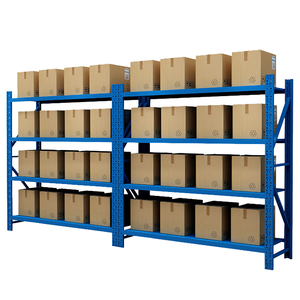
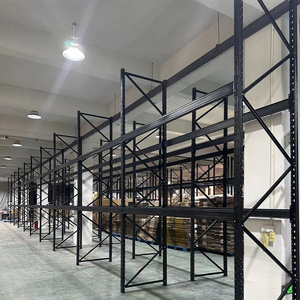
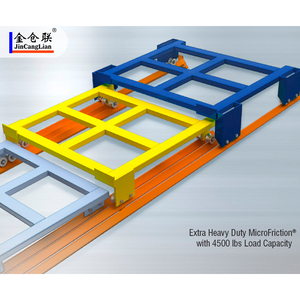
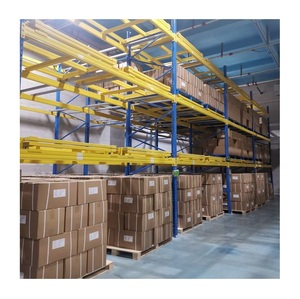
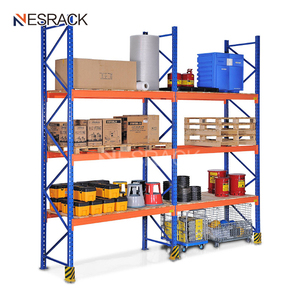
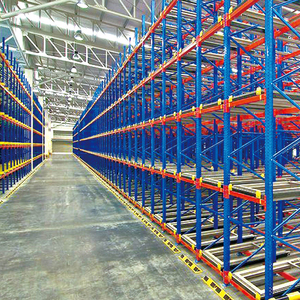
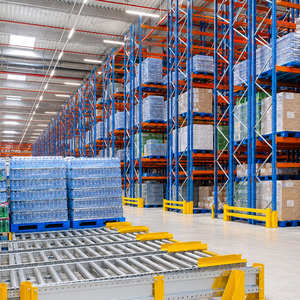
Mechanical Architecture of Gravity Flow Rack Picking
Flow rack picking systems—comprising carton flow beds, skate-wheel tracks, and heavy-duty pallet flow gravity lanes—represent the gold standard in split-case and unit-load order fulfillment. Discover how precision manufacturing directly impacts operational throughput.
Kinematic Track Geometry & Declination Angles
The functional heart of dynamic picking flow racks is the precise pitch calculation of the roller bed. Standard carton flow applications require an incline of 2.5° to 3.5° (approx. 4% to 6% grade), while heavy industrial totes or pallet gravity lanes demand 3.5° to 4.5°.
Top-tier Chinese manufacturers calibrate this via cold-rolled, heavy-gauge steel side channels integrated with high-density polyethylene (HDPE) or zinc-plated steel roller wheels. Misaligned pitch creates dangerous container hydroplaning or stalled product runs, severely bottlenecks picking lines.
- High-density polycarbonate rollers with dual-sealed bearings
- Adjustable front drop-stops to protect pickers during high velocity flow
- Custom steel separators to maintain dedicated multi-SKU product lanes
Replenishment & Picking Decoupling
In standard selective racking, replenishment and pick functions compete in the same aisle, driving forklift-pedestrian congestion and high hazard rates. Gravity flow racks physically separate these operations into opposite zones.
Loading personnel restock bins from the rear loading aisle, while picking staff access inventory uninterrupted from the front discharge face. This configuration slashes travel distances by up to 75%, accelerating pick rates from 60 units/hour to upwards of 250+ units/hour per operator.
- Eliminates forklift traffic in operator walking aisles
- Enforces true physical First-In-First-Out (FIFO) batch compliance
- Drastically minimizes operator fatigue via ergonomic tilt shelves
Centrifugal Speed Controllers & Safety Stops
When handling heavier loads such as beverage crates, engine subassemblies, or full pallets, uncontrolled gravitational acceleration presents severe workplace hazards. Leading Chinese suppliers integrate mechanical speed controllers within the track matrix.
Internal eddy-current or friction brake rollers engage progressively, maintaining descent speeds between 0.15 m/s and 0.3 m/s regardless of weight fluctuations. Front-mounted impact-damped end stops absorb terminal energy without warping plastic totes or denting products.
- Self-regulating internal centrifugal planetary gear retarders
- Reinforced heavy-duty front discharge trays with finger clearance
- Custom load capacities from 50 kg/level to over 3,000 kg/lane
Flow Rack Picking vs. Conventional Static Storage
Compare mechanical properties, picking throughput, space utilization, and total cost of ownership (TCO) benchmarks to inform warehouse engineering procurement decisions.
| Storage & Picking Architecture | Direct Pick Face Access | Floor Space Efficiency | Picking Throughput (Lines/Hr) | Inventory Discipline | Capital Investment Ratio |
|---|---|---|---|---|---|
| Carton Flow Picking Rack (Roller Bed) | 100% Pick Face | 75% Utilization (+40% vs Static) | 220 – 350 Units/Operator | Strict Physical FIFO | Moderate (Rapid 14-Mo ROI) |
| Heavy Pallet Gravity Flow (Rollers) | Lane Facing (First Pallet) | 85% Utilization (Deep-Lane) | High Forklift Velocity | Strict Physical FIFO | Upper-Mid (Brake-Roller Spec) |
| Push-Back Cart Racking (2–5 Deep) | Single Aisle Facing | 70% Utilization (No Rear Aisle) | Medium-High Forklift Turnover | LIFO (Batch Controlled) | Moderate (Spring-Free Carts) |
| Selective Static Pallet Racking | 100% Total Pallet Access | 40% – 50% Utilization (Aisle-Heavy) | 60 – 90 Units/Operator | Operator Dependent | Baseline Lowest Capital Cost |
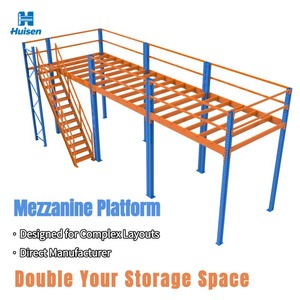
| Multi-Tier Pick Module / Mezzanine | Multi-Level Distributed Access | 150% – 250% (Vertical Cube Gain) | 450+ Integrated Split-Case | Hybrid FIFO/Dynamic | Engineered Strategic Asset |
Guangzhou Heda Shelves Co., Ltd. Production Scale
Delivering precision-formed steel racking, gravity flow beds, and industrial mezzanines since 2001. Certified under international structural and quality standards.
Emerging Technologies Shaping China Flow Rack Sourcing (2025–2035)
Global supply chains are moving past passive steel racking toward dynamic, automated, and intelligent order picking hardware. Here are the macro architectural shifts Chinese top-tier suppliers are integrating.
AMR & AGV-Fed Gravity Flow Interfaces
Autonomous Mobile Robots (AMRs) and Automated Guided Vehicles (AGVs) are replacing manual forklifts on replenishment aisles. Leading factories now pre-engineer flow racks with optical docking targets, magnetic guide brackets, and automated rear flap release mechanisms. This permits robotic roll containers to dock and discharge payloads directly onto flow beds with zero human intervention.
Integrated IoT Pick-to-Light (PTL) Track Channels
Rather than mounting external conduits that snag picking totes, next-generation carton flow beds feature roll-formed steel shelf profiles with integrated raceways for low-voltage busbars and fiber-optic PTL displays. Operators achieve pick speeds surpassing 400 lines/hour with zero documentation clutter, while digital displays relay real-time stock levels back to the warehouse management system (WMS).
High-Tensile Cold-Rolled Q355B Alloy Optimization
With shipping freights and raw material volatility impacting landed costs, Chinese suppliers are transitioning structural flow uprights from traditional Q235B to high-strength Q355B micro-alloyed steel. This metallurgical progression reduces structural self-weight by up to 18% while maintaining identical load deflection ratios (L/200), translating directly into lower ocean freight per pallet position.
10-Stage Anti-Corrosion Nanotech Pretreatment
High-humidity warehouses in Southeast Asia, coastal India, and cold-storage distribution hubs suffer premature paint delamination and oxidation. Tier-1 Chinese suppliers have replaced rudimentary solvent washing with a 10-stage automated pickling, silane nanotechnology phosphating, and electrostatic epoxy-polyester powder baking process, delivering salt-spray resistance exceeding 720 hours.
Modular Track Retaining & Toolless Reconfiguration
Rapid e-commerce SKU turnover requires frequent changes in lane widths. Modern flow systems utilize toolless snap-in roller tracks and drop-in lane dividers mounted on CNC-punched intermediate bed beams. Warehouse staff can adjust a 20-lane picking bay to 35 variable-width SKU channels in less than 20 minutes without drilling or unbolting structural frames.
Digital Twin CAD/BIM Layout Verification
B2B purchasers no longer accept static 2D drawings. Advanced suppliers now deliver full Building Information Modeling (BIM) files and dynamic CAD simulations before production. These digital twins model container deflections, seismic shear forces, fire sprinkler flow clearance through wire mesh decks, and picking ergonomics, guaranteeing flawless physical installation upon ocean delivery.
Frequently Asked Questions on Flow Rack Picking Sourcing
Detailed answers prepared by senior storage engineers to resolve technical, logistical, and commercial inquiries common among international project directors.
What is the standard declination angle for carton flow and pallet flow racks?
For carton flow racks handling plastic totes or rigid cardboard boxes, the typical incline is between 2.5° and 3.5° (approximately 4% to 6% slope). For heavy pallet flow systems carrying wooden or plastic pallets from 500 kg to 1,500 kg, the angle is calibrated between 3.0° and 4.0°. Incline angles must be tailored during CAD layout based on container base friction, load weight, and roller track diameter to ensure consistent flow without impact damage.
How do Chinese manufacturers guarantee quality and structural safety?
Established factories operate under ISO 9001:2015 quality control systems and engineer their profiles strictly compliant with European FEM 10.2.02 / EN 15512 racking codes, as well as American RMI standards. Structural steels (such as certified Q235B and Q355B) undergo spectrometer testing for tensile and yield strength, while all welded beam connectors and upright bases carry verified CE certification (e.g., CE 2435-CPR-8605159).
Can carton flow beds be retrofitted into existing selective pallet racks?
Yes. Leading Chinese suppliers produce universal bracket drop-in flow beds. These self-contained roller track assemblies fit directly onto standard step beams or box beams manufactured by Dexion, SSI Schaefer, Stow, Interlake, or standard Chinese teardrop/omega profiles. You do not need to replace your entire warehouse rack infrastructure to achieve high-density gravity picking.
How are heavy flow racking shipments packaged to prevent transit damage?
Precision roll-formed uprights and beams are bundled with protective corrugated interleaves, strapped with heavy-gauge PET banding, and wrapped in industrial moisture-barrier stretch film. Sensitive components like speed controller rollers, bearings, and track end-stops are packed inside reinforced export plywood crates (ISPM 15 compliant). Loading configurations are software-optimized for 40' High Cube containers to eliminate shifting at sea.
What documentation is required to begin a custom flow rack engineering layout?
To receive a verified CAD layout, load capacity calculation, and formal quotation, you should supply: (1) Warehouse architectural drawings indicating clear ceiling heights, column grids, and egress doors; (2) Dimensions, weights, and base materials of totes, cartons, or pallets; (3) Daily pick line turnover and number of distinct SKUs; and (4) Site seismic and slab compressive specifications. Free 3D designs are delivered within 24 hours.
How does HEDA Shelves support global on-site assembly and commissioning?
Every export shipment includes comprehensive 3D assembly manuals, exploded-view structural diagrams, and step-by-step video tutorials. All frames, beams, and track beds are stamped with CNC project part numbers matching the installation blueprints. For complex distribution hubs or multi-tier pick modules, experienced structural installation supervisors can be dispatched directly to your facility.
Why International Logistics Leaders Partner with HEDA Shelves
Established in 2001 in Guangzhou, China, Guangzhou Heda Shelves Co., Ltd. has evolved into an engineering powerhouse specializing in heavy-duty racking, mezzanine platforms, and dynamic flow picking architectures.
Full In-House Manufacturing Chain
From raw steel coil slitting, cold roll-forming, and automated CNC punching to robotic welding and automated powder coating, every stage is executed within our 30,000 m² facility with complete heat-lot traceability.
Certified Quality Management
Holding official CE Certification No. 2435-CPR-8605159, ISO 9001:2015 Certification No. 18624Q00169R0M (valid through 2027), and verified RoHS environmental compliance for all powder-coated components.
Complimentary Engineering & 3D Modeling
Our dedicated team of 300+ professionals includes 30+ senior structural engineers who provide customized CAD layouts, dynamic carton flow track simulations, and finite element analyses within 24 hours of inquiry.
Ready to Accelerate Your Warehouse Picking Operations?
Connect with HEDA Shelves engineers today for free CAD layouts, structural calculations, and factory-direct pricing for your next project.