High-Density Industrial Storage & Warehouse Shelving Systems
Every shelving framework is precision-manufactured from high-grade Q235B/Q355B cold-rolled steel, engineered to European CE standards, and validated through extensive structural FEA simulations.
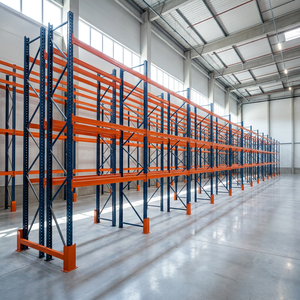
Heavy Duty Adjustable Selective Warehouse Storage Shelving Rack
- Payload Rating:1,000 - 4,500 kg/tier
- Pitch Adjustment:50mm / 75mm Stepped
- Certification:CE / ISO 9001:2015
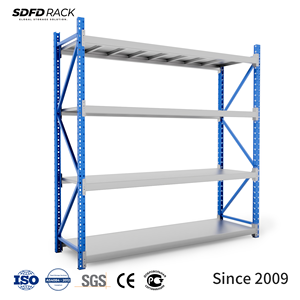
Custom 200kg-500kg Longspan Shelving & Pallet Racks
- Tier Capacities:200kg / 300kg / 500kg
- Application:E-Commerce Fulfillment
- Decking Option:Steel Panel / Wire Deck
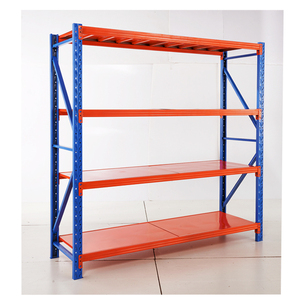
Adjustable Metal Boltless Shelf & Medium-Duty Racking
- Assembly Method:Keyhole / Rivet Interlock
- Surface:Thermo-Set Epoxy Coated
- Loading Class:150 - 400 kg/level
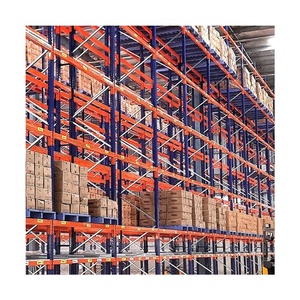
Industrial Metal Pallet Racking Warehouse Unit
- Upright Profile:90x65 / 100x70 / 120x95
- Beam Section:Box Beam / Step Beam
- Standard:FEM 10.2.02 / CE
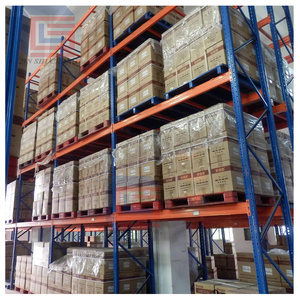
Heavy Duty Steel Pallet Rack for Distribution Hubs
- Clear Height:Configurable Up to 15m
- Access Efficiency:100% Individual SKU Pick
- Safety Factor:1.5 Static Yield Margin
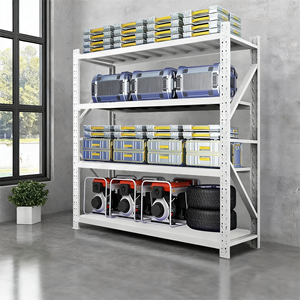
Modular Metal Stacking Shelves & Heavy Iron Racks
- Per Layer Capacity:300 kg - 500 kg
- Configuration:Multi-Tier Stackable
- Anti-Rust:Pickling Phosphatized
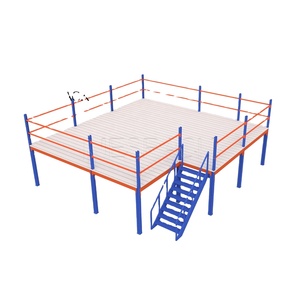
Structural Heavy Steel Mezzanine Platform & Shelving
- Platform Loading:300 - 1,000 kg/sqm
- Floor Deck:Checkered Steel / Grating
- Integration:Staircase & Safety Gates
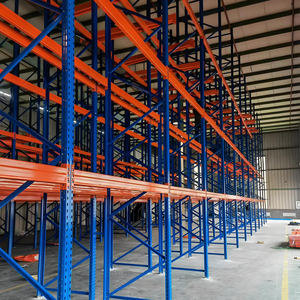
Turnkey 4,000kg Capacity Cold-Rolled Steel Shelving
- Bay Structural Load:Up to 12,000 kg Total
- Steel Specification:SS400 / Q235B Cold-Roll
- Export Assurance:Custom Export Packaging
Global Racking Fabrication & Engineering Pedigree Since 2001
Over two decades of precision cold roll forming, certified robotic welding, and automated surface chemical passivation. Delivering high-tolerance structural shelving to over 120 countries across five continents.
Verified Compliance: CE Certification (2435-CPR-8605159) & ISO 9001:2015
Structural safety in industrial warehouse shelving is an uncompromising science. HEDA Shelves operates under strict adherence to European racking standard EN 15512:2020 (Steel static storage systems - Specification of beam-and-upright pallet racking systems) and the American Rack Manufacturers Institute (RMI MH16.1) design mandates. Our production infrastructure maintains CE Certificate No. 2435-CPR-8605159 and ISO 9001:2015 Quality Management Accreditation No. 18624Q00169R0M (valid through June 2027), ensuring complete metallurgy traceability from the primary steel mill to the delivered container.
Unlike conventional metal workshops that utilize generic hot-rolled angle irons, our automated facilities deploy precision multi-stage cold-roll forming lines for upright column perforation, cold-formed box beams, and step-profile cross members. Each structural profile is cold-worked to induce strain hardening, which substantially raises the effective yield strength ($\sigma_y$) of structural carbon steel (Q235B and Q355B) from its base 235 MPa to upwards of 345–380 MPa without embrittlement.
10-Stage Standardized Industrial Manufacturing Protocol
How raw certified high-tensile steel strip is engineered into fault-free, high-capacity warehouse racking.
Spectro Mill Testing
Verification of carbon, silicon, and manganese chemistry per batch.Continuous Slitting
Micro-tolerance CNC coil slitting to exact section strip dimensions.High-Speed Punching
Full-cycle 75mm/50mm pitch CNC automated hole matrix punching.Multi-Pass Roll Forming
18 to 24 progressive roll passes for cold-induced work-hardening.Robotic Seam Welding
CO2/Argon shielded automatic seam welding of multi-claw connectors.Straightening & Sizing
Hydraulic multi-plane axial calibration eliminating torsion camber.Acid Descaling & Pickling
Complete removal of thermal mill scale and rust oxides in heated acid.Zinc Phosphating
Micro-crystalline chemical passivation layer for maximum paint bonding.Electrostatic Powder Coating
Swiss Gema automatic spray guns; 60–90µm thick epoxy polymer cured at 200°C.Palletized Export Bundling
High-tensile steel strap wrapping with bubble buffer packaging for sea transit.Structural Mechanics, Beam Deflection Limits & Seismic Design Formulations
A rigorous engineering overview for procurement directors, logistics consultants, and warehouse safety auditors.
Deflection Calculation ($L/200$)
Under European standard EN 15512, horizontal rack load beams must not exceed an elastic deflection of $\delta_{max} = L/200$ (where $L$ is the clear distance between column faces) under uniformly distributed load (UDL). In automated high-bay AS/RS systems with optical sensors, we design tighter tolerances of $L/300$ or $L/400$ to prevent picking head collisions and false optical trips.
Seismic Dynamic Resistance
Shelving frameworks act as semi-rigid unbraced frames in the down-aisle direction and truss-braced frames in the cross-aisle direction. Our structural engineers integrate seismic response spectrum analysis (Eurocode 8 / ASCE 7-22), calculating fundamental vibration periods ($T_1$), base shear forces, and rotational ductility factors ($R \ge 4.0$) with thickened anchor baseplates and M12/M16 chemical bolts.
Buckling & Second-Order Effects
Industrial upright columns undergo continuous compression and biaxial bending under full pallet loads. We model non-linear P-Delta ($P\text{-}\Delta$) sway effects and local torsional-flexural buckling using computerized Finite Element Analysis (FEA), ensuring an ultimate structural safety factor greater than 1.5 across all static and dynamic load loadouts.
Structural Engineering Matrix: Heavy-Duty Racking Profiles
| Profile Designation | Material Grade | Section Modulus ($Z_x$) | Ultimate Yield ($\sigma_y$) | Typical Bay Application | Design Code Compliance |
|---|---|---|---|---|---|
| UP-90x65x1.8 | Q235B Cold-Rolled | 14.82 cm³ | $\ge 235 \text{ MPa}$ | Medium Longspan / Standard Selective (up to 8,000 kg) | EN 15512 / ISO 9001 |
| UP-100x70x2.0 | Q235B / Q355B | 21.45 cm³ | $\ge 355 \text{ MPa}$ | Heavy Selective / Multi-Tier Mezzanine (up to 14,000 kg) | EN 15512 / CE 2435 |
| UP-120x95x2.5 | Q355B High-Tensile | 38.60 cm³ | $\ge 355 \text{ MPa}$ | VNA High-Bay & Drive-In Systems (up to 22,000 kg) | FEM 10.2.02 / RMI MH16.1 |
| BB-120x50x1.5 | Welded Box Interlock | 18.90 cm³ | $\ge 235 \text{ MPa}$ | Heavy Pallet Beams (2,000 kg / pair @ 2,700mm) | EN 15512 ($L/200$ verified) |
| BB-160x50x2.0 | Heavy Closed Box | 36.12 cm³ | $\ge 355 \text{ MPa}$ | Extra Heavy Beam Loads (4,500 kg / pair @ 3,300mm) | EN 15512 ($L/250$ verified) |
Future Trends in Global Warehouse Storage Procurement (2025–2030)
How automation integration, cold-chain expansion, carbon-neutral manufacturing, and structural reconfigurability are reshaping B2B capital equipment purchasing decisions.
1. Automation-Ready Hybrid Racks
Procurement heads are moving away from single-purpose static shelving. Capital investments today require hybrid frameworks capable of retrofitting autonomous mobile robots (AMRs), automatic guided vehicles (AGVs), and 4-way radio shuttle systems without full structural rebuilds.
2. Cryogenic Cold-Chain Density
With soaring energy costs in temperature-controlled pharmaceutical and frozen food storage (-25°C to -40°C), procurement demands high-density gravity flow and shuttle racking fabricated from high-impact toughness steel (Q355D/E) that resists low-temperature embrittlement.
3. Circular Economy & Modularity
Enterprise supply chain audits now heavily prioritize circular equipment lifecycles. Standardized boltless connection mechanisms, standardized pallet clearances, and multi-tier mezzanine conversion options maximize equipment residual value across changing leased facilities.
4. IoT Structural Health Monitoring
High-traffic multi-national logistics distribution centers are implementing real-time strain-gauge telemetry and wireless collision sensors on lower upright columns, automatically logging forklift impact velocity and alerting engineers before micro-fissures induce collapse.
Racking Engineering Transformation: From Heavy Iron to Precision Aerospace-Grade Robotics
The progression of material storage from primitive static angle irons to dynamically loaded, digital-twin simulated logistics machines.
Micro-Alloy Metallurgy & Weight Optimization
Historical warehouse racking relied heavily on oversized, high-thickness structural sections (hot-rolled I-beams and channels) to compensate for metallurgical inconsistencies. This bloated freight costs, slowed container offloading, and overloaded building concrete slabs.
Modern manufacturing applies micro-alloyed, continuous-cast high-strength low-alloy (HSLA) steels with niobium and vanadium trace additives. This metallurgical leap allows our cold roll-forming lines to reduce profile gauge while increasing overall torsional resistance by up to 32%, substantially cutting container shipping dead-weight and carbon freight penalties.
Digital Twin 3D Layouts & Dynamic Seismic Simulation
The obsolete method of rough manual 2D CAD drafting has been permanently superseded by integrated BIM (Building Information Modeling) and automated FEA solvers. Before a single steel coil is cut at HEDA Shelves, our structural design office simulates:
1. Full static loading iterations across irregular pallet weights.
2. Reach truck aisle clearance dynamics and cornering radii.
3. In-slab anchor stress distribution, concrete spalling margins, and dynamic spectral response curves matched precisely to the buyer's local municipal seismic zone codes.
Frequently Asked Questions: Global Industrial Shelving Procurement
In-depth answers addressing structural engineering, certifications, custom coatings, and international sea-freight logistics.
What is the engineering significance of CE Certification (EN 15512) for warehouse racking?
CE Certification under standard EN 15512 guarantees that the static storage system has been designed and load-tested according to rigorous European structural engineering limit-state methods. It mandates comprehensive verification of structural stiffness, member stability against torsional buckling, beam end-connector rotational stiffness, and structural baseplate anchor design. Racking lacking certified EN 15512 documentation often carries dangerous hidden safety margins and poses severe liability hazards during workplace safety inspections or commercial property insurance claims.
How do you calculate the permissible floor slab point load for heavy industrial racking?
Upright columns transfer massive concentrated point loads through baseplates directly to the warehouse concrete slab. A double-deep bay with 12,000 kg total payload distributes approximately 3,000 to 6,000 kg per column baseplate. Our engineering team calculates the required baseplate surface area ($A_{bp} = P / f_{c}$), minimum concrete slab compressive strength (typically C25/30 or 3,000–4,000 PSI), slab thickness (minimum 150mm–250mm reinforced), and subgrade reaction modulus ($k$) to prevent punch-through shear failure.
What powder coating chemistry is recommended for tropical or coastal humidity?
Standard indoor powder coatings will rapidly blister and delaminate when subjected to the high relative humidity and airborne salinity of maritime port hubs. For coastal warehouses (e.g., Chennai, Chattogram, Karachi, Colombo, Singapore), we deploy a multi-stage pre-treatment featuring hot acid pickling, zinc phosphating, followed by an electrostatic application of high-durability polyester/epoxy hybrid or pure polyester powder with a dry film thickness (DFT) of 80–110 microns, passing 500-hour ASTM B117 neutral salt spray testing. Hot-dip galvanization is also available for extreme environments.
What is the maximum container utilization efficiency for 40ft High Cube (40HQ) containers?
Industrial steel racking is bulky and dense. Standard packing frequently wastes up to 30% of container cube space, significantly inflating landed costs per pallet position. HEDA Shelves deploys custom nesting algorithms: upright frames are disassembled or nested into interlocking bundles with protective timber dunnage, while horizontal beams are inter-locked and banded with high-tensile steel strapping. This methodical loading achieves 95%+ cube utilization, fitting approximately 22–26 metric tons of certified racking per 40HQ container within maritime shipping gross-mass limits.
Can HEDA Shelves provide OEM/ODM custom upright punching pitches for legacy systems?
Yes. While standard international setups operate on 50mm, 75mm, or 76.2mm (3-inch) pitch centers, we maintain fully re-programmable CNC hydraulic roll-punching equipment. We routinely manufacture matching replacement uprights, teardrop configurations, or specialized slotted keyhole patterns for buyers expanding existing warehouse installations originally sourced from other European, American, or Asian racking brands.
What site documentation is required before dispatching a complete turnkey quotation?
To deliver an accurate, structurally validated CAD layout and price breakdown within 24 hours, our engineering design office requires: (1) Warehouse architectural CAD/PDF plan showing interior clear height, column grid offsets, and dock doors; (2) Pallet specifications including width, depth, overall height with load, and gross weight; (3) Existing forklift model, maximum lift height, and minimum aisle turning radius; and (4) Site seismic and environmental location conditions.
Accelerate Your Storage Efficiency with Certified Racking Engineering
Collaborate directly with HEDA Shelves' senior structural design engineers. Receive a comprehensive CAD floor plan, 3D structural rendering, static load calculations, and itemized factory-direct quotation tailored to your operational requirements within 24 hours.