High-Density Industrial Mezzanine Platforms & Racking Systems
Direct from our 30,000 m² automated production facility: custom structural platforms, cold-rolled steel rack-supported mezzanines, and high-bay distribution shelving built to rigorous international safety standards.
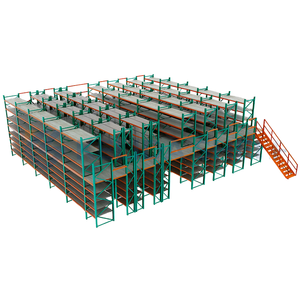
Industrial Mezzanine Racking for Warehouse Distribution Center Factory Logistics Storage
- Structure: Integrated Rack-Supported
- Floor Deck: Perforated Steel Plate
- Load Range: 300 – 800 kg/m²
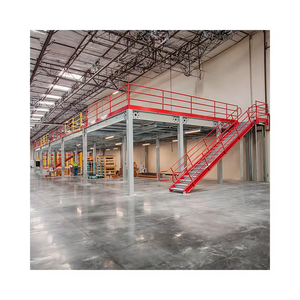
HUAWU 1000kg/sqm Industrial Mezzanine Floor Rack System Multi-layer Storage Platform Q235
- Steel Grade: Certified Q235B Cold-Rolled
- Live Load: Up to 1,000 kg/m²
- Levels: 2–4 Tier Customizable
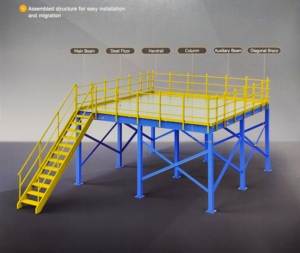
Nova Steel Customized Heavy-Duty Industrial Mezzanine Metal Floor Rack for Storage
- Profile: Heavy C/Omega Upright
- Staircase: Anti-Slip Diamond Tread
- Safety: Full Kickplate & Guardrails
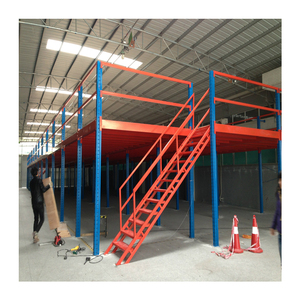
HUAWU 1000kg/sqm 2-Layer Mezzanine Floor System Electrostatic Powder Coated Platform
- Coating: Electrostatic Epoxy 80µm
- Pretreatment: Pickling & Phosphating
- Grid Span: Custom Column Bays
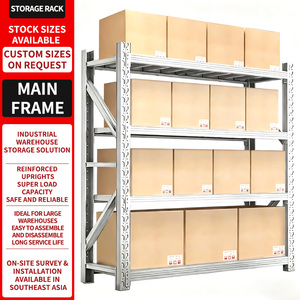
YueYang 300kg Per Layer Adjustable Cold Rolled Steel Heavy Duty Pallet Racking System
- Pitch Pitch: 50mm / 75mm Pitch Adjust
- Beam Connector: 3/4 Claw Riveted Safety Pin
- Standard: FEM 10.2.02 / CE Marked
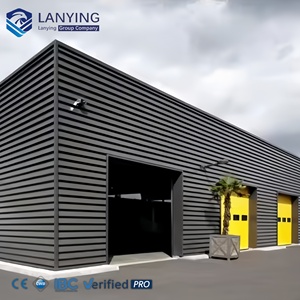
Prefabricated Steel Structure Logistics Warehouse Workshop Industrial Commercial Platform
- Main Frame: Welded H-Section Columns
- Secondary: Cold-Formed C/Z Purlins
- Seismic: Zone 3 / Zone 4 Engineered
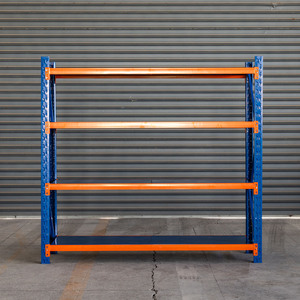
Industrial Adjustable High Performance Steel Medium Duty Shelving Long Span Racking
- Shelf Deck: Steel Deck / Wire Mesh / Wood
- Tier Rating: 300 – 800 kg Uniform Load
- Assembly: Boltless Fast Lock System
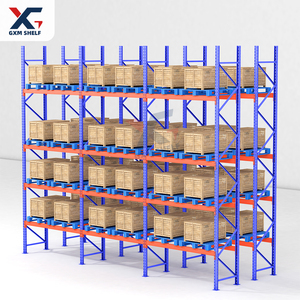
Heavy Duty Industrial Pallet Racking System Three-dimensional Optimal Stacking Solution
- Bay Load: Up to 5,000 kg / Beam Pair
- Frame Height: Up to 15 Meters Clear
- Forklift Class: Counterbalance, Reach, VNA
Product Recommendations & Structural Architecture: Choosing the Right Mezzanine System
Industrial storage facilities face relentless pressure to optimize vertical cubic space without escalating operational real estate footprints. When architecting an elevated logistics facility, enterprise procurement teams encounter two primary structural paths: Free-Standing Structural Steel Mezzanines and Rack-Supported Multi-Tier Mezzanine Systems. Understanding the fundamental mechanics, dead-load transfers, and floor utilization dynamics of each topology is essential for long-term operational viability.
1. Free-Standing Structural Steel Mezzanine Platforms (Wide-Bay Columns): Engineered utilizing heavy hot-rolled structural shapes (such as universal beams, H-sections, and square hollow columns), these platforms provide immense open floor clearances below. Spanning column bay distances from 4 meters to over 9 meters, they are ideal for integrating ground-level high-throughput workflows, automated sorting lines, or forklift transit channels while dedicating the upper deck to assembly, office pods, or dynamic parcel consolidation. Load capacities reliably span from 500 kg/m² up to 1,500 kg/m² with strict deflection control ($\le L/300$).
2. Rack-Supported Mezzanine Floor Systems (High-Density Pick Modules): Leveraging cold-rolled upright frames and horizontal box beams as the primary structural pillars, this design converts every structural column into high-capacity pallet storage or longspan bin locations. Rack-supported systems eliminate the duplicated expense of independent structural columns by utilizing the shelving system as the foundation. They represent the industry standard for apparel distribution, automotive spare parts, and pharmaceutical e-commerce order fulfillment centers requiring multi-tiered manual picking paths across 2, 3, or 4 levels.
Engineering Rule of Thumb: If your SKU profile consists of over 70% small-to-medium piece picking requiring direct hand access, a Rack-Supported Multi-Tier Mezzanine yields an ROI 35–45% faster than a structural platform due to eliminated steel redundancies. Conversely, if lower-level operations demand clear forklift transit or AGV navigational freedom, specify a Heavy-Duty Structural Steel Platform.
Technical Specification & Structural Sizing Matrix
The table below provides a verified comparative engineering summary for plant managers and facility planners evaluating mezzanine systems according to Eurocode 3 (EN 1993), EN 15512, and FEM 10.2.02 standards:
| System Classification | Primary Steel Grade | Standard Span (m) | Uniform Live Load ($q_k$) | Deflection Limit ($\delta$) | Floor Deck Options | Ideal Industry Application |
|---|---|---|---|---|---|---|
| Heavy Structural Mezzanine | Q355B / S355JR Hot-Rolled | 6.0m – 10.0m Bay | 500 – 1,500 kg/m² | $L / 350$ under full live load | B-Deck + Concrete / Solid Steel Plate | Heavy Machinery, Bulky Goods, AGV Transit |
| Rack-Supported Mezzanine | Q235B Cold-Formed High-Tensile | 1.8m – 3.3m Shelf Beam | 300 – 800 kg/m² | $L / 250$ to $L / 300$ | Perforated Steel Grate / 25mm Plywood | E-Commerce Picking, Garments, Auto Spares |
| Shelving Multi-Tier System | Q235B Cold-Rolled Strip | 0.9m – 2.0m Shelf Span | 150 – 400 kg/tier | $L / 200$ standard deflection | Slotted Steel Decking / MDF Deck | Pharmaceuticals, Electronics, Fasteners |
| Cantilever-Supported Floor | Q235B / Q355B Hybrid | 3.0m – 6.0m Arm Center | 500 – 1,000 kg/arm | $L / 300$ tip deflection | Steel Bar Grating / Heavy Timber | Pipes, Extrusions, Sheet Timber Storage |
Future Procurement Trends in Industrial Racking & Mezzanines (2025–2030)
The global intralogistics landscape is undergoing a structural paradigm shift driven by urban warehouse land scarcity, surging labor overheads, and the rapid deployment of autonomous warehouse technologies. As chief procurement officers (CPOs) and supply chain directors rethink capital expenditure strategies, several macro procurement trends have emerged as non-negotiable evaluation criteria:
1. Modular "Bolt-Together" Demountability
Leased warehouse contracts increasingly require turnkey reinstatement upon lease termination. Procurement specifications now decisively mandate 100% bolted structural connections—eliminating field welding entirely. Facilities invest in modular mezzanine designs that can be disassembled, reconfigured, or expanded into higher tier counts as SKU complexity escalates without destroying the structural asset value.
2. AMR & AGV Upper-Deck Compatibility
The introduction of Autonomous Mobile Robots (AMRs) onto mezzanine levels has revolutionized multi-tier picking. Forward-thinking procurement now specifies high-flatness flooring tolerances (DIN 18202 Group 4), high dynamic point-load tolerances (minimum 3.5 kN wheel load), and specialized textured epoxy or steel composite decking designed to prevent robotic traction slippage while dampening structural resonance.
3. Carbon Footprint & Steel Traceability
Corporate ESG directives are reshaping tender requirements. Leading international buyers require mills to present Environmental Product Declarations (EPDs) and verify prime steel sourcing. The integration of high-yield-strength cold-formed profiles (e.g., Q355B instead of conventional Q235B) reduces total structural tonnage by up to 18% while sustaining identical load thresholds, substantially slashing freight emissions and landed costs.
Furthermore, procurement strategies are pivoting away from fragmented regional trading intermediaries in favor of direct manufacturer partnerships. By establishing direct contracts with certified OEM factories equipped with in-house structural engineers, enterprise buyers eliminate margin stacking, secure transparent mill-test material documentation, and gain complete control over critical project delivery schedules.
Engineering Development Trends: Safety Standards, FEA Simulation & Coating Technologies
The engineering discipline governing industrial mezzanines and heavy racking systems has accelerated beyond conventional static calculation handbooks. As warehouse building clear heights expand from 9 meters to 14+ meters, structural stability requirements must satisfy rigorous dynamic criteria:
Finite Element Analysis (FEA) & Non-Linear Structural Sizing: Modern mezzanine design relies on full-scale 3D finite element simulation using advanced structural software (ANSYS, RFEM, and STAAD.Pro). Engineers must model non-linear second-order $P-\Delta$ (P-Delta) sway effects, connection rotational spring stiffness, and structural torsional buckling. Under EN 15512 (European standard for adjustable pallet racking) and EN 1090-1 Execution Class EXC2, cold-formed perforated uprights undergo physical prototype destructive testing to determine precise moment-rotation curves before digital modeling is signed off.
Seismic Engineering & Disaster Resilience (EN 16681 / ASCE 7): Mezzanines erected in seismically active geographic zones require ductile beam-to-column semi-rigid nodes and X-bracing shear walls capable of absorbing and dissipating kinetic ground accelerations. Base plates are engineered with heavy post-installed chemical anchor studs sized according to concrete shear cone breakout capacities (ACI 318 Annex D), guaranteeing that catastrophic progressive collapse is prevented during high-energy seismic disturbances.
Advanced Pretreatment & Duplex Surface Protection: Corrosion represents the single largest hidden failure mechanism for steel platforms deployed in tropical, coastal, or refrigerated environments. State-of-the-art manufacturing lines incorporate continuous 10-stage automated surface preparation featuring hot alkaline degreasing, ultrasonic rust removal, multi-stage rinsing, and nano-ceramic zirconium conversion coating. The subsequent electrostatic powder application deposits an 80–120µm thick cured thermoset polyester finish that delivers 1,000+ hours of continuous salt-spray resistance (ASTM B117), impervious to the scratching and chemical exposure common to forklift and pallet truck traffic.
Enterprise Advantages: Why Global Supply Chains Specify Our Manufacturing Facility
As a specialized manufacturer since 2001, Guangzhou Heda Shelves Co., Ltd. controls the complete supply chain loop—from raw steel coil slit-cutting to custom cold-roll forming, robotic automated welding, electrostatic coating, and precision export container packing. With an expansive 30,000 m² production facility operating 18 continuous roll-forming lines, we deliver enterprise-grade storage infrastructure tailored to specific floor configurations and throughput requirements.
Verifiable CE & ISO Compliance
Certified strictly under CE No. 2435-CPR-8605159, ISO 9001:2015 (Reg No. 18624Q00169R0M), and full RoHS heavy-metal-free compliance audits.
Complimentary 24h 3D CAD/FEA
Our senior engineering department prepares full architectural layout CAD schemes, 3D spatial renderings, and load stress calculation packets free of charge within 24 hours.
30,000 Ton Monthly Scale
Massive monthly steel throughput ensures priority raw material mill allocations, shielding enterprise procurement from steel market price volatility and lead-time delays.
Container-Optimized Logistics
Specialized bundled export racking packages engineered for maximum 40' High Cube container space utilization, minimizing ocean freight landed costs to any international sea port.
10-Stage Precision Manufacturing Workflow
Every structural upright, box-profile beam, and deck component passes through our certified ten-stage automated manufacturing lifecycle:
Prime Steel QC
Certified Q235B/Q355B coils tested for yield & tensile strength.
Laser & CNC Cut
High-speed laser slitting with sub-millimeter dimensional tolerances.
CNC Punching
Automated continuous pitch punching for beam connector adjustability.
Cold Bending
Precision press braking forming custom channel & angle profiles.
Profile Forming
Continuous multi-station roll-forming lines creating rigid uprights.
Surface Polishing
Edge deburring and shot blasting to remove burrs and mill scale.
Robotic Welding
Dual-station robotic pulse MIG welding of beam end connectors.
Pickle & Phosphating
Chemical bath immersion neutralizing rust and promoting paint bond.
Electrostatic Powder
Automated powder spray booths with 200°C convection curing ovens.
Final QA & Bundle
Cross-hatch adhesion check, dry-film thickness test, ocean packing.
Frequently Asked Questions: Technical Sizing, Certification & International Procurement
Plan Your Storage Expansion with Senior Racking Engineers
Share your warehouse CAD drawing, clear height parameters, and operational load requirements. Our technical design team will return a customized structural layout, 3D visualization model, and factory-direct price quotation within 24 hours.