ISO / CE Certified
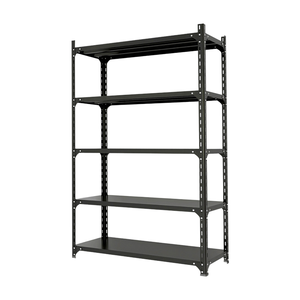
Explore our precision-formed, cold-rolled racking solutions designed for intense turnover, automated shuttle integration, and extreme vertical stacking.
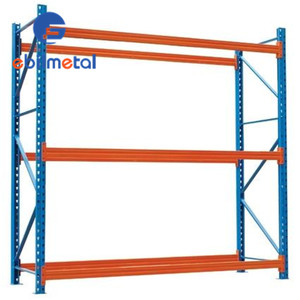
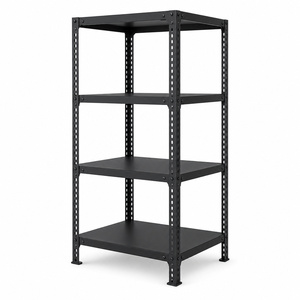
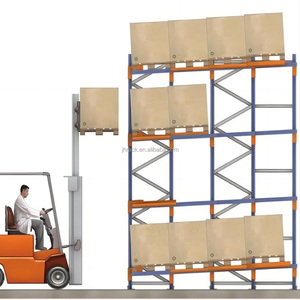
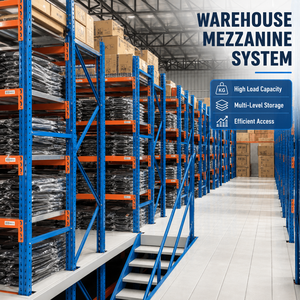
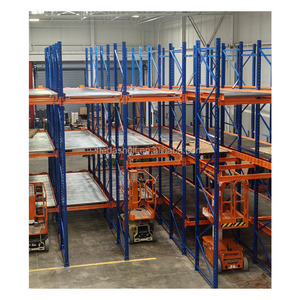
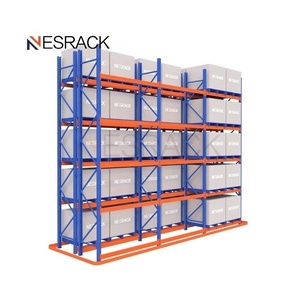
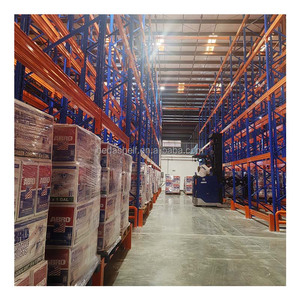
Modern supply chain infrastructures demand uncompromising structural integrity. In an era where automated warehouses exceed 12 meters in height and unit load weights scale upwards of 2,500 kg per pallet position, the designation of CE Certification (EN 15512:2020 / EN 15620) is more than a regulatory checkbox—it is an exacting mathematical proof of structural resilience. Standard steel shelving often exhibits dangerous lateral deflection, torsional buckling, and joint fatigue under continuous seismic micro-vibrations or reach-truck docking impacts. High-integrity stackable pallet racks resolve these mechanical vulnerabilities through precision engineering.
Our production protocols leverage certified high-yield structural steel coils (Q235B and Q355B grades), systematically audited using spectrometer tensile testing and Charpy V-notch impact assessments. Uprights undergo continuous automated roll-forming featuring 12 to 18 progressive cold-bending passes. This specialized cold-working significantly increases the yield point of the steel profile corners, producing high torsional rigidity without introducing brittle micro-fractures. In conjunction with robotically welded 3-claw or 4-claw connector plates, the beam-to-column connection forms a semi-rigid joint system that mitigates second-order rotational moments (P-Delta effects) under maximum rated volumetric capacity.
Every racking layout is modeled via 3D Finite Element Analysis (FEA), calculating node stress, base plate anchors, and torsional displacement tailored to regional ground acceleration spectrums and dynamic slab loads.
Prior to thermosetting powder coating, parts undergo an 8-stage automated pickling and silane-phosphating wash. This deep-cleans molecular scale grease, creating optimal chemical bonding against high coastal humidity.
Audited strictly under CE certificate No. 2435-CPR-8605159 and ISO 9001:2015. Raw steel heat numbers, roll alignment parameters, and coating dry-film thickness (60-80 microns) are 100% batch-documented.
Global supply chain disruptions and surging commercial land acquisition costs across South Asia, the Middle East, and Europe are fundamentally transforming how industrial space is procured. Procurement managers are shifting away from static racking purchases toward multi-dimensional architectural integration.
Three dominant procurement paradigms are defining the next decade:
Enterprises are migrating from horizontal expansion toward rack-supported mezzanines and Very Narrow Aisle (VNA) systems, doubling pallet density without incurring civil structural expansion or commercial property taxation penalties.
Pure human-forklift handling is being replaced by Radio Shuttle systems. Procurement specifications increasingly require pallet channels configured with guidance sensors compatible with both standard FLTs and Autonomous Mobile Robots (AMRs).
Environmental standards in modern logistics parks require low-VOC powder coatings and sustainable steel traceability. In cold stores and tropical humid zones, hot-dip galvanized components are specified to secure 20+ year zero-maintenance lifespans.
A premier global racking and warehouse mezzanine equipment manufacturer founded in 2001, providing total engineering traceability from coil slitting to multi-tier installation.
Answers to critical questions asked by logistics operators, project consultants, and enterprise procurement directors.
Every racking system is verified according to the European EN 15512 standard for steel static storage systems. Raw material heat tests, welding penetration inspections, and dynamic deflection ratios (beam deflection strictly ≤ L/200) are fully verified and certified prior to export.
To deliver an optimized free CAD solution, our engineers require warehouse floor plans showing column positions, building clear height under roof joists, floor slab concrete grade, pallet dimensions (W×D×H), unit load weight, and your forklift turning radius and mast reach.
We deploy two high-performance solutions: An industrial 8-stage pickling and phosphating pretreatment before applying electrostatic epoxy-polyester powder coating (exceeding ASTM salt spray benchmarks), or hot-dip galvanization for low-temperature sub-zero cold rooms.
Every export shipment is coded with standardized part labels keyed to component layout drawings. We supply comprehensive step-by-step engineering diagrams, dynamic 3D installation videos, and can dispatch seasoned HEDA engineers for direct on-site supervisory commissioning.