Industrial Racking & Dynamic Carton Flow Systems
Precision-fabricated utilizing high-tensile certified steel. Designed to eliminate bottlenecks in high-throughput fulfillment hubs, split-case picking modules, and automated material handling environments.
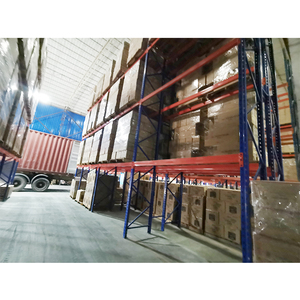
Custom Heavy Duty Shelving 3000Kg Layer Pallet Racking Warehouse Storage Metal Stacking Shelf Rack Unit
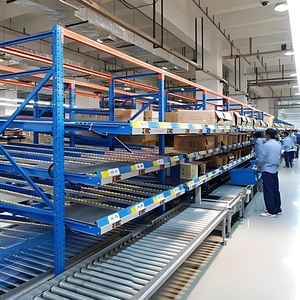
Factory Price Carton Flow Rack Adjustable Wheel Track Shelving for Warehouse Order Picking
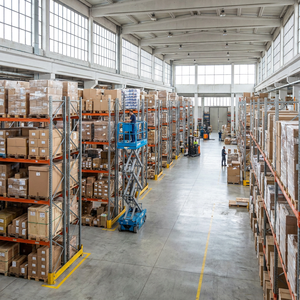
Warehouse Pallet Rack Factory Direct Supply Heavy Duty Steel Storage System Manufacturer
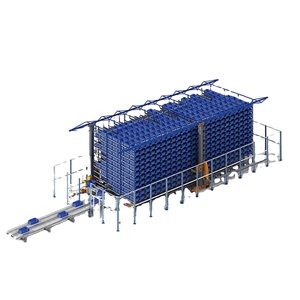
Automated Target Retrieval Racking System Pallet ASRS Warehouse Automated Storage Retrieval System
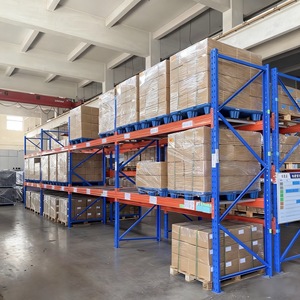
Heavy-Duty Iron Metal 5-Layer Adjustable Beam-Type Warehouse Rack Pallet Shuttle Racking Efficient Stacking
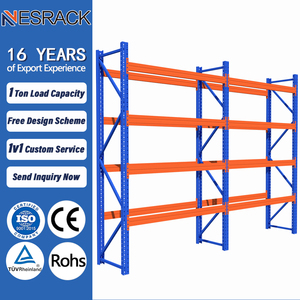
Heavy Duty Warehouse Shelving Industrial Steel Storage Rack With 5 Layers Racks for Warehouse Goods
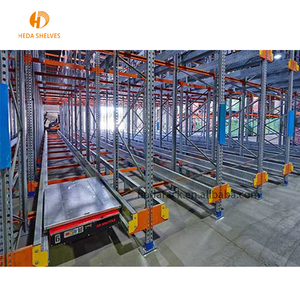
OEM High-Tech Radio Shuttle Pallet Rack Industrial Steel Automatic Warehouse Racking System For Storage
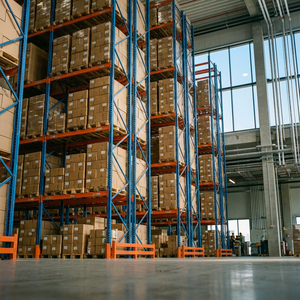
Multi Level Heavy Duty Shelf Multi Layer Shelf Garage Stacking Shelf Warehouse Storage Rack
Engineering Principles of Dynamic Carton Flow Racks
Carton flow systems, often termed "live storage," represent the pinnacle of high-velocity manual case and split-case order picking. Unlike static wide-span shelving where replenishment and picking compete in the same aisle, carton flow establishes separated operational interfaces.
A true industrial-grade carton flow installation operates on gravitational dynamics, utilizing precise pitch gradients typically calibrated between 2.5% and 5.0% (approximately 1.5° to 3.0° inclination), governed by the carton base material characteristics, weight distribution, and ambient temperature. Our engineering department implements cold-rolled structural steel beds fitted with high-durability thermoplastic rollers or heavy-gauge galvanized steel wheel tracks. By separating the stocking lane (loading face at the rear) from the order extraction lane (picking face at the front), cross-aisle traffic interference is completely eliminated, yielding an immediate 30% to 50% reduction in operator travel time.
Critical Mechanical Parameter: Dynamic Rolling Resistance & Incline Calibration
The standard formula for slope optimization is expressed as: θ = arctan(μk + Finertia / W), where μk represents the kinetic rolling friction coefficient (0.025 to 0.045 for hard plastic totes; 0.050 to 0.085 for corrugated fiberboard under seasonal humidity). Systems engineered by Guangzhou Heda Shelves Co., Ltd. incorporate adjustable bracket assemblies, allowing micro-step angle modifications without requiring structural disassembly.
Furthermore, carton flow racks are engineered with dedicated full-length lane dividers that maintain neat SKU separation along the entire gradient length. At the picking face, high-strength structural drop stops and pick trays absorb continuous dynamic impact from descending cartons, protecting warehouse operators from repetitive-stress hazards and preventing product spillage onto picking concourses.
Mechanical Performance & Material Specification Comparison
| Component Element | HEDA Standard Specification | Generic Market Alternative | Engineering Benefit |
|---|---|---|---|
| Structural Frame Steel | Certified Q235B / Q355B Cold-Formed Steel | Recycled Low-Grade Commercial Scrap | High elastic limit; resists deformation under seismic micro-strain |
| Roller Track Profiles | Galvanized C-Section or Hardened Extruded Aluminum | Thin-gauge (0.8mm) folded tin sheet | Zero deflection across 2,500mm free spans; rust immune |
| Roller Assembly & Axles | High-impact ABS / Polycarbonate with Solid Steel Pins | Hollow rivet pins with unreinforced polyethylene | 25 kg wheel load rating; resistant to cracking down to -30°C |
| Surface Pretreatment | 10-Stage Acid Pickling, Phosphating & Electrostatic Powder | Single-stage flash dip paint with low adhesion | Complies with ASTM salt-spray durability > 500 hours |
| Structural Norms | CE Certified (2435-CPR-8605159), EN 15512:2020 | No third-party certified structural calculations | Fully auditable for high-risk industrial safety compliance |
Why Global Logistics Engineers Specify HEDA Shelves
Established in 2001, Guangzhou Heda Shelves Co., Ltd. has developed into an internationally certified powerhouse in heavy-duty racking, automated carton flow engineering, and mezzanine logistics systems.
30,000 m² Mega Plant
Equipped with automated continuous roll-forming production lines, precision CNC punching cells, and automated robotic welding gantries delivering 30,000 metric tons monthly.
CE & ISO 9001 Certified
Audited quality assurance under CE Certificate No. 2435-CPR-8605159 and ISO 9001:2015 registration No. 18624Q00169R0M, guaranteeing strict compliance with European safety standards.
Exported to 120+ Countries
Global project execution experience spanning South Asia, Europe, the Americas, and the Middle East, with containerized export packing optimized for maritime humidity resistance.
Free 3D & CAD Layouts
In-house structural engineering teams provide comprehensive finite element calculations, static rack load maps, and 3D architectural CAD layouts within 24 hours of brief delivery.
Proprietary 10-Stage Precision Manufacturing Workflow
Every beam, upright column, and carton flow wheel rail undergoes rigorous metallurgical and dimensional control to prevent deformation during severe operational duty cycles.
Spectrometric verification of Q235B/Q355B coils for chemical purity and tensile yield.
High-speed strip slitting with edge conditioning to eliminate micro-burrs and stress cracks.
High-tonnage progressive die punching maintaining ±0.1mm column pitch tolerance.
Multi-station cold roll-forming lines creating rigid closed omega and box beam sections.
Flying shear cutting guaranteeing dead-square beam connector fits and square column uprights.
Multi-axis robotic carbon dioxide shielded welding for deep penetration beam connector lugs.
Automated shot-blasting and mechanical surface finishing to remove scale and oxidation.
Chemical immersion bath ensuring deep micro-etching for superior powder polymer cross-linking.
Thermoset epoxy polyester coating cured at 200°C for high impact and scratch resilience.
Full batch deflection audit, bundle strapping, and marine-grade protective wrapping.
Future Procurement & Technology Trends in Dynamic Racking
Global supply chain pressures are fundamentally transforming order picking architecture. The intersection of labor availability challenges and micro-fulfillment demand has triggered four major technological migrations.
AMR-to-Flow Rack Automated Interfaces
Modern distribution centers are rapidly phasing out pure manual replenishment. Forward-thinking procurement contracts now specify flow rack rear loading apertures designed for Autonomous Mobile Robot (AMR) and AGV roller drop-off decks.
- Optical alignment targets on frame beds
- Low-impact guided mechanical funnels
- High-rigidity front impact dampers
Pick-to-Light (PTL) & IoT Dynamic Tracking
Carton flow racks are transitioning from passive steel gravity frames to cyber-physical warehousing nodes. Factory-integrated cable management and front-beam click-in raceways allow direct installation of pick-to-light LED arrays and optical sensors.
- Real-time stock-out optical detection
- Zero-wiring snap-on busbar channels
- 99.98% pick accuracy fulfillment integration
Decarbonized Steel & Cold-Room Polymers
Corporate ESG directives are reshaping racking tender documents. Procurement directors are demanding audited Environmental Product Declarations (EPD), low-carbon electric arc furnace (EAF) steel, and non-embrittling thermoplastic rollers.
- RoHS compliant powder coatings
- Cold-chain operational guarantee to -30°C
- 100% recyclable structural steel scrap credit
Frequently Asked Questions for Project Procurement
Essential technical and compliance inquiries addressed by our senior structural engineers to assist procurement heads, project managers, and 3PL facility planners.
Q1 How is track gradient determined for mixed corrugated cartons versus rigid plastic totes?
Rigid plastic tote containers possess uniform baseline deflection and hard contact points, requiring a modest gradient of 2.0% to 2.5% (approx. 1.2° to 1.5°). In contrast, corrugated cardboard cartons exhibit higher friction coefficients due to bottom-panel sagging under humidity and load weight. We recommend a 3.5% to 4.5% gradient for cardboard boxes, supplemented by high-density roller bed tracks with 28mm or 38mm wheel spacing to distribute contact pressure and eliminate indentation friction.
Q2 What European structural standards govern HEDA CE-certified racking products?
Our racking systems are fully calculated and fabricated in adherence to EN 15512:2020 (Steel static storage systems - Specification of beam-type racking), EN 15620 (Tolerances, deformations and clearances), and the Construction Products Regulation CPR 305/2011/EU under CE certificate registration 2435-CPR-8605159. Structural integrity certificates and load test calculation documentation are supplied for every bespoke project layout.
Q3 Can standard selective pallet racking bays be retrofitted into dynamic carton flow lanes?
Yes. Our modular carton flow beds are engineered with universal bracket hooks that secure directly onto standard roll-formed step beams or box beams. Warehouse operators can preserve their existing heavy-duty pallet framework while converting lower tiers into high-velocity split-case picking tunnels, leaving upper levels intact for reserve pallet staging.
Q4 How does the factory protect structural steel from rust in coastal or extreme monsoon humidity?
All raw steel components undergo an intensive chemical pretreatment including acid pickling to strip mill scale, followed by iron phosphating to build an anti-corrosion barrier. Finally, an electrostatic epoxy-polyester architectural powder coating (60–80 microns) is baked onto the steel. For harsh environments, hot-dip galvanized uprights and pre-galvanized roller track assemblies can be specified at the engineering stage.
Q5 What load capacities are supported per carton flow shelf level?
Our standard light-duty tracks support 50 kg to 150 kg per linear meter, while heavy-duty reinforced aluminum and steel wheel tracks can carry up to 500 kg per square meter of shelf bed area. Individual polycarbonate rollers are rated at 15 kg to 25 kg dynamic load per wheel. Custom reinforced channel profiles are available for automotive dies, liquid chemical containers, and dense casting components.
Q6 What engineering drawings and site data are required to receive a formal 3D layout proposal?
To produce an optimized CAD proposal, our engineering team requires: (1) Warehouse architectural drawings indicating clear ceiling heights, column grids, and egress doors; (2) Carton or container external dimensions (L x W x H) and weight ranges; (3) Number of distinct SKUs and desired buffer depth per lane; (4) Floor slab thickness and concrete compressive strength (e.g., C20/25 or C30/37).
Request an Engineered Layout & Factory-Direct Quotation
Collaborate directly with Guangzhou Heda Shelves structural engineers. We provide comprehensive warehouse space calculations, FEA load analysis, and free 3D CAD schematics optimized for your specific SKU velocity profile.
Direct communication with senior warehouse racking engineers. 24-hour turnaround on technical proposals.