Engineered Industrial Storage Systems & Warehouse Equipment
Explore our flagship heavy-duty pallet systems, high-density automated shuttle lanes, and versatile industrial storage assemblies manufactured under strict CE and ISO 9001:2015 execution controls.
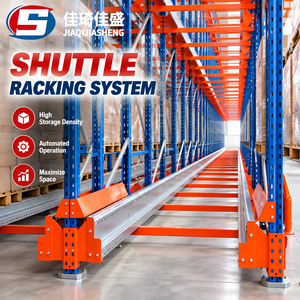
OEM ODM Custom Pallet Lane Design Space Maximizing Intelligent Shuttle Rack
View Specifications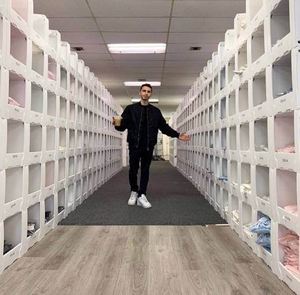
Foldable Corflute Correx PP Corrugated Plastic Stacking Warehouse Storage Bins
View Specifications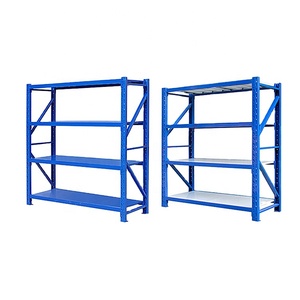
Light Duty Long Span Warehouse Shelving Shelf Storage System
View Specifications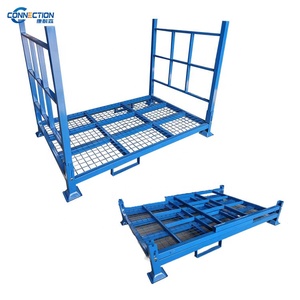
High Loading Capacity Steel Wire Mesh Pallet Foldable Stacking Tire Rack
View Specifications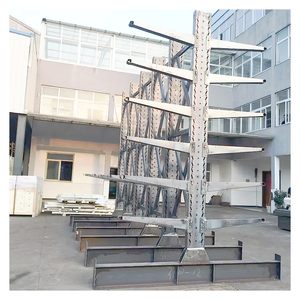
Heavy Duty Warehouse Storage Cantilever Racking Systems for Pipe & Timber
View Specifications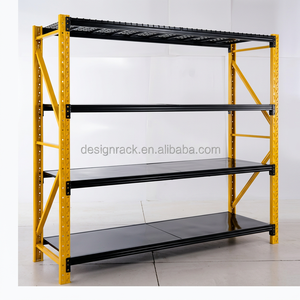
Mobile Wide Span Storage Racks for Building Materials & Hardware Tool Shelf
View Specifications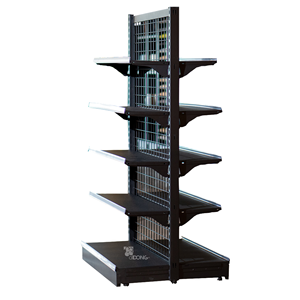
Custom Double-Sided Vertical Metal Supermarket Shelf Gondola Shelving
View Specifications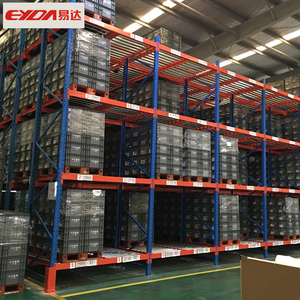
Guangzhou Factory Heavy Duty Pallet Gravity Flow Roller Rack System
View SpecificationsCE Certified Limit State Design & Structural Safety Criteria
A technical treatise on cold-formed steel racking design compliance under European Norms EN 15512:2020, EN 15620, and the Construction Products Regulation (CPR 305/2011/EU).
Industrial pallet storage racking is not mere commodity steel shelving; it is a complex, slender, unbraced or partially-braced civil engineering structure subjected to intense dynamic live loads, material handling vehicle impacts, and localized torsional stresses. In Europe and globally compliant markets, the baseline regulatory requirement for structural integrity is defined by the harmonized European Standard EN 15512:2020 (Steel static storage systems - Adjustable pallet racking systems - Principles for structural design) alongside EN 1090-1 Execution Class 2 (EXC2) under the CE marking framework.
Our manufacturing processes utilize certified hot-rolled and cold-formed coil steels—primarily high-yield structural grades Q235B, Q355B (equivalent to S235JR and S355JR according to EN 10025). Upright frames are roll-formed into complex, multi-bend omega profiles that substantially elevate the sectional modulus ($W_x, W_y$) while minimizing the total deadweight of the structure. The perforations along the column face, optimized at 50mm or 75mm pitches, undergo rigorous non-linear Finite Element Analysis (FEA) and stub column testing to evaluate the effective net section area ($A_{eff}$) under severe axial compression and torsional buckling.
A critical engineering parameter frequently compromised by low-tier fabricators is the rotational stiffness ($C_d$) of the beam-to-column connector. The connection assembly between the cold-formed box beam and the vertical upright must provide an exact degree of semi-rigidity. Under EN 15512, physical testing regimens—including dynamic cyclic bending tests and shear reverse loading—are conducted to generate moment-rotation curves. These empirical values are directly integrated into frame design matrices to confirm that connection deflection limits do not induce premature plastic hinge failure.
Beam deflection under maximal operational safe working load (SWL) is held to an ultra-conservative ceiling of $\delta \le L/200$ (span length divided by 200), far exceeding minimal market tolerances. This structural stiffness prevents accidental load dislodgement, reduces dynamic harmonic vibration during automated reach-truck retrievals, and protects the welded end-connector tongues from excessive shear strain. Base plates and chemical anchor studs are sized according to slab shear punching resistance ($V_{Rd,c}$) based on the client's concrete compressive strength (minimum C20/25 to C30/37).
| Racking Archetype | Pallet Accessibility | Space Utilization | Stock Rotation | Floor Footprint Optimization | Ideal Industry Application |
|---|---|---|---|---|---|
| Selective Pallet Racks | 100% Direct Access | 60% – 65% | FIFO / LIFO | Aisle widths: 2.8m – 3.5m | High SKU divergence, 3PL FMCG Logistics |
| Radio Shuttle System | Lane-Dependent | 85% – 90% | FIFO & LIFO Automated | Aisle widths: Reduced to transfer bays | Cold Storage (-30°C), Beverage, High Volume |
| Pallet Gravity Flow | Dedicated Face | 80% – 85% | Strict FIFO (Gravity) | Continuous roller-bed lanes | Perishable Goods, Dairy, Active Expiry SKUs |
| Drive-In / Drive-Through | Deep Channel Access | 75% – 80% | Strict LIFO (Drive-In) | Dense multi-level guide rails | Seasonal agricultural bulk, raw commodity storage |
| Heavy Duty Cantilever | 100% Clear Frontage | 70% – 80% | Direct Unobstructed | Adjustable arm pitch, zero front column | Steel pipes, extrusions, timber packs, sheet goods |
Industrial Storage Racking & Warehouse Procurement Trends
Analysis of emerging regulatory frameworks, material science shifts, automation convergence, and decarbonization strategies shaping modern warehouse supply chains over the coming decade.
Convergence with Autonomous Mobile Robots (AMRs)
Modern warehouse engineering is transitioning away from manual counterbalance forklifts toward hybrid automated operations. Future racking must integrate sub-millimeter beam leveling tolerances, floor-guide laser integration, and rack-supported mezzanines engineered with high-friction flat steel floor panels to facilitate high-speed AMR and AGV fleet navigation.
Embodied Carbon & Environmental Product Declarations (EPD)
Global Tier-1 logistics developers and institutional real estate investment trusts (REITs) now enforce stringent ESG procurement mandates. Industrial rack fabrication is shifting toward certified green steel sourced via electric arc furnaces (EAF), accompanied by verified Life Cycle Assessment (LCA) documentation and recyclable thermoplastic dry powder finishing.
Dynamic Cold Chain & Cryogenic Steel Performance
With pharmaceuticals and perishable supply chains escalating cold-store investments, racking metallurgy must resist low-temperature embrittlement. Certified sub-zero high-density radio shuttle racks rely on fine-grained silicon-killed steels capable of maintaining Charpy V-notch impact toughness values of $\ge 27\text{ Joules at } -30^\circ\text{C}$ (EN 10025-2).
Seismic Resilience & Dynamic Base-Isolation Systems
Seismic zoning revisions globally necessitate higher safety factors in rack foundation design. Advanced engineering specs integrate hysteretic base-isolation plates and cross-aisle vertical diagonal bracing patterns compliant with FEM 10.2.08 and Eurocode 8, dramatically diminishing pallet toppling probabilities during ground acceleration events.
Modular Brownfield Retrofitting & Mezzanine Expansion
High industrial land costs discourage greenfield development. Plant managers increasingly expand vertically within existing building envelopes by installing multi-tier rack-supported platforms (300 to 1,000 kg/m² capacities), tripling pick-face densities without requiring municipal structural permits for external civil work.
Predictive Structural Health Monitoring & IoT Sensoring
The rise of digital twins in intralogistics has birthed sensorized upright protection. Embedded low-power strain gauges and 3-axis MEMS impact sensors installed on critical corridor uprights automatically signal maintenance crews via telemetry if forklift collisions exceed plastic deformation thresholds.
Why Tier-1 Global Procurement Teams Partner with Our Factory
Since 2001, Guangzhou Heda Shelves Co., Ltd. has stood at the intersection of heavy industrial fabrication and precision warehouse systems engineering, delivering fully compliant storage solutions across more than 120 countries.
Complete In-House Manufacturing
We eliminate sub-tier supply risk. From direct mill raw coil slitting, multi-stand CNC roll-forming, robotic MIG welding, through automated powder application lines, every single component is manufactured and stamped under our roof.
Compliant Verifiable Certifications
Maintain complete audit security. Our products and factory hold legitimate, registered certifications including CE Certificate No. 2435-CPR-8605159, ISO 9001:2015 No. 18624Q00169R0M, and comprehensive EU RoHS environmental verifications.
Free Engineering CAD & 3D Modeling
Prior to commercial quotation, our senior structural engineers develop complete warehouse layout proposals, clear aisle calculations, reach forklift compatibility analyses, and 3D visual renderings without preliminary design fees.
10-Stage Precision Fabrication
Every beam connector and frame passes through our certified 10-step protocol: coil inspection, precision shear cutting, CNC punching, cold bending, continuous roll-forming, edge deburring, robotic weld joining, pickling/phosphating, electrostatic coat, and load QC.
Export Packing & Ocean Freight Density
Container packing is optimized via digital staging algorithms. Uprights, box beams, and wire decks are bundled with custom timber cradles and high-tensile steel straps to guarantee 98%+ 40HQ container cube utilization with zero transit abrasion.
Turnkey Global Erection Support
Every overseas shipment is matched with color-coded part markings, comprehensive 2D erection schematics, exploded view anchor maps, step-by-step video procedures, and optional on-site engineering supervision to ensure flawless installation compliance.
Frequently Asked Questions in Heavy Industrial Racking Procurement
Authoritative technical answers to common engineering, structural compliance, custom fabrication, and international freight inquiries posed by warehouse operators and supply chain executives.