High Density Racking Systems & Heavy Duty Storage Configurations
Engineered for high-throughput distribution hubs, manufacturing warehouses, cold-chain environments, and automated intralogistics terminals. Factory-direct supply meeting European CE structural mandates.
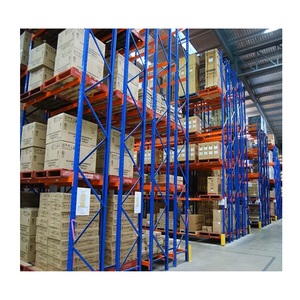 Heavy Duty
Powder Coated Steel Heavy Duty Industrial Racks Warehouse Racking Storage Shelf Shelving Units Pallet Rack System
Heavy duty teardrop and European-profile pallet rack system manufactured with premium cold-rolled Q235B steel. Designed for adjustable 75mm/50mm pitch beam connections and maximum beam rigidity.
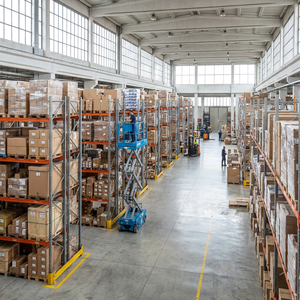 High Density
 Pallet Storage Rack System Heavy Duty Warehouse Racking Equipment
Space-maximizing structural racking tailored for bulk storage facilities. Minimizes service operating aisles while elevating volumetric capacity by 65% over traditional selective racking layouts.
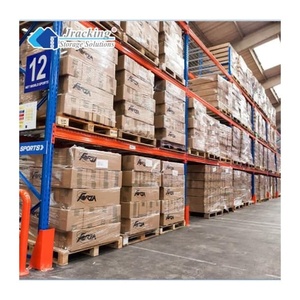 CE Certified
Jracking EURO Standard Steel Warehouse Shelves Storage Racks CE Certified Heavy Duty Pallet Racking System For Industrial Use
Strictly verified according to European standard EN 15512 specifications. Features high-tensile column sections and precision-punched hooks for uncompromising structural load distribution.
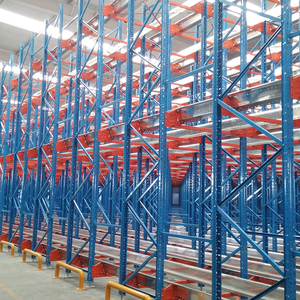 Semi-Automated
High Density Warehouse Automatic Radio Shuttle Rack Shelves Storage Racks Heavy Duty Pallet Racking Radio Shuttle Racking System
Dynamic deep-lane pallet storage using intelligent shuttle carts. Supports dual FIFO and LIFO dispatching paradigms without forklift entry into structural channels, reducing collision hazards.
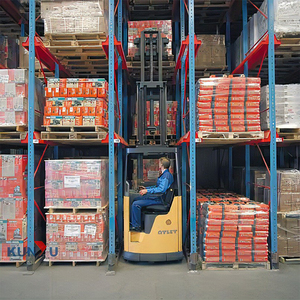 Continuous Lane
China Factory Heavy Duty Drive-in Storage Racking System Warehouse Industrial Steel Drive-in Pallet Rack Shelves of High Density
Engineered for large-volume, low-SKU inventory. Features continuous pallet support rails stamped from high-strength galvanized steel coils to withstand repeated operational forklift docking.
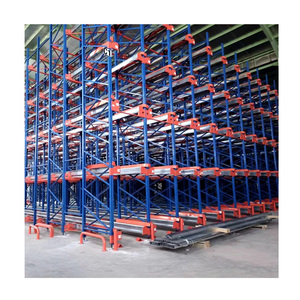 Intelligent Shuttle
Adjustable High-Speed Storage Racks Shelving Systems Pallet Car Auto Shuttle Racking System For Warehouse
High-speed automatic shuttle vehicle integration running on custom cold-formed tracks. Delivers linear transit speeds of up to 1.2 m/s under load, maximizing turnaround in rapid distribution centers.
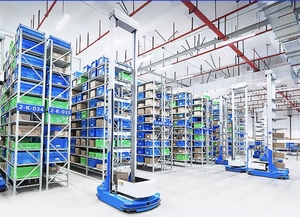 AGV / AMR Ready
Automatic Warehouse Storage Rack For AGV Bin Robot Industrial Logistics Shelving System High Density Tote Rack Shelving Unit
Next-generation micro-fulfillment and tote handling framework. Engineered with tight dimensional tolerances (±1.0mm) to guarantee seamless interaction with autonomous mobile robots and AMR bin pickers.
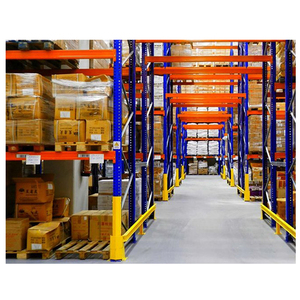 Boltless Modular
Heavy Duty Boltless Steel Pallet Rack System Industrial Warehouse Storage Shelves Metallic Heavy Duty Industrial Shelving
Fast-assembly interlocking shelving modules engineered for heavy manual fulfillment, picking levels, and mezzanine sub-structures. Eliminates bolting hardware while preserving structural rigidity.
Guangzhou HEDA Shelves: Direct Factory R&D & Structural Engineering
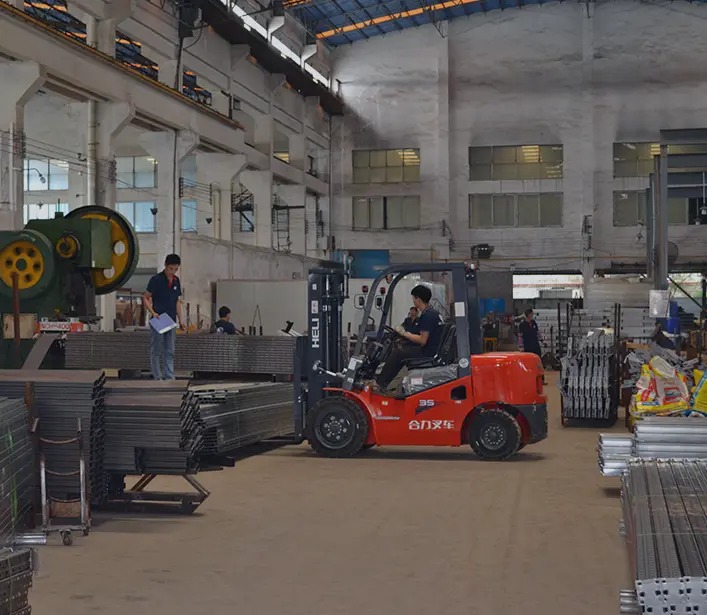
For more than two decades, Guangzhou Heda Shelves Co., Ltd. has stood at the forefront of structural industrial rack engineering. We own and control the entire manufacturing lifecycle across our dedicated 30,000 m² production complex.
Unlike trading intermediaries, every upright frame, roll-formed box beam, guide rail, and bracing strut shipped to your site is fabricated in-house from prime cold-rolled steel coils. Our automated production incorporates CNC steel uncoiling, computer-controlled precision punching, continuous roll-forming lines, automated robotic welding, and an advanced 10-stage surface pretreatment line with automatic electrostatic powder coating.
20+ Years Engineering Expertise
Over two decades of structural specialization supplying multinational FMCG, 3PL logistic giants, automotive assembly plants, and public pharmaceutical cold-chain facilities worldwide.
- 10,000+ completed projects
- Custom structural calculation reports
- Seismic safety compliance to local codes
Free 2D CAD & 3D Modeling
Our in-house project engineering office prepares complimentary CAD layout blueprints, pallet load distribution models, and 3D visualization renderings within 24–48 hours.
- Aisle geometry tailored to forklift fleet
- Point load verification against slab PSI
- Sprinkler & lighting flue clearance mapping
10-Stage Surface Pretreatment
Superior corrosion resistance achieved through hot chemical degreasing, acid rust descaling, and zinc phosphating prior to electrostatic polyester powder thermosetting at 200°C.
- Cross-hatch adhesion test Grade 0 (ISO 2409)
- Salt spray resistance > 500 hours
- Food-grade anti-microbial coatings available
Full OEM/ODM Project Customization
Every profile, beam box depth, column punching pitch (50mm/75mm/76.2mm), and connector thickness is tailored to client specifications, regional pallets, and seismic zones.
- Custom RAL corporate color matching
- Container-optimized export bundling
- Modular integration with AGV & ASRS
Future Procurement Trends in High Density Warehousing (2025–2030)
Global logistics directors and procurement committees are moving beyond initial capital expenditure calculations. Modern storage procurement is driven by total cost of ownership (TCO), volumetric footprint compression, and automated readiness.
1. Shifting from Initial Capex to TCO per Pallet Location
Industrial real estate lease costs across tier-1 logistics hubs have surged over 35% in recent years. Savvy procurement specialists evaluate racking investments based on the amortized cost per pallet stored rather than steel price per metric ton.
By implementing high-density configurations such as radio shuttle, drive-in, or push-back racking, warehouse operators reduce the required building floor area by 40% to 60%. The resulting savings in land acquisition, building slab construction, HVAC climate control, and facility lighting rapidly offset the initial structural investment within 18 to 24 months of operational deployment.
2. Semi-Automated & Robotic Retrofit Compatibility
The global shortage of licensed material handling equipment (MHE) operators and escalating labor costs are compelling warehouses to design static racking infrastructures that allow frictionless transitions into semi-automated and robotic operations.
Procurement specifications now frequently mandate radio shuttle guide rails, pallet position optical reflective markers, and floor guide rails ready for Autonomous Mobile Robots (AMRs) and Automated Guided Vehicles (AGVs). Facilities that install robotic-ready racking preserve capital value by avoiding structural demolition when automating future workflows.
3. Cold-Chain & Ultra-Low Temp Structural Integrity
With refrigerated food supply chains and bio-pharmaceutical logistics expanding exponentially, deep-freeze warehouse procurement (operating at -25°C to -30°C) presents severe structural engineering challenges. Steel embrittlement at sub-zero temperatures causes micro-fracturing along welded joints under dynamic shock loading.
Procurement teams demand certified impact-tested Q355D or low-temperature carbon steels with Charpy V-notch verification, combined with high-density automated shuttle architectures that eliminate human equipment operators within deep-freeze refrigeration zones, thereby drastically reducing cold air thermal escape.
High Density Racking Architectural Comparison
A rigorous engineering benchmark assessing storage density, pallet selectivity, forklift operational requirements, capital expenditure, and stock rotation dynamics.
| Racking Architecture | Volumetric Density | Pallet Selectivity | Dispatch Paradigm | MHE Forklift Requirement | Capex Index | Primary Industrial Fit |
|---|---|---|---|---|---|---|
| Radio Shuttle System | Ultra High (85%) | Lane Selective | FIFO or LIFO | Standard Counterbalance / Reach | Moderate-High | Cold Storage, Food & Beverage, High Turnover FMCG |
| Drive-In / Drive-Through | High (70–75%) | Low (Per Lane) | Strict LIFO (Drive-In) | Reach Truck / Specialized Counterbalance | Low-Moderate | Seasonal Agricultural Goods, Bulk Homogeneous Goods |
| Push-Back Cart Racking | Medium-High (65%) | 2–6 Deep per Level | Strict LIFO | Standard Forklift | Moderate | Medium SKU Diversity, Fast-Paced Buffers |
| Gravity Pallet Flow | High (80%) | Face Selective | Automatic Strict FIFO | Standard Counterbalance / Reach | High | Pharmaceuticals, Perishables, Fast Expiration Items |
| Very Narrow Aisle (VNA) | Medium (60%) | 100% Direct Access | Any (Flexible) | Specialized Wire/Rail-Guided VNA Trucks | Moderate | High-Bay E-Commerce Hubs, General 3PL Distributors |
| Standard Selective Rack | Baseline (40%) | 100% Direct Access | Any (Flexible) | Universal Material Handling Equipment | Lowest | Broad Multi-SKU Warehouses, Maintenance Tool Cribs |
Emerging Technological Advances in High-Density Storage Racking
Structural steel storage is evolving from static load-bearing frames into intelligent, sensor-monitored, robotic-integrated logistical ecosystems.
1. 4-Way Multi-Directional Shuttle Swarms
The material handling sector is transitioning from traditional 2-way linear shuttles to omni-directional 4-way robotic shuttles. These intelligent vehicles transition across longitudinal storage lanes and transverse transfer aisles autonomously, utilizing vertical reciprocating hoists (lifts) to traverse tiers.
By decoupling the robotic carrier fleet from individual levels, facility managers can scale throughput dynamically during seasonal peaks by introducing additional shuttles into the racking matrix without altering the core structural skeleton.
2. IoT Structural Health Monitoring (SHM) Telemetry
Unnoticed forklift impacts against uprights represent one of the primary triggers of catastrophic progressive warehouse rack collapses. Next-generation high-density installations are integrating low-power piezoelectric impact strain sensors and digital laser alignment monitors directly onto base plates and upright frames.
When an MHE impact exceeds permissible structural deflection tolerances (per EN 15635 regulations), the sensor transmits an instantaneous alert to warehouse management software (WMS), flagging the affected bay for inspection before structural failure can manifest.
3. Decarbonized Green Steel & Eco-Coating Chemistry
In alignment with Corporate Social Responsibility (CSR) mandates and European Carbon Border Adjustment Mechanism (CBAM) requirements, high-density racking manufacturing is undergoing a materials revolution.
HEDA Shelves incorporates high-strength, thin-walled cold-formed steel coils that achieve equivalent structural yield strengths (exceeding 355 MPa) with 12% less total steel weight. Combined with heavy-metal-free, zero-VOC TGIC-free polyester powder formulations, our production processes minimize carbon footprints per pallet location.
Frequently Asked Questions by Industrial Sourcing Engineers
Comprehensive, engineering-grade answers regarding international certifications, structural deflections, floor slab requirements, and environmental durability.
Request a Custom Engineering Design & Factory-Direct Quote
Submit your warehouse architectural drawings (CAD/PDF), ceiling clear heights, pallet specifications, and target storage capacities. Our engineering team will return a customized 2D CAD layout, 3D visualization, and structural calculation proposal within 24 hours.