Engineered Warehouse Racking Solutions
Designed for strict FIFO batch rotation, optimal cubic volume utilization, and certified compliance with European safety standard EN 15512:2020 and CE Machinery & Structural Directives.
Engineering Principles of FIFO Pallet Racking Architecture
A comprehensive examination of kinetic gravity roller beds, automated multi-depth shuttle logistics, structural steel metallurgical grades, and European standard compliance.
In modern supply chain architecture, First-In, First-Out (FIFO) pallet racking represents the pinnacle of deterministic stock rotation. Unlike conventional static racks where stock retrieval operates on a Last-In, First-Out (LIFO) or arbitrary selectivity basis, FIFO systems enforce chronological inventory discipline. This is a mission-critical prerequisite for cold chains, pharmaceutical distribution centers, fast-moving consumer goods (FMCG), and high-throughput chemical facilities where product shelf-life, batch integrity, and strict traceability govern profitability and regulatory clearance.
As a CE certified industrial manufacturer and direct exporter with more than two decades of fabrication heritage, Guangzhou Heda Shelves Co., Ltd. (HEDA Shelves) engineers FIFO solutions rooted in European Structural Standards (EN 15512:2020, EN 15620, EN 15629, and EN 15635). Through cold-formed high-tensile steel profiling (grades Q235B and Q355B), dynamic brake roller integration, and automated wireless robotics, our production facility delivers intralogistics structures capable of resisting extreme seismic horizontal shears while maintaining smooth operational kinematics.
| System Configuration | Operating Dynamic | Cubic Volumetric Efficiency | Typical SKU Depth | Standard Load Capacity | Best Architectural Match |
|---|---|---|---|---|---|
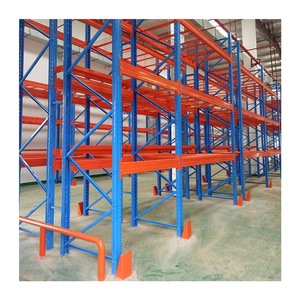
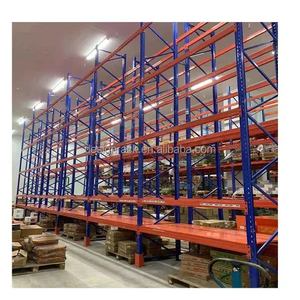
| Dynamic Pallet Flow (Live Roller) | Strict FIFO (Gravity 3.5° Declination) | 85% - 90% | 4 to 25 Pallets Deep | 500 - 1,800 kg / Pallet | Perishable food, cold rooms, date-sensitive pharmaceuticals |
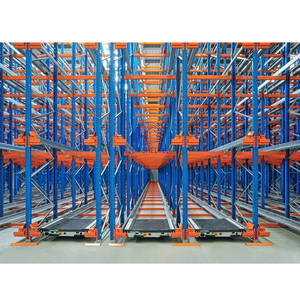
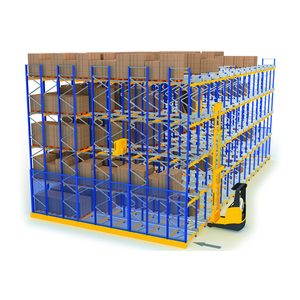
| Automated 4-Way Radio Shuttle | Configurable FIFO / LIFO (Robotic Carrier) | 90% - 95% | Up to 40+ Pallets Deep | 1,000 - 2,500 kg / Pallet | Deep-freeze blast storage (-30°C), beverage distribution hubs |
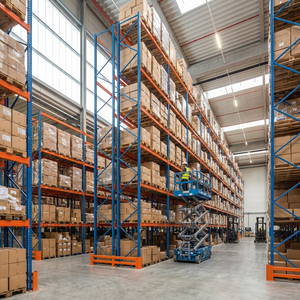
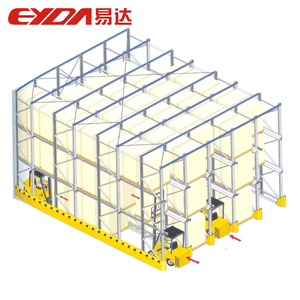
| Drive-Through Pallet Racking | Strict FIFO (Dual-Sided Access) | 75% - 80% | 5 to 12 Pallets Deep | 800 - 1,500 kg / Pallet | High-volume single SKU batches, raw materials staging |
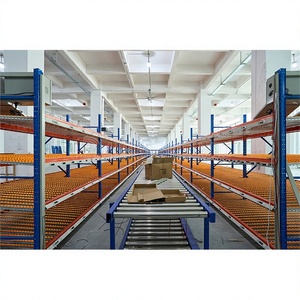
| Carton Live Flow Rack | Strict FIFO (Roller Track Incline) | 70% - 80% | 2 to 10 Boxes Deep | 50 - 200 kg / Level | Split-case order picking, automotive parts fulfillment |
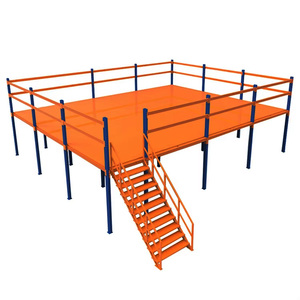
| Selective Racking + Mezzanine Floor | Batch Selectivity (100% Direct Pick) | 60% - 70% (Floor Area x 2.5) | Single / Double Deep | 300 - 1,000 kg / m² Deck | Omnichannel e-commerce dispatch, spare parts consolidation |
Engineering Recommendation Engine: System Selection Criteria
Selecting the optimal FIFO configuration involves balancing capital expenditure (CAPEX), SKU velocity, floor slab limitations, and operational temperature profiles.
Gravity Pallet Flow: High Turnover & Zero Power Consumption
When operations demand absolute FIFO rotation without reliance on electronic controllers or battery charging bays, Gravity Pallet Flow Racking is the premier technical choice. Utilizing a precise gradient angle (typically 3.0° to 4.0°) with reinforced steel side channels and triple-row full-width galvanized rollers, pallets glide smoothly from the rear charging face to the front extraction face. Integrated centrifugal speed-controller rollers govern velocity at a safe maximum of 0.25 m/s, preventing damaging kinetic collisions. A mechanical separation separator unit automatically isolates the lead pallet from accumulating rear pallets, allowing forklift operators to retrieve loads without backpressure resistance.
4-Way Radio Shuttle ASRS: Deep-Storage Cold Chain Density
For refrigerated facilities operating at temperatures as low as -30°C, the thermal loss from open aisles translates into severe energy inefficiency. Automated Radio Shuttle Systems condense multiple forklift corridors into continuous, solid blocks of storage. The motorized carriage is deployed into high-strength omega-profile galvanised rails via standard counterbalanced or reach trucks. Through radio frequency or warehouse execution system (WES) commands, the shuttle navigates beneath pallets, hoisting and conveying loads safely along channels up to 40 pallet positions deep. By switching software logic, operations can alternate seamlessly between batch FIFO production discharge and seasonal LIFO accumulation.
Drive-Through Racking: High-Tonnage Industrial Batching
Unlike traditional Drive-In systems which feature a single access face and force LIFO sequencing, Drive-Through Racking provides independent ingress and egress lanes on opposing sides of the rack structure. This physical segregation enables true FIFO flow for heavy building materials, chemicals, paper rolls, and non-stackable bulk containers. Manufactured with high-yield upright posts and continuous heavy-gauge rolled arm supports, Drive-Through systems eliminate floor floor-loading bottlenecks while shielding stored inventory from compressive crushing damages typical in block stacking.
Future Procurement Trends in FIFO Pallet Racking Systems
Strategic insight into how global supply chain disruptions, energy costs, and ESG mandates are transforming warehouse storage specifications from 2026 to 2035.
Global logistics engineering is currently navigating a tectonic transition toward dark warehousing, decoupled human-machine workflows, and aggressive carbon footprint accountability. Industrial procurement teams are no longer evaluating pallet racks as static structural steel assemblies; they are assessing them as high-precision, software-orchestrated capital assets designed for a 20-year structural lifespan. Below are the transformative trends reshaping procurement directives across Europe, North America, the Middle East, and South Asia.
1. Convergence of Pallet Racks with AGV and AMR Fleets
Autonomous Mobile Robots (AMRs) and automated guided counterbalanced forklifts are rapidly replacing human operators on the warehouse floor. Consequently, manufacturing dimensional tolerances must shift from legacy coarse construction brackets to millimetric precision. Racking columns, entry guide funnels, and shuttle rail profiles are now specified under EN 15620 Tolerance Class 400 or better. This guarantees that robotic vision guidance systems and automated LiDAR navigation sensors do not encounter reflective glare anomalies, unexpected beam camber deflections, or uncalibrated stop-plate offsets during high-speed pallet handover.
2. Green Steel Sourcing and CBAM Carbon Compliance
With the European Union’s Carbon Border Adjustment Mechanism (CBAM) coming into full force, industrial racking buyers in Europe, the UK, and export hubs are scrutinizing embodied carbon per pallet position. Racking factories must now provide mill test certification (MTC) proving the utilization of electric arc furnace (EAF) or scrap-optimized structural steel coils. Guangzhou Heda Shelves Co., Ltd. continuously reduces lifecycle carbon footprint by integrating volatile organic compound (VOC)-free electrostatic powder coatings, cold-bending forming processes that avoid thermal degradation, and container packing configurations engineered to eliminate dead freight volume.
3. Rigorous Seismic and Dynamic Dynamic Deflection Modeling
Modern warehouses are reaching vertical heights of 15 to 40 meters. In active seismic regions (such as the Mediterranean, Pacific Rim, and Himalayan foothills), dynamic live-load behavior during an earthquake is catastrophic if under-engineered. Global project tenders now mandate advanced finite element analysis (FEA) simulating real-time structural resonances, nonlinear plastic hinge formation in beam end-connectors, and anchor bolt concrete break-out shear stresses under seismic coefficient conditions. High-ductility steel grades and specialized floor-slab expansion baseplates are becoming non-negotiable procurement prerequisites.
Integrated Manufacturing & Global Export Authority
A 30,000 m² state-of-the-art manufacturing infrastructure backed by verifiable European CE certification, ISO 9001:2015 quality protocols, and end-to-end metallurgical traceability.
Established Since 2001
Over two decades of engineering excellence. Over 10,000 completed heavy-duty logistics projects deployed across more than 120 countries and autonomous territories worldwide.
30,000 m² Factory Floor
Equipped with 10 high-precision CNC roll-forming lines, automated punching machines, robotic welding stations, and a modern continuous pickling-phosphating powder coating line.
Audited Certification
Full CE Factory Production Control (FPC) Certificate No. 2435-CPR-8605159, certified ISO 9001:2015 Quality Management System (No. 18624Q00169R0M), and RoHS environmental testing.
Free 3D & CAD Design
Our dedicated team of 30+ structural engineers delivers comprehensive AutoCAD layouts, realistic 3D photorealistic renderings, and complete structural calculation packages within 24 hours.
Frequently Asked Questions on CE Certified FIFO Pallet Racking
Authoritative technical answers to common engineering, compliance, inspection, and logistics inquiries submitted by international supply chain directors.
Request Your Custom FIFO Storage Layout & Quotation
Connect directly with our structural engineering team. Receive comprehensive CAD schematics, load calculations, and direct-factory pricing within 24 business hours.