High-Bay Heavy Duty Storage & Warehouse Racking Systems
From cantilever arm racks for continuous tubular payloads to high-density pallet shuttles and cold-chain dynamic shelving, our Guangzhou manufacturing complex delivers end-to-end heavy industrial racking architectures engineered to European CE standards.
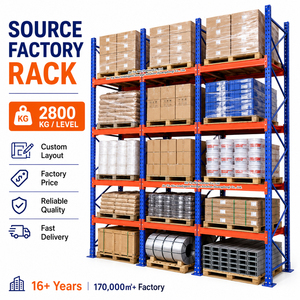
2800KG 5 Levels High Bay Industrial Pallet Racking Heavy Duty Warehouse Rack System
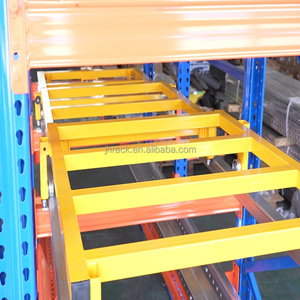
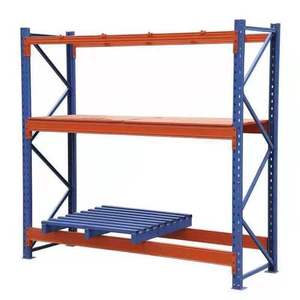
Adjustable Pallet Rack Warehouse Storage Heavy Duty Shelving Pallets Racking for Warehouse Storage
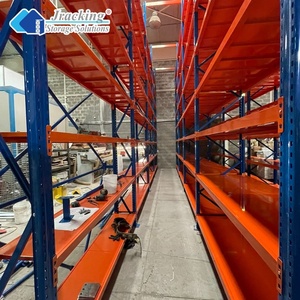
Jracking Industrial Warehouse Racks Shelves EU Standard Pallet Rack System for Cold Room
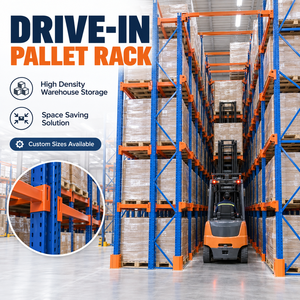
Heavy Duty Drive-in Pallet Racking System for High Density Warehouse Storage
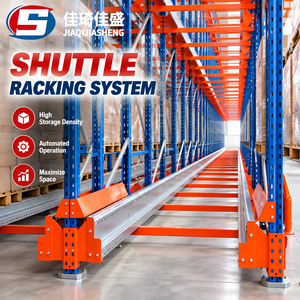
OEM ODM Custom Pallet Lane Design Project Planning Service Space Maximizing Intelligent Shuttle Rack for Multi-batch Goods Stock
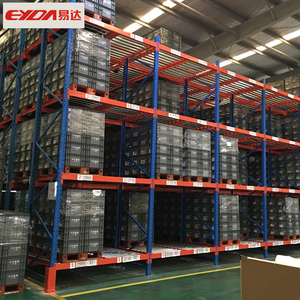
GuangZhou Factory OEM Service Adjustable Warehouse Storage Heavy Duty Pallet Gravity Flow Racking Roller Rack System
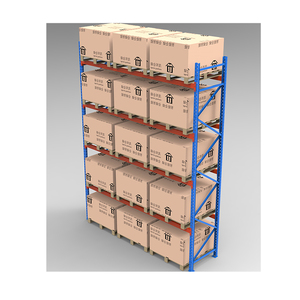
Warehouse Racking Heavy Duty Rack System Stack Warehouse Storage Steel Pallet Racks for Sale
Structural Mechanics of Cantilever Racking in Pipe & Tube Logistics
Storing long, cylindrical items presents fundamental structural challenges distinct from palletised goods. Calculating dynamic bending moments, arm deflection limitations, pipe rollout tendencies, and unbraced frame stiffness is essential for operational warehouse safety.
1. The Physics of Long-Span Concentrated Payloads vs. Uniform Loads
Unlike standardized wooden or composite pallets that distribute uniform downward forces across longitudinal load beams, steel pipes, carbon steel tubing, PVC conduits, and copper extrusions act as continuous linear beams subject to three-point flexure. When bundles of heavy pipes rest on cantilever arms, two physical phenomena dictate the structural integrity of the racking system: longitudinal pipe sag (sagitta deflection) between adjacent cantilever arms, and torsional cantilever arm moment transfer back to the vertical column upright.
If cantilever columns are placed too far apart, flexible pipes (such as schedule 40 PVC or thin-walled stainless steel conduit) sag excessively, inducing localized point loading at the arm tips and potentially kinking or permanently ovalizing the stored inventory. Conversely, if the cantilever arms are rigid but inadequately pitched, the dynamic impact of overhead crane or side-loader placement transfers immense rotational kinetic energy into the column web, threatening vertical column buckling or connection failure. HEDA Shelves addresses this through finite element analysis (FEA) compliant with EN 15512 and FEM 10.2.09, verifying load transfer through structural I-beam sections and cold-formed double-profile columns.
Arm Upward Incline & Deflection
Cantilever arms are factory-welded or pinned with an upward resting pitch of 1.5° to 2.5°. Under maximum design load (up to 3,000 kg per arm), elastic bending deflection flattens the arm to near-horizontal without ever crossing below 0°, preventing circular pipes from migrating outwards under gravity.
Removable Pipe Stop Pins (Chocks)
To eliminate kinetic roll-off hazards during seismic tremors or uneven forklift handling, arm tips feature integrated socket sleeves accepting heavy-gauge steel stop pins (heights: 100mm to 350mm), complete with quick-release retaining pins and optional polyurethane protective cushioning.
Continuous Heavy I-Beam Uprights
Heavy-duty pipe storage demands hot-rolled European standard IPE or HEA structural steel profiles. Unlike thin sheet sections, solid I-beam columns resist asymmetrical lateral torsional buckling when one side of a double-sided rack is fully picked while the reverse side remains loaded.
Cantilever Pipe Storage System Classification
Match your facility profile, pipe bundle weights, and material handling fleet against our certified structural product lines.
| System Model | Material Construction | Load Capacity per Arm | Standard Column Height | Max Arm Length | Ideal Pipe Profiles | Material Handling Type |
|---|---|---|---|---|---|---|
| Light-Duty Roll-Formed | Cold-bent high-tensile Q235B | 150 kg – 500 kg | 2,000 mm – 4,500 mm | 600 mm – 1,000 mm | PVC conduit, copper tubing, electrical raceways | Manual picking, order pickers |
| Medium-Duty Modular | Double-riveted welded C-profile | 500 kg – 1,200 kg | 3,000 mm – 6,000 mm | 800 mm – 1,200 mm | Aluminium extrusions, gas pipes, scaffolding tubes | Counterbalance forklift, reach truck |
| Heavy-Duty Structural IPE | Hot-rolled structural I-beam (Q355B) | 1,000 kg – 3,500 kg+ | 3,500 mm – 10,000 mm+ | 1,000 mm – 2,000 mm | API casing, seamless drill pipes, ductile iron water mains | Heavy reach truck, 4-way side-loader |
| Outdoor Roofed Cantilever | Hot-dip galvanized structural steel (ISO 1461) | 1,200 kg – 3,000 kg | 4,000 mm – 8,000 mm | 1,000 mm – 1,500 mm | External steel yard stock, galvanised drainage conduits | Outdoor counterbalance forklift, overhead crane |
Strategic Sourcing & Procurement Trends for Pipe Racking (2025–2030)
Industrial logistics managers and supply chain directors are navigating rapid technological transformations in long-load warehousing. Procurement strategies are moving away from ad-hoc welded fabrications toward certified, digitized, and automated cantilever ecosystems.
AS/RS Automated Cantilever
The convergence of multi-directional automated guided vehicles (AGVs) and stacker crane cantilever racks is eliminating manual forklift aisles in high-throughput tube manufacturing plants, slashing product damage by 85%.
IoT Deflection Sensors
Smart logistics hubs are mandating factory-fitted strain-gauge sensors on structural cantilever arm pins. These report real-time structural deflection data straight to ERP systems, preventing accidental operator overloading.
Duplex Anti-Corrosion Systems
With coastal storage expanding rapidly in Southeast Asia and the Middle East, procurement standards now demand hot-dip galvanizing under ISO 1461 combined with thermoset architectural powder coatings to survive marine C4/C5 atmospheric zones.
Parametric BIM & Digital Twins
Engineers now expect full 3D CAD/BIM models of cantilever racking systems prior to container dispatch, allowing seamless clearance simulation with fire suppression sprinkler pipes and HVAC overhead ducting.
CE Execution Class & Global Structural Certifications
When sourcing pipe racks for high-liability infrastructure or corporate manufacturing plants, compliance is not negotiable. Guangzhou Heda Shelves Co., Ltd. provides complete traceability, third-party laboratory material test certificates (MTRs), and verified European CE certification.
Traceable Engineering Documents
Our cantilever systems comply with the Construction Products Regulation (EU) No 305/2011. Structural steel elements are fabricated under factory production control systems certified under EN 1090-1 Execution Class EXC2, guaranteeing weld integrity and yield strength parameters under static and seismic scenarios.
- CE Certification No. 2435-CPR-8605159: Confirmed compliance with European harmonized structural manufacturing standards.
- ISO 9001:2015 Registered (No. 18624Q00169R0M): Comprehensive quality management governing raw steel arrival, cold bending, robotic welding, and powder coating curing.
- EN 15635 & FEM 10.2.09 Compliant: European code governing safe cantilever rack tolerances, arm deflection ratios (δ ≤ L/200), and operational safety clearances.


Heavy-Duty Cantilever Configuration: 1,000 – 3,000 kg / Arm for Cylindrical Profiles
Inside Our 30,000 m² Racking Production Facility
Operating in Guangzhou, China since 2001, Guangzhou Heda Shelves Co., Ltd. combines an in-house engineering academy, 300+ technicians, and heavy industrial machinery outputting over 30,000 metric tons of precision racking per month.
Our 10-Stage High-Integrity Manufacturing Workflow
Every beam, arm connector, and column baseplate undergoes strict multi-point metallurgical and dimensional quality checks.
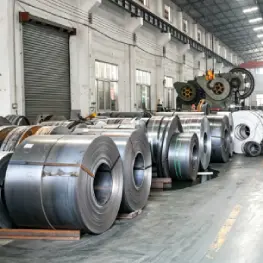 01
Raw Material Audit
Certified Q235B/Q355B coils tested for yield strength & chemical composition.
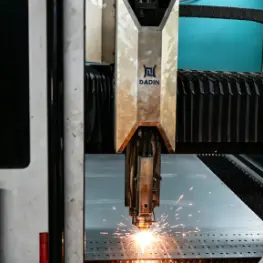 02
Precision Cutting
High-speed laser & CNC saw stations achieving ±0.5mm length accuracy.
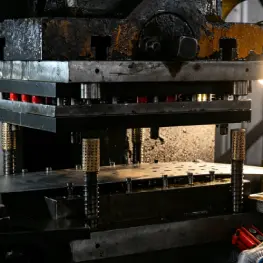 03
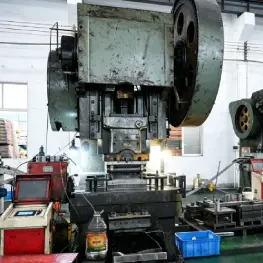
Automated Punching
Continuous CNC hole-pitch stamping ensuring uniform arm height adjustability.
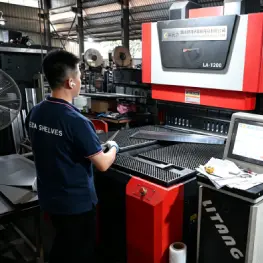 04
Cold Bending
Multi-stage press brakes producing structurally rigid channel sections.
 05
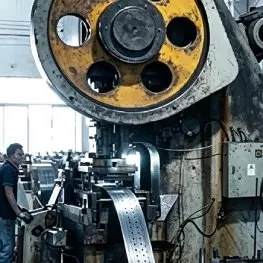
Profile Roll Forming
Heavy rolling lines shaping high-moment upright and arm profiles without stress cracks.
 06
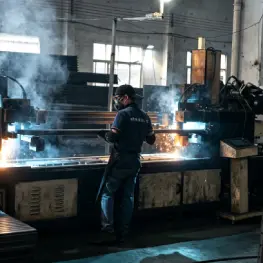
Deburring & Polishing
Edge radiusing and slag removal preventing abrasion on sensitive pipes.
 07
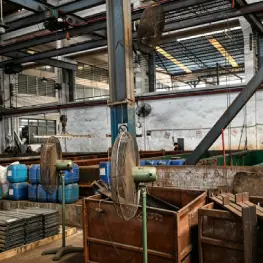
Robotic Welding
Shielded arc robotic stations welding cantilever arm gusset plates with deep penetration.
 08
Pickling & Phosphating
8-stage chemical wash stripping rust and creating optimal phosphate surface adhesion.
 09
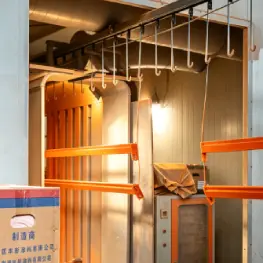
Powder Coating
Automated powder spray booth delivering 80–120μm durable thermoset finish.
 10
QC & Container Stowage
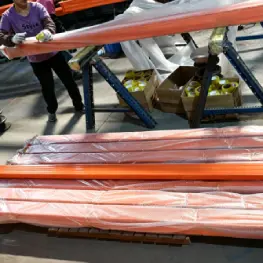
Laser dimension verification, batch load tests, and export palletization.
Frequently Asked Questions: Industrial Pipe Cantilever Sourcing
Clear, definitive answers to technical and commercial questions raised by EPC contractors, plant logistics directors, and structural procurement auditors.
How do engineers calculate the correct cantilever arm spacing for storing flexible pipes?
What is the difference between hot-rolled structural I-beam and roll-formed cantilever racks?
Can cantilever pipe racking systems be installed outdoors safely?
How do you prevent circular pipes from rolling off cantilever arms?
What concrete floor slab requirements are needed to anchor heavy cantilever pipe racks?
How does CE Certification (No. 2435-CPR-8605159) verify our project's safety?
What information is needed to obtain a free CAD layout and engineering quote?
Request Your Engineered Cantilever Layout & Factory Price Proposal
Accelerate your project with Guangzhou Heda Shelves Co., Ltd. Our structural racking engineers deliver custom CAD pipe rack designs, load capacity deflection charts, and containerized freight estimates within 24 hours.