[email protected] Serving India · Bangladesh · Pakistan · Sri Lanka · Nepal
English (South Asia)
0%

China’s pallet storage racking system manufacturers serve warehouses that demand speed, safety, and measurable space efficiency. Their solutions range from selective pallet racks to drive-in, shuttle, and automated storage systems. Each design responds to different inventory profiles, forklift routes, ceiling heights, and stock rotation patterns.

Gwynne Richards, a recognized warehouse management author and consultant, has stated, “The warehouse is no longer a passive storage area; it is an active part of the supply chain.” This observation remains highly relevant. A modern Pallet Storage Racking System must support more than storage density. It should improve picking access, reduce handling delays, and maintain stable pallet positions during daily operations. In a busy facility, small design errors can create larger problems. A narrow aisle may slow forklifts. An unsuitable beam rating may increase risk. Poor labeling can cause avoidable confusion.

The leading Chinese manufacturers usually provide engineering drawings, load calculations, surface treatments, installation guidance, and after-sales support. However, comparing suppliers only by price is a weak approach. Steel thickness, welding quality, testing records, and replacement-part availability deserve closer attention. Some claims also need verification. Not every “heavy-duty” rack performs equally well.

This guide examines China’s top Pallet Storage Racking System manufacturers through practical criteria. It considers product quality, customization, production experience, certification, delivery reliability, and service response. Real warehouse conditions matter. Dust, uneven floors, changing pallet sizes, and rushed operators can expose hidden weaknesses. The best choice is not always the largest supplier. It is the one that fits the operation honestly.
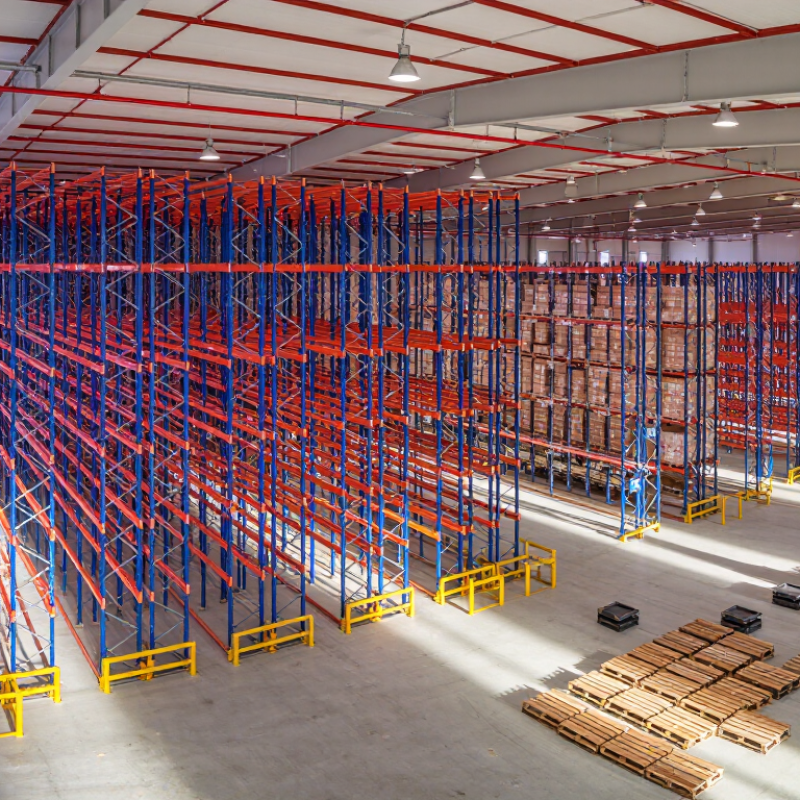
China Top Pallet Storage Racking System Manufacturers

What Is a Pallet Storage Racking System?

What Is a Pallet Storage Racking System?

A pallet storage racking system is a steel structure designed to hold palletized goods above the warehouse floor. It uses upright frames, horizontal beams, safety locks, and pallet supports. Forklifts place loads into vertical storage levels, creating clearer aisles and better inventory access.

The system is not simply “more shelves.” Selective racking provides direct access to every pallet and suits products with frequent turnover. Drive-in racking increases density but reduces selectivity. Pallet-flow systems use rollers and gravity, helping older stock move forward. According to Grand View Research, the global warehouse racking market was valued at over USD 9 billion in 2023, showing strong demand for organized storage. Density matters.

Design requires more than measuring the building height. Engineers must check pallet dimensions, load weight, beam capacity, forklift clearance, floor strength, and sprinkler spacing. The 2024 MHI Annual Industry Report highlights growing investment in warehouse automation and digital inventory control. Yet automation cannot correct weak rack installation or poor loading habits.

A practical inspection should look for bent uprights, missing locking pins, damaged beams, and uneven pallets. Small damage can become expensive. Rack capacity labels should remain visible, and staff need documented training. In real warehouses, layouts often change faster than safety reviews. That is where planning can fail.

How Pallet Storage Racking Systems Work

China Top Pallet Storage Racking System Manufacturers

Pallet storage racking systems work through a simple load path. Pallets rest on horizontal beams, while upright frames transfer weight to the floor. Forklifts place pallets into selected levels, creating vertical storage without expanding the building footprint. The correct system depends on pallet size, load weight, aisle width, and inventory movement.

Warehouse teams usually choose FIFO or LIFO access. Selective racking supports direct access to every pallet and suits varied stock. Drive-in racking stores deeper lanes but offers less immediate access. In a 2024 report, MHI found that 55% of supply chain professionals planned to increase technology investment. That investment often supports warehouse management software, barcode scanning, and automated storage equipment.

Data improves control.

A warehouse management system assigns locations and records each pallet’s movement. Operators then follow digital instructions instead of relying on memory. However, software cannot correct overloaded beams or damaged uprights. The system is not foolproof. The Occupational Safety and Health Administration requires stored materials to remain stable and secure, making inspections part of daily operations. Teams should check beam deflection, frame damage, floor condition, and pallet quality. The European Federation of Material Handling also emphasizes planned inspection and maintenance for storage equipment. A clean drawing can still hide a poor daily habit. Rack labels, load notices, and protected corners reduce practical risks. Engineers should verify every capacity calculation against real pallets, not optimistic assumptions.

China Top Pallet Storage Racking System Manufacturers - How Pallet Storage Racking Systems Work
Racking System How It Works Typical Storage Density Stock Selectivity Suitable Pallet Flow Common Forklift or Handling Method Typical Application Important Design Considerations
Selective Pallet Racking Each pallet position is accessed directly from an aisle. Pallets are stored on horizontal beams supported by upright frames. Approximately 35%–45% of the floor area is used for storage because aisles are required for direct access. Very high First-in, first-out or last-in, first-out, depending on inventory management and loading sequence. Counterbalance forklifts, reach trucks, or narrow-aisle trucks. Warehouses with many stock-keeping units and frequent pallet access. Beam capacity, upright height, aisle width, pallet dimensions, floor flatness, rack protection, and seismic requirements must be checked.
Double-Deep Pallet Racking Two rows of pallets are placed one behind the other, usually using a reach truck with an extended fork or telescopic mechanism. Higher density than selective racking, commonly reducing the number of access aisles. Medium Generally last-in, first-out for rear pallet positions; access to the front position is required before the rear position. Reach trucks equipped for double-deep operation. Warehouses storing larger quantities of fewer product types. Product rotation, reach-truck lift height, visibility, rear pallet access, and fire-safety clearance are important.
Drive-In Racking A forklift drives into rack lanes supported by guide rails or support rails. Pallets are stored several positions deep on each lane. High density because shared aisles and internal rack lanes minimize unused space. Low Usually last-in, first-out, although drive-through layouts can support first-in, first-out for compatible products. Counterbalance or reach forklifts designed for controlled lane entry. Cold storage and bulk storage with relatively few stock-keeping units. Uniform pallets, stable loads, lane depth, forklift clearance, rack impact protection, and load sequence are critical.
Pallet Flow Racking Pallets are loaded from one side and move by gravity on inclined roller lanes toward the picking side. High density with fewer operating aisles than selective racking. Medium to high First-in, first-out; separate loading and unloading aisles support controlled stock rotation. Reach trucks, counterbalance forklifts, or pallet movers. Perishable goods, food distribution, and products requiring strict rotation. Roller pitch, pallet quality, brake rollers, lane separators, load speed, and pallet compatibility must be designed correctly.
Push-Back Racking A forklift places a pallet on a wheeled cart or roller carriage and pushes earlier pallets deeper into the lane. Higher density than selective racking with fewer aisles and multiple pallet positions per lane. Medium Generally last-in, first-out because loading and unloading take place from the same aisle. Reach trucks or counterbalance forklifts, depending on rack height and lane depth. Bulk storage where several pallets of the same product are held together. Cart operation, lane depth, pallet uniformity, impact control, and safe push-in and pull-out procedures require attention.
Mobile Pallet Racking Rack rows are mounted on powered or mechanically assisted mobile bases that open only the required access aisle. Very high space utilization because multiple fixed aisles can be replaced by one movable aisle. High Supports both first-in, first-out and last-in, first-out depending on the rack arrangement and warehouse procedures. Reach trucks, stackers, or other equipment suitable for the remaining aisle width. High-value inventory, archival storage, cold rooms, and facilities with limited floor space. Floor load capacity, rail alignment, safety sensors, emergency stops, access control, and power supply must be evaluated.
Narrow-Aisle Racking Selective rack rows are installed with reduced aisle widths and served by specialized high-lift trucks. Higher storage capacity than conventional selective racking because more floor area is allocated to rack positions. Very high Usually first-in, first-out or last-in, first-out according to warehouse software and handling procedures. Very-narrow-aisle trucks, turret trucks, or guided reach trucks. High-throughput distribution centers with tall buildings and many stock-keeping units. Truck guidance, floor tolerances, aisle width, rack height, sprinkler clearance, and operator training are essential.
Automated Pallet Racking Stacker cranes, shuttle vehicles, conveyors, sensors, and warehouse control software automatically store and retrieve pallets. Very high vertical and floor-space utilization when the building, inventory, and throughput are suitable. High Can support first-in, first-out, last-in, first-out, batch control, and traceable inventory movement. Stacker cranes, pallet shuttles, conveyors, lifts, and automated guided vehicles. High-volume operations, controlled-temperature warehouses, and facilities requiring accurate inventory tracking. Load-unit standardization, software integration, equipment redundancy, maintenance access, fire protection, and power continuity are key.
Pallet Shuttle Racking A battery-powered shuttle travels along rack rails to position pallets inside deep storage lanes, while forklifts operate mainly at the lane entrance. High to very high density with deep lanes and reduced forklift travel inside the rack. Medium First-in, first-out or last-in, first-out is possible with the appropriate lane configuration and operating sequence. Forklifts transfer pallets to and from the shuttle; the shuttle performs internal lane movement. High-volume bulk storage, cold-chain facilities, and warehouses with repetitive pallet loads. Shuttle battery management, rail condition, pallet quality, lane depth, temperature rating, and system controls must be specified.
Multi-Tier Pallet and Picking System Several storage or picking levels are created by structural platforms, stairways, and rack-supported floors. Increases usable vertical storage volume without expanding the building footprint. High Usually supports organized batch picking and direct access to multiple levels. Forklifts, pallet stackers, conveyors, order-picking equipment, and manual handling. Mixed pallet and carton operations where vertical building height is available. Structural load calculations, guardrails, stair access, emergency exits, sprinklers, lighting, and platform deflection must be verified.
Common Manufacturing and Quality Checks Manufacturers normally convert the approved layout and load data into engineered frames, beams, connectors, guards, and accessories, followed by coating and inspection. Capacity is determined by the complete system design rather than by a single rack component. Design dependent System selection should match product rotation, handling frequency, and inventory control rules. Equipment compatibility must be confirmed before production and installation. New warehouses, retrofit projects, distribution centers, and industrial storage areas. Verify material specifications, weld quality, dimensional tolerances, surface coating, rated-load signage, installation method, anchoring, and compliance with applicable local standards.

Key Types of Pallet Racking Manufactured in China

China Top Pallet Storage Racking System Manufacturers

China manufactures several key pallet racking types for different warehouse densities. Selective pallet racking offers direct access to every pallet and suits mixed inventory. Drive-in racking increases cube utilization by removing many aisles. Push-back systems support faster loading, while pallet flow racking helps first-in, first-out distribution. Double-deep layouts improve density, but they require compatible forklifts and stricter stock planning. Automated storage and retrieval systems add high density, though software integration and maintenance deserve careful review.

MHI’s 2024 Annual Industry Report surveyed more than 1,300 supply-chain professionals. It identifies automation and digital warehouse tools as major investment priorities. Grand View Research’s 2024 market assessment also forecasts strong growth for warehouse racking through 2030. These figures support demand for higher-density systems, but density alone can mislead. A rack’s beam capacity, upright thickness, floor tolerance, and seismic conditions must match the site. EN 15635 guidance and local engineering requirements should shape inspection and installation procedures.

Tip: Ask Chinese manufacturers for load tables, steel grades, testing records, and installation drawings. Check whether the quoted capacity includes pallet weight and safety factors. In project reviews, the overlooked detail is often aisle clearance. A few extra centimeters can affect forklift turning, fire access, and daily productivity. Lower pricing is tempting. It is not always economical. Selective racking may waste space, while drive-in racking may slow access to frequently picked products. Evaluate pallet dimensions, turnover rate, building height, and future SKU changes before choosing.

How to Evaluate China’s Top Racking System Manufacturers

Evaluating China’s top racking system manufacturers requires more than comparing steel prices. Start with evidence from real warehouses. Ask for load calculations, material certificates, weld inspection records, and recent project references. A credible supplier explains upright profiles, beam deflection limits, seismic design, and corrosion protection in plain language. Request a sample bay and measure hole spacing, beam locks, coating thickness, and pallet clearance. Small inconsistencies often become costly during installation.

Labor pressure makes design verification more important. The MHI Annual Industry Report 2024, produced with Deloitte, reported labor shortages among 55% of supply-chain leaders. Manufacturers should therefore show how their racks support safer, faster picking, not merely higher storage density. Compare tested capacity with your actual pallet weight, forklift pattern, floor flatness, and temperature range. Ask whether calculations follow recognized standards, such as EN 15635 or RMI guidance, and whether independent engineers review them.

Audit the factory, not just its showroom.

Check production traceability, calibration records, packaging, replacement-part availability, and response times after delivery. A useful scorecard can assign separate weights to safety, engineering, quality control, lead time, and lifecycle cost. Price should not dominate.

No scorecard is perfect. I would still inspect a finished installation and interview its operator.

One weakness remains easy to miss: some suppliers document capacity well but provide poor change-management support when layouts evolve. Evaluate that risk before signing.

Quality Standards, Customization, and Safety Considerations

Reliable pallet racking begins with verifiable engineering, not attractive catalog images. Professional China-based manufacturers should provide steel grades, weld procedures, coating data, and tested load capacities. Ask for traceable inspection records and clear tolerances for beams, uprights, and connectors. Standards matter. Depending on the destination, buyers may reference EN 15635, ANSI MH16.1, or local structural codes. These references do not replace a site assessment. Floor strength, seismic activity, sprinkler clearance, and forklift routes can change the design.

Customization should follow operating evidence. A warehouse handling 1,000-kilogram pallets needs different beam levels from one storing lighter cartons. Designers should review pallet dimensions, entry direction, aisle width, lifting height, and daily traffic. Upright guards, row spacers, mesh decking, and anti-collapse protection may reduce practical risks. However, more accessories do not automatically create a safer system. Poorly chosen components can obstruct forklifts or reduce usable space.

Safety depends on installation and behavior after handover. Anchors must suit the concrete slab, and every bay needs visible load notices. Inspectors should check bent frames, loose connectors, damaged beams, and unauthorized alterations. Small damage matters. A drawing can look perfect yet miss uneven floors or careless pallet placement. This is an uncomfortable limitation in many projects. Regular inspections, trained operators, and documented repairs are essential. Even experienced teams can overlook a connector during a busy shift.

FAQS

What is a pallet storage racking system?

It is a steel structure for storing palletized goods above the warehouse floor. It uses upright frames, beams, safety locks, and pallet supports.

How does pallet racking create more storage space?

Forklifts place pallets on several vertical levels. This uses building height instead of extra floor area. Density matters.

Which pallet racking layout suits frequently changing inventory?

Selective racking gives direct access to every pallet. It suits varied products and frequent stock movement. Every pallet stays reachable.

When is drive-in racking useful?

Drive-in racking stores pallets deep inside lanes. It increases storage density but reduces direct access. That trade-off needs careful thought.

How do pallet-flow systems support stock rotation?

Rollers and gravity move older pallets toward the loading side. This can support FIFO inventory movement. It is helpful, not perfect.

What information is needed before designing a rack system?

Designers should check pallet size, load weight, aisle width, and forklift clearance. They must also verify floor strength and sprinkler spacing. Guessing creates problems.

What should warehouse staff inspect regularly?

Staff should look for bent uprights, damaged beams, and missing locking pins. They should also check uneven pallets and floor conditions. Small damage can grow.

Can warehouse software replace rack safety inspections?

No. Software can record pallet locations and movement. It cannot repair overloaded beams or damaged frames. Human checks remain necessary.

Why are capacity labels and staff training important?

Visible capacity labels show safe load limits for each rack section. Documented training helps operators place pallets correctly. Daily habits still matter.

Conclusion

A Pallet Storage Racking System is a structured warehouse solution designed to store palletized goods safely, efficiently, and accessibly. It uses vertical space through frames, beams, and supporting components, allowing forklifts or other handling equipment to place and retrieve pallets according to the warehouse’s operational needs. Common systems manufactured in China include selective pallet racking, drive-in racking, double-deep racking, push-back racking, and pallet flow racking, each offering different balances of accessibility, storage density, and inventory rotation.

When evaluating China’s top racking system manufacturers, buyers should consider engineering capability, production quality, material strength, testing procedures, delivery reliability, and after-sales support. Customization is also important, as rack dimensions, load capacities, finishes, and safety accessories should match the facility and products being stored. Compliance with recognized quality and safety standards, accurate load calculations, protective features, and clear installation guidance are essential for creating a durable, efficient, and safe warehouse storage environment.

Evelyn

Evelyn

Evelyn is a professional marketing specialist dedicated to helping businesses understand how thoughtful products, reliable services, and practical solutions can create lasting value. With extensive knowledge of the company’s product portfolio and a strong understanding of customer needs, she......