Choosing among China’s top 10 Pallet Warehouse Racking manufacturers requires more than comparing catalog prices. Storage density, load safety, installation quality, and after-sales support can affect daily warehouse performance. A reliable supplier should understand forklift movement, beam deflection, aisle widths, and changing inventory patterns. Small design errors may create expensive delays.
This guide introduces manufacturers through practical evaluation criteria rather than marketing claims. It considers production experience, engineering capability, material traceability, welding quality, surface treatment, and project references. Factory audits, technical drawings, load calculations, and sample inspections can reveal important differences. Certifications also matter, but documents alone cannot replace careful verification. Real warehouse performance matters more.
No ranking is perfect. Supplier strengths may change by project size, product type, and delivery region. One manufacturer may offer excellent customization, while another may provide stronger export support or faster production. Buyers should request clear quotations, installation plans, warranty terms, and maintenance guidance. They should also confirm steel grades and rack dimensions before signing.
The following overview focuses on manufacturers with visible industry experience and practical service capabilities. It aims to help warehouse owners, distributors, and procurement teams create a more dependable shortlist. Site conditions still require professional review. A rack system that works well in one facility may not suit another. Careful comparison remains essential.
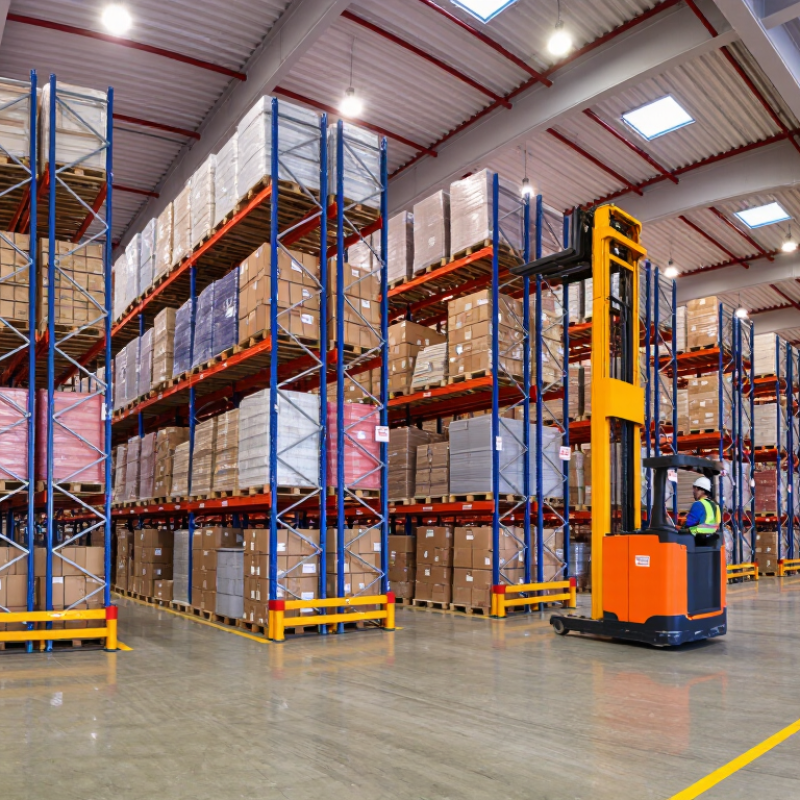
Pallet warehouse racking manufacturers do more than produce steel frames. They translate storage needs into safe, workable systems. A project usually begins with an audit of pallet sizes, load weights, aisle widths, forklift types, and building conditions. Experienced engineers then prepare layout drawings and calculate upright capacity, beam strength, and anchoring points. Small details matter. A few centimeters can affect daily forklift movement.
Reliable manufacturers control the process from raw material inspection to final assembly. They check steel thickness, welding quality, coating coverage, and dimensional accuracy. Load testing and sample inspections can reveal weak connections before installation. Many factories also provide installation manuals, safety signs, replacement parts, and technical training. Clear documentation helps warehouse teams maintain the system instead of guessing after handover.
However, manufacturing quality alone is not enough. A rack may pass a factory check but fail when operators overload beams or ignore damaged uprights. Manufacturers should explain safe loading limits in plain language and offer inspection guidance. I have seen projects where the layout looked efficient, yet the turning space was too narrow for real forklift work. That mistake was expensive and avoidable. Better suppliers listen to operators, revise drawings, and admit when an earlier design needs improvement. Local building conditions, fire controls, and seismic risks also require careful review by qualified professionals.
Ranking China’s top ten pallet racking manufacturers requires more than comparing factory prices. I examine production capacity, engineering experience, and project records. A serious manufacturer should provide load calculations, clear drawings, and traceable steel certificates. Factory visits also reveal practical details. I check welding consistency, beam straightness, coating thickness, and storage conditions. Small defects often predict larger problems later.
Product testing matters. I request load-test reports, installation guidance, and inspection records from completed projects. The best suppliers explain allowable loads under different beam lengths and pallet weights. They also address seismic conditions, forklift impact, and floor tolerance. Certifications support credibility, but they do not replace independent verification. Ask who issued each document and when.
Communication affects the ranking too. Reliable teams answer technical questions directly and revise drawings when site measurements change. They should identify risks instead of promising everything is easy. Delivery history, spare-part support, and warranty terms deserve measurable evidence. I score these areas with a consistent checklist, then compare the results across ten manufacturers. My ranking remains provisional because factory data can change, and one site visit cannot reveal every weakness. A cheaper quote may still hide thicker tolerances, weaker after-sales service, or unclear installation responsibility. Sometimes, I may overvalue visible organization. That is worth reviewing.
China’s top 10 pallet racking manufacturers show a wide range of capabilities. Their profiles reflect production scale, engineering depth, testing discipline, and export experience. The ranking should not rely on factory size alone. Warehouse projects need different answers.
Several manufacturers focus on selective pallet racks for high-access storage. Others develop drive-in, push-back, shuttle, and very narrow aisle systems. Their strongest profiles often include automated storage integration, seismic design, and custom beam testing. MHI’s 2024 Annual Industry Report reported that 55% of supply-chain professionals planned to increase technology investment. This supports demand for racks designed for scanners, conveyors, and robotic equipment.
The leading profiles also reveal practical differences. Some manufacturers operate automated welding lines and powder-coating systems. Others depend more heavily on manual inspection. EN 15635 guidance emphasizes regular rack inspection, load notices, and damage control. However, published product claims can be difficult to verify without test records. That weakness matters. A credible supplier should provide material certificates, structural calculations, installation guidance, and references from comparable warehouses.
China’s major production clusters support shorter lead times and competitive steel sourcing. Yet price alone can hide thinner columns, inconsistent coating thickness, or weak after-sales support. Buyers should compare load tables, tolerance records, delivery evidence, and replacement-part access. The best profile is rarely the loudest one. It is the manufacturer whose drawings remain accurate after installation.
China Top 10 Pallet Warehouse Racking Manufacturers?
China’s leading pallet racking manufacturers commonly provide selective pallet racks, drive-in systems, shuttle racks, and automated storage solutions. Selective racks suit warehouses with many stock-keeping units and frequent picking. Drive-in racks increase density for uniform products. Shuttle systems reduce forklift movement and improve cold-storage efficiency.
Modern factories use automated welding lines, laser cutting, and powder-coating equipment. These processes help control beam dimensions and surface quality. Some suppliers also offer pallet conveyors, stacker cranes, warehouse control software, and barcode integration. Load testing remains essential. A rack may look strong, yet poor anchoring can create serious risks during daily operations.
Warehouse applications vary widely. E-commerce facilities need fast access and flexible layouts. Food warehouses often require corrosion-resistant finishes and temperature-compatible components. Manufacturing plants may combine pallet racks with carton flow lanes and picking platforms. In my experience, the best design begins with pallet size, load weight, aisle width, and forklift turning radius. Drawings alone are not enough. Site measurements can reveal awkward columns, uneven floors, or clearance problems. This step is sometimes underestimated. It should not be. Manufacturers with engineering teams, documented testing, installation guidance, and responsive after-sales support usually offer more dependable project results. Still, buyers should verify specifications independently, because advertised capacity may depend on beam levels, load distribution, and local safety requirements.
Choosing the right Chinese pallet warehouse racking manufacturer requires more than comparing prices. The cheapest quotation may hide thinner steel, weaker welds, or unclear installation support. Ask for load calculations, material grades, beam deflection limits, and surface treatment details. A professional supplier should provide readable drawings and explain every safety factor.
Request factory videos, production photos, and recent project references. If possible, arrange an independent factory audit. Check whether the manufacturer performs incoming material checks, weld inspections, coating tests, and final dimensional checks. Confirm production capacity and realistic lead times, not optimistic promises. Your warehouse layout, pallet dimensions, forklift type, floor condition, and local fire or seismic requirements should appear in the design. Small details matter.
Tips: Compare complete technical proposals, not only unit prices. Ask for a physical sample or connection test before mass production. Clarify packaging, replacement parts, installation guidance, warranty coverage, and communication responsibility. Include inspection criteria in the contract. A useful warning is often overlooked: drawings may look correct while site measurements are wrong. Recheck column spacing and aisle clearance before fabrication. No manufacturer is perfect, and buyers sometimes approve changes too quickly. Careful review prevents expensive rework later.
Compare production capacity, engineering experience, project records, testing documents, delivery history, and after-sales support.
Inspect weld consistency, straight beams, coating thickness, and how steel and finished parts are stored. Small defects can matter.
Request load calculations, clear drawings, traceable steel certificates, load-test reports, installation guidance, and inspection records from completed projects.
Certifications support credibility, but they do not replace independent checks. Confirm who issued each document and when.
Selective racks support frequent picking across many products. Drive-in racks suit uniform goods, while shuttle systems can reduce forklift movement.
Check pallet dimensions, load weight, aisle width, forklift turning radius, floor conditions, and column locations. Measure the site.
Beam length, load distribution, beam levels, anchoring, and site conditions can all affect capacity. Ask for calculations.
Clarify installation responsibility, spare-part availability, warranty terms, and response procedures. Vague promises deserve a closer look.
Automated welding, laser cutting, and powder coating can help control quality. Conveyors, cranes, and software may support material flow.
Factory data changes, and one visit cannot expose every weakness. A neat workshop is useful evidence, but not the whole story.
This article provides a practical guide to China’s top 10 Pallet Warehouse Racking manufacturers without focusing on brand promotion. It explains what professional racking manufacturers do, including system design, engineering support, production, quality control, installation guidance, and after-sales service. It also introduces a clear method for identifying and ranking leading suppliers by considering manufacturing capacity, product quality, customization ability, safety standards, technical expertise, delivery performance, and customer support.
The article reviews the main product types, technologies, and warehouse applications commonly offered by Chinese manufacturers, such as selective pallet racks, drive-in systems, multi-level solutions, automated storage equipment, and heavy-duty structures. It further explains how these systems support distribution centers, factories, cold storage facilities, and e-commerce warehouses. Finally, readers will learn how to select a suitable manufacturer by evaluating storage requirements, warehouse layout, load capacity, automation needs, budget, compliance, project experience, and long-term service capabilities.