Choosing the 2026 best Pallet Racking system requires more than comparing prices or attractive product images. Global buyers need storage equipment that fits their products, buildings, workflows, and local safety requirements. A rack designed for light cartons may fail under dense steel coils or uneven pallet loads. The details matter.
This guide examines selective pallet racks, drive-in systems, push-back racks, pallet flow solutions, and automated options. It considers load capacity, aisle width, beam adjustment, forklift access, installation quality, and future expansion. Buyers should verify steel specifications, load plaques, protective guards, and inspection procedures before placing an international order. Local engineers and qualified installers can confirm seismic, fire, and building-code requirements.
Real warehouse experience also shows that the cheapest quote rarely represents the lowest total cost. Shipping damage, missing components, unclear drawings, and difficult replacement parts can delay an entire project. Ask for installation manuals, warranty terms, inspection guidance, and documented testing. Request reference projects with similar pallet weights and operating conditions.
No ranking can suit every warehouse. A perfect system does not exist. Product data may look precise, yet actual performance depends on loading habits and daily discipline. That is where this comparison needs careful judgment. The strongest choice balances safety, density, accessibility, maintenance, and long-term supplier support. It should protect workers, preserve inventory, and remain practical across changing global supply conditions.
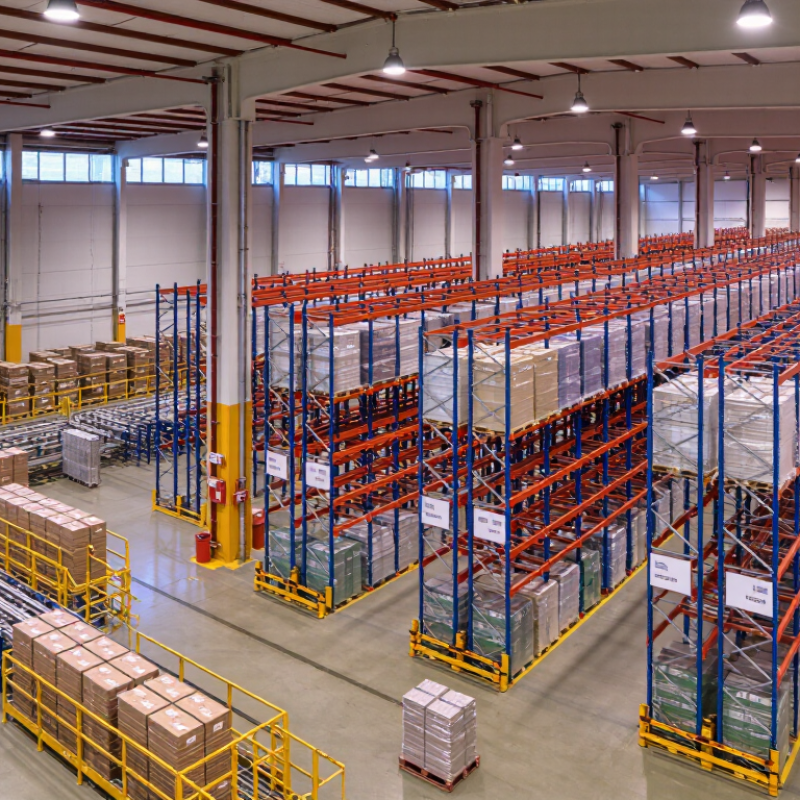
Pallet racking is no longer a simple steel storage choice. It connects warehouse height, product turnover, labor flow, and safety control.
Selective racking suits mixed pallets and frequent access.
Drive-in racking improves density for uniform products.
Cantilever systems handle long goods, such as pipes and timber.
Mobile racking saves floor space but needs stronger floor preparation and careful operating controls.
The MHI 2024 Annual Industry Report reported that 58% of surveyed supply-chain professionals expected to adopt robotics within two years. This signals a practical shift toward automated pallet movement and higher storage accuracy. Global buyers should check beam capacity, upright thickness, load labels, aisle width, and seismic requirements. EN 15635 provides useful inspection guidance, but local standards still matter. A design copied from one country may fail in another.
Tips: Measure the real pallet, not the catalogue drawing. Test forklift turning space with a loaded vehicle. Ask for steel certificates, installation records, and inspection procedures. Review spare-part availability before ordering. Total cost includes anchors, protection barriers, software interfaces, and future reconfiguration.
The best system depends on use, not appearance. A dense layout can reduce travel distance, yet slow picking if product turnover changes. This is where many plans need more reflection. Data helps, but warehouse experience still catches awkward corners.
For global buyers, pallet racking selection starts with the load, not the catalog. Selective racks provide direct access to every pallet and suit mixed stock. Drive-in racks increase density by reducing aisles, but forklifts enter the structure. Push-back racks use nested carts for two to five pallets deep. The right choice depends on turnover, SKU variety, and forklift control.
Capacity claims need careful reading. A 1,000–5,000 lb rating may describe one pallet position, one beam level, or an entire frame. These are not interchangeable. Rack Manufacturers Institute guidance emphasizes rated components, upright protection, and documented design assumptions. Buyers should submit pallet dimensions, load-center distance, beam spans, seismic conditions, and lift-truck details. Small errors become expensive. A bent upright is not cosmetic.
MHI’s 2024 Annual Industry Report states that 55% of surveyed supply-chain professionals planned to increase technology investment over the following two years. That trend favors racks designed for scanners, sensors, and changing workflows. Yet automation cannot correct poor loading discipline. The U.S. Bureau of Labor Statistics continues to identify material-moving equipment as a significant workplace-risk area, making aisle width and impact protection essential. I would challenge any quote using only “heavy-duty” language. Ask for calculations, testing records, inspection procedures, and exact capacity at each beam level. A cheaper system can become the costliest choice.
An efficient warehouse starts with aisle discipline, not maximum rack height. For standard counterbalance forklifts, 8–12-foot aisles often provide a practical balance between access and density. Narrower aisles may increase storage positions, but they can slow turning, picking, and emergency access. Always confirm the required aisle width with the truck manufacturer and a qualified warehouse engineer.
A realistic utilization target is 80–90% of usable locations, not 100%. The 2024 MHI Annual Industry Report highlights continued investment in supply chain technology and operational visibility. That matters because empty locations, blocked slots, and poor inventory records can hide true capacity. A 90% target leaves room for receiving surges and product reshuffling. It also reduces unsafe overstacking pressure.
Leave breathing space.
In my layout reviews, mixed pallet sizes frequently cause the biggest losses. A rack bay designed for uniform cartons may perform poorly with irregular loads. Measure pallet dimensions, load weights, turning paths, sprinkler clearances, and floor conditions before selecting a system. Storage utilization studies from the Warehousing Education and Research Council consistently emphasize slotting accuracy and travel reduction as major productivity factors.
However, published benchmarks vary by building shape and product mix. That limitation deserves attention. A dense layout can look impressive while creating longer travel distances and more handling damage. Test the design with peak-season volumes, not average daily demand.
2026 Best Pallet Racking Systems for Global Buyers?
Safety Compliance: Load Signs, Upright Protection, and Annual Inspections
A reliable racking system begins with visible, accurate load signs. Each sign should show bay capacity, beam levels, and permitted pallet positions. Workers need this information from the aisle, not from a supervisor’s memory. During site audits, I check whether labels remain readable after dust, impacts, and routine cleaning. Small omissions matter. A missing capacity sign can encourage unsafe loading, even when the rack appears strong.
Upright protection reduces damage from forklifts and pallet movement. Guards should cover exposed columns, corners, and other impact zones. They must remain firmly anchored and should not block inspection points. I have seen protectors installed correctly but left loose after minor collisions. That detail is easy to miss. Replace bent guards promptly, and investigate the impact instead of treating it as cosmetic damage.
Annual inspections should be performed by a competent, suitably trained professional familiar with storage equipment. The review should examine frames, beams, anchors, connections, floors, signs, and visible deformation. Local requirements may differ, so buyers should confirm inspection intervals with qualified safety advisers. Record photographs and corrective actions. A yearly visit is useful, but not sufficient after a serious impact or major layout change. In practice, busy warehouses sometimes postpone repairs. That habit needs honest review.
The chart presents a practical buyer-audit weighting for three core pallet-racking safety controls. Load signs should clearly state safe working loads, upright protection should address foreseeable impact risks, and storage systems should receive a documented expert inspection at least every 12 months where EN 15635 guidance applies.
The percentages are an illustrative procurement-audit weighting, not legal limits. Requirements may vary by country, building authority, risk assessment, rack design, and applicable standards such as OSHA guidance, EN 15635, or ANSI/RMI specifications.
2026 Best Pallet Racking Systems for Global Buyers
Global rack purchasing should begin with total cost, not the quoted frame price. Include steel, engineering, packaging, ocean freight, duties, installation, inspections, and future repairs. A low factory price can become expensive after port delays and local labor costs. Measure twice. Storage density, forklift aisle width, load weight, and pallet dimensions must match the design.
Lead times often change with customized beams, seismic requirements, or incomplete drawings. Request a staged schedule covering approval, production, testing, shipment, and site installation. Ask for material certificates, load tables, welding records, and traceable inspection documents. Standards vary by market, so confirm applicable requirements such as EN 15635, ANSI/RMI MH16.1, or AS 4084 with a qualified local engineer. Never treat one certificate as universal approval.
ROI should use measurable warehouse data. Compare pallets stored per square meter, retrieval time, labor hours, damage rates, and usable building volume. A practical model should show payback under conservative, expected, and delayed-demand scenarios. I have seen forecasts fail because they ignored aisle congestion and seasonal inventory. The calculation may still be useful, but it needs honest assumptions. Review rack condition quarterly, record impacts, and budget replacement parts before shortages occur. Performance is not only capacity; it is safe, repeatable operation.
| Racking System | Best-Fit Operating Profile | Typical Storage Depth | Pallet Accessibility | Indicative Installed Cost USD / Pallet Position |
Typical Procurement-to-Ready Lead Time | Space Utilization Potential | SKU / Stock Rotation Suitability | Typical Payback Target | Key Standards and Compliance Checks |
|---|---|---|---|---|---|---|---|---|---|
| Selective Pallet Racking | Many SKUs, frequent picking, direct access required | 1 pallet deep | 90–100% | $120–$300 | 3–6 weeks | 40–60% of usable storage area | Excellent for high SKU variety and FIFO/FEFO control | 12–30 months | EN 15512, EN 15620, EN 15629, EN 15635, or ANSI MH16.1; anchorage, beam deflection, upright protection, seismic design, sprinkler clearance, and floor loading review |
| Double-Deep Racking | Medium SKU variety with repeated pallet quantities | 2 pallets deep | 45–55% | $160–$380 | 4–8 weeks | 55–75% of usable storage area | Good for LIFO; selective FIFO requires suitable operating controls | 18–36 months | Racking design standards above, plus reach-truck mast clearance, extended-reach equipment capability, pallet condition control, and fire-code aisle requirements |
| Drive-In / Drive-Through Racking | High-volume, low-SKU inventory with batch storage | 4–10 pallets deep | 20–40% | $180–$450 | 6–10 weeks | 60–80% of usable storage area | Drive-in: mainly LIFO; drive-through: FIFO when loading and unloading are separated | 18–42 months | EN 15635 or ANSI MH16.1; impact protection, rail alignment, pallet quality, forklift compatibility, tunnel capacity, emergency access, and fire protection review |
| Push-Back Racking | Multiple pallets per SKU with moderate selectivity | 2–6 pallets deep | 50–70% | $220–$500 | 6–10 weeks | 55–75% of usable storage area | Strong for LIFO and medium stock rotation | 18–36 months | EN 15512, EN 15620, EN 15629, EN 15635, or ANSI MH16.1; cart or trolley load rating, lane slope, pallet quality, restraint provisions, and impact protection |
| Pallet Flow Racking | Perishable goods, high throughput, and strict FIFO/FEFO | 2–20 pallets deep | 100% lane access | $300–$700 | 8–14 weeks | 60–80% of usable storage area | Excellent for FIFO/FEFO; best with consistent pallet dimensions and loads | 18–36 months | Racking standards above; roller load rating, braking and speed-control devices, lane separators, pallet tolerances, end stops, ergonomic replenishment, and fire clearance |
| Pallet Shuttle Racking | High-density storage with repetitive pallet movements | 5–40 pallets deep | Channel-based | $450–$1,200 | 12–24 weeks | 70–90% of usable storage area | Suitable for FIFO or LIFO, depending on channel layout and operating method | 24–48 months | Racking standards above; shuttle load capacity, rail tolerances, battery and charging safety, wireless controls, emergency access, operator training, and machine guarding |
| Mobile Pallet Racking | High storage density where one access aisle can serve many bays | 1–2 pallets deep per bay | 80–100% when aisle is open | $350–$900 | 10–18 weeks | 75–90% of usable storage area | Good for high-value or slow-to-medium rotation stock | 24–48 months | EN 15635 or ANSI MH16.1; moving-base structural calculations, floor flatness, rail installation, emergency stop systems, access control, anti-crush protection, and seismic assessment |
| Automated Pallet AS/RS | Large, stable-volume operations with high labor or land costs | Typically 8–40 pallets deep or crane-served aisles | System-controlled | $1,000–$3,000+ | 20–40 weeks | 85–95% of usable storage area | Best for predictable demand, standardized loads, and high transaction volumes | 36–72 months | EN 528, EN 15635, EN 15512, applicable machinery and electrical safety rules, local fire codes, functional safety assessment, guarding, emergency egress, WMS/WCS integration, and seismic design |
Cost scope: Indicative installed rack-system cost in USD per pallet position, generally including steel, standard accessories, delivery, and installation. Excludes building construction, slab replacement, sprinklers, taxes and duties, forklifts, conveyors, WMS/WCS software, permits, and unusual seismic or cold-store requirements.
Lead-time basis: Typical period from approved design and purchase order to installation readiness for standard configurations. Imported components, engineering approvals, port congestion, customs, project size, and local installation capacity can materially change the result.
ROI calculation: Simple payback period = total project investment ÷ annual net benefit. Annual net benefit should include labor savings, released floor space, reduced damage, improved inventory accuracy, reduced energy use, maintenance, software fees, batteries, training, and financing costs.
Utilization definition: Space utilization potential refers to the share of usable warehouse storage area that can be occupied by pallet positions after accounting for aisles, access zones, structural clearances, fire protection, and operating safety requirements. It is not the same as inventory fill rate.
Validation requirement: Final selection should be checked against pallet dimensions and weight, SKU count, inventory profile, throughput, forklift type, building height, floor capacity and flatness, fire protection, seismic zone, labor costs, local regulations, and required FIFO/FEFO performance.
It should show bay capacity, beam levels, and permitted pallet positions. Workers need readable information from the aisle.
Dust, impacts, and cleaning can make labels unreadable. Missing information may encourage unsafe loading.
Protect exposed columns, corners, and common forklift impact zones. Guards should stay firmly anchored.
Replace it promptly and investigate the collision. Do not treat damage as cosmetic.
A trained, competent professional familiar with storage equipment should inspect the system. Local requirements may vary.
It should examine frames, beams, anchors, connections, floors, signs, and visible deformation.
No. Inspect again after serious impacts or major layout changes. Busy warehouses sometimes postpone repairs.
Include steel, engineering, packaging, freight, duties, installation, inspections, and future repairs. The quoted frame price is incomplete.
Measure pallets per square meter, retrieval time, labor hours, damage rates, and usable building volume. Conservative forecasts matter.
Custom designs and incomplete drawings can delay production. Request approval, testing, shipment, and installation milestones. Delays happen.
In 2026, Pallet Racking remains a key solution for improving warehouse capacity, accessibility, and operational efficiency. This guide compares selective, drive-in, and push-back rack systems, with typical load capacities ranging from 1,000 to 5,000 pounds. It explains how each design supports different inventory profiles, handling methods, and storage goals. Careful warehouse planning is also essential, including aisle widths of approximately 8–12 feet and layout strategies that can achieve 80–90% storage utilization without compromising safe movement.
For global buyers, selecting a racking system requires more than comparing purchase prices. Important considerations include total cost of ownership, manufacturing and shipping lead times, applicable technical standards, installation requirements, and expected return on investment. Safety practices such as clearly displayed load signs, upright protection, routine maintenance, and annual inspections help reduce operational risks and extend equipment life. By balancing capacity, layout, compliance, durability, and long-term performance, buyers can choose a practical system suited to their facility and market requirements.